

The Best Cosmetics Website Templates for Stunning Stores
February 27, 2026
Examples of Cosmetics Websites with Great Web Design
March 1, 2026Your best customers are already selling for you. Their Google reviews sit on your Business Profile, convincing strangers to pick up the phone or hit "add to cart." But most of that social proof never makes it onto your actual website.
Learning how to embed Google reviews on your site puts that trust where it matters most, right next to your calls to action, your pricing, and your product pages.
This guide walks through every method available. From the Google Places API and no-code widgets to review badges, schema markup, and custom styling. Whether you're working with WordPress, Shopify, or a hand-coded HTML site, you'll find a working approach here.
What Is a Google Reviews Embed?

A Google reviews embed is a block of code placed on a website that pulls and displays customer reviews from a Google Business Profile. It can be live (updating automatically when new reviews come in) or static (showing a fixed set of reviews you selected manually).
That distinction matters more than most people think.
A live embed connects to Google's database through an API or third-party widget, so the reviews refresh without you touching anything. A static embed, on the other hand, means you copied the review text and pasted it into your page. Screenshots fall into this category too.
Most businesses place these embeds on homepages, landing pages, and dedicated testimonial pages. Product pages and checkout flows are also common spots, especially for ecommerce stores that want to reduce cart abandonment.
One thing to keep in mind: Google's Terms of Service govern how you display review content pulled from their platform. You can't alter the text, fabricate reviews, or misrepresent the rating. Sounds obvious, but I've seen businesses cherry-pick only 5-star reviews and hide the overall rating. That's a gray area you don't want to play in.
The embed itself usually takes the form of a JavaScript snippet, an iframe, or a WordPress plugin shortcode that renders a styled review card or widget on your page.
Why Embed Google Reviews on Your Website?
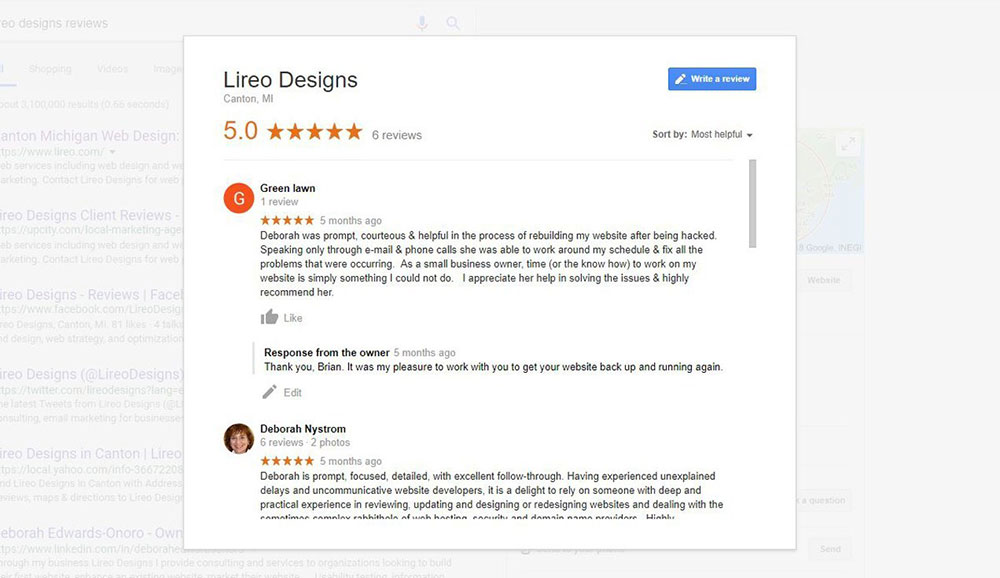
Spiegel Research Center found that products with five reviews are 270% more likely to be purchased than those with none. That number alone should end any debate about whether embedding reviews is worth the effort.
But there's more going on here than just conversion bumps.
Social Proof Drives Purchases
BrightLocal data shows 83% of shoppers begin their research with Google reviews. When those reviews live directly on your website, you're keeping visitors in your ecosystem instead of sending them off to Google to read feedback there.
SOCi research backs this up. Their study of 31,000 business profiles found that conversion rates improve by 2.8% for every 10 new reviews a business earns. And a one-star increase in average rating corresponds to a 44% jump in conversions.
Think about what that means for a local service business pulling in 8,000 impressions a month.
User-Generated Content Without the Work
Every new Google review that auto-syncs to your site adds fresh, unique text written by real people. That's user-generated content showing up on your pages without you writing a word.
Reviews naturally include the kind of language your customers actually use when talking about your products or services. That language variety is good for search visibility and topical depth on your pages.
Trust Signals for New Visitors
According to Capital One Shopping research, 92% of consumers hesitate to buy products without online reviews. For a first-time visitor who has never heard of your business, a visible Google rating with real customer names and photos is the fastest way to build credibility.
Businesses ranked in Google's local 3-Pack earn 126% more traffic than those ranked lower, per SOCi. Embedding those same reviews on your site reinforces the trust people already formed during the search.
When you pair embedded reviews with proper review schema markup, search engines can display star ratings in your search snippets. That alone can boost your click-through rate before anyone even lands on your page.
How to Find Your Google Place ID
Almost every method for embedding Google reviews requires one thing: your Google Place ID. It's a unique text string (starts with "Ch" and looks something like ChIJN1t_tDeuEmsRUsoyG83frY4) that tells Google exactly which business profile to pull reviews from.
Skip this step and you'll waste time troubleshooting later. Trust me on that.
Using Google's Place ID Finder
Google provides an official Place ID Finder tool at developers.google.com/maps/documentation/javascript/examples/places-placeid-finder.
How it works:
- Open the tool and type your business name plus city into the search bar
- Select the correct listing from the autocomplete dropdown
- Copy the Place ID from the info window that appears on the map
This is the most reliable method. Google built the tool specifically for this, and it pulls directly from their Places database.
Finding It Through Google Maps
You can also grab it from Google Maps. Search for your business, click "Share," go to the "Embed a map" tab, then right-click on the review count and select "Inspect Element." The Place ID is buried in the HTML source.
It works, but it's clunky. The official finder tool is faster for anyone who isn't comfortable reading HTML.
Common Mistakes to Avoid
CID vs. Place ID: These are not the same thing. A CID (Customer ID Number) is a permanent 64-bit number tied to a business profile. A Place ID is a text string used by Google's APIs. Mixing them up will break your embed.
Google also recommends refreshing Place IDs older than 12 months since they can expire if a business moves or Google updates its database. If your embed suddenly stops loading reviews, a stale Place ID is often the cause.
How to Embed Google Reviews With the Google Places API
The Google Places API gives you the most control over how reviews appear on your website. It's the developer-friendly path, and the one that avoids third-party dependencies entirely.
That said, it's not a plug-and-play solution. You'll need a Google Cloud Console account and a basic understanding of JavaScript. If that sounds like too much, skip ahead to the no-code section below.
Setting Up Your API Key
Head to console.cloud.google.com, create a new project, then enable the Places API (New) under the APIs & Services library. Generate an API key and restrict it to your domain to prevent unauthorized use.
Since March 2025, Google restructured their pricing. The old $200 monthly credit was replaced with free usage thresholds per SKU. The Places API now falls under a tiered system: Essentials, Pro, and Enterprise. Essentials-tier calls get 10,000 free requests per month.
For most small business sites displaying reviews on a handful of pages, you'll likely stay within the free tier without any issues.
Making the API Request
A Place Details request with the reviews field returns review data in JSON format. You'll get back up to 5 reviews per request. Not 50. Not all of them. Five.
That's the biggest limitation of the API approach, and it catches a lot of developers off guard.
Each review object includes:
- Author name and profile photo URL
- Star rating (1-5)
- Review text
- Relative time description ("2 weeks ago")
You parse that JSON response and render it into HTML however you want. Full creative control over the layout, styling, and which data points to display.
Basic Code Example for Displaying API Reviews
Here's the general flow in JavaScript:
- Send a fetch request to the Place Details endpoint with your Place ID and API key
- Parse the
reviewsarray from the JSON response - Loop through each review and build an HTML card with the author name, rating stars, and review text
- Append the cards to a container div on your page
For star ratings, most developers render SVG stars or use CSS to display filled vs. empty stars based on the numeric rating value. Nothing fancy required.
If you're building on WordPress, you can wrap this logic in a shortcode or a simple plugin. But honestly, if you're going the WordPress route, a dedicated plugin will save you time. The API method makes more sense for custom-built sites or when you need total design freedom.
How to Embed Google Reviews Without Code
Most people searching for how to add Google reviews to their website are not developers. They run local businesses, manage marketing for small teams, or handle their own sites on WordPress, Shopify, or Wix. They need something that works in under 10 minutes.
Good news. Several tools make this possible without writing a single line of code.
Using Third-Party Widgets
Elfsight is probably the most widely used option here. You enter your Google Place ID or business name, pick a layout (slider, grid, list, or masonry), customize colors and fonts, then copy a JavaScript embed code and paste it into your site.
Setup takes about five minutes. The widget auto-updates when new reviews appear on your Google Business Profile.
| Feature | Elfsight | Taggbox | SociableKIT |
| Free Plan | Yes (200 views/mo limit) | Yes (500 views/mo limit) | Yes (3,000 views/mo limit) |
| Branding | Elfsight logo on Free | Taggbox logo on Free | SociableKIT logo on Free |
| Layout Options | ~6-8 core layouts | 7+ (Themes & Walls) | 100+ (Widget specific) |
| Auto-sync | Yes (72h on Free) | Yes (2h on Starter) | Yes (Real-time available) |
| Schema Markup | Yes (Pro & above) | Limited / Manual | Yes (Built-in for SEO) |
| Best For | One-off simple widgets | Shoppable UGC & Events | Scaling brands & SEO focus |
Taggbox and SociableKIT work similarly. You connect your review source, configure the display, and get an embed snippet. Trustmary is another solid alternative, especially if you also want to collect reviews directly through your website.
The tradeoff with all free plans: branding. The widget shows the tool's logo until you upgrade to a paid tier. For some businesses that's fine. For others building a professional website, it looks out of place.
There's also a performance consideration. Every third-party script you add is another HTTP request and more JavaScript your page has to load. If your site already runs slow, adding a review widget on top of that won't help your Core Web Vitals scores.
Using WordPress Plugins
If your site runs on WordPress, plugins handle the entire process inside your dashboard.
Widget for Google Reviews is one of the most popular free options. Install it, enter your Google Place ID and API key, and drop a widget into any sidebar or page using a shortcode. Basic but functional.
ReviewsOnMyWebsite and WP Google Review Slider offer more display options. Carousel layouts, filtering by minimum star rating, custom CSS overrides for matching your theme's design.
A few things to watch out for:
- Plugin bloat is real. Some review plugins load heavy scripts on every page, not just the ones displaying reviews. Look for plugins that use conditional loading.
- Google's API changes can break plugins. When Google moved from the legacy Places API to the Places API (New), several plugins stopped pulling reviews until their developers pushed updates. Keep plugins current.
- Caching matters. If you're using a caching plugin (and you should be), make sure the review widget output gets cached properly. Otherwise it fires a fresh API call on every page load.
For sites built on Shopify, Squarespace, or Wix, third-party widgets like Elfsight are usually the better path since those platforms don't support WordPress-style plugins.
How to Embed a Google Reviews Badge
Sometimes you don't need a full review feed. You just need a compact badge that shows your overall Google rating and total review count. Something small enough to sit in a hero section, sidebar, or right next to a call to action button.
That's what a Google review badge does.
What a Review Badge Looks Like
A typical badge displays three things: the Google logo (or a Google icon), your average star rating, and the number of reviews. Some versions link directly to your Google Business Profile so visitors can read all reviews there.
It takes up minimal space. Think of it as a trust signal, not a content block.
Creating a Review Badge
Third-party badge generators are the fastest route. Tools like Elfsight, SociableKIT, and Trustmary all offer badge-specific layout options alongside their full review widgets. You configure the badge in their editor and get an embed code.
If you want to build one yourself, it's straightforward. Pull the aggregate rating and review count from the Places API, style a small HTML element with CSS, and display it wherever you want.
The DIY approach gives you full control over the visual design, which matters if your site follows a specific color scheme or strict brand guidelines.
Where to Place Your Badge
Placement depends on what you're trying to do with it.
Near conversion points: Place it next to pricing tables, contact forms, or checkout buttons. The badge serves as a last-second trust nudge right when someone is deciding whether to take action. This is especially effective on product landing pages where purchase decisions happen fast.
In the site header or footer: A persistent badge visible on every page builds cumulative trust as visitors browse. The header works well for service businesses. The footer is less aggressive but still visible.
Some businesses put a review badge on their pricing page right above the plan comparison. Smart move. That's exactly when a potential customer is weighing their options and looking for reasons to commit.
How to Embed a Specific Google Review
Sometimes you don't want a feed. You want one particular review, the one where a customer described exactly why they chose your business, to sit front and center on a landing page.
That's a different task than embedding a review widget.
Finding the Direct Link to a Single Review
Open your Google Business Profile and go to the Reviews tab. Find the review you want, click the three-dot menu in the upper-right corner, and select "Share review." That gives you a direct URL to that specific review on Google.
You can also grab it from Google Maps. Search for your business, scroll to the reviews section, click the review, and copy the URL from your browser's address bar.
Embedding Options for a Single Review
Styled blockquote: Copy the review text, author name, and star rating into an HTML blockquote element. Add proper attribution with a link back to the original Google review. Simple, lightweight, zero dependencies.
iframe embed: Paste the review URL into an iframe tag. This displays the actual Google review inside a frame on your page. The downside? Iframes are clunky on mobile, hard to style, and can cause layout shift issues that hurt your Core Web Vitals scores.
Screenshot approach: Take a screenshot of the review, add it as an image. Quick but static. Won't update if the reviewer edits their text. Some businesses use this for social media repurposing and email campaigns, then link the image to the full Google Business Profile listing.
Keeping It Honest
BrightLocal data shows 76% of consumers trust mixed reviews more than pages showing only 5-star feedback. Featuring one glowing review is fine, but burying all negative feedback across your site erodes trust.
If you're highlighting a specific review, make sure the overall rating and total review count are visible somewhere nearby. A single 5-star testimonial next to a badge showing your actual 4.3-star average looks authentic. A page full of cherry-picked perfection does not.
Adding Review Schema Markup to Embedded Google Reviews
Embedding reviews is one thing. Making sure search engines can read and display them properly is another. That's where structured data comes in.
Nestle found that pages appearing as rich results in search had an 82% higher click-through rate than standard listings, according to Google's own case study data. Star ratings in search snippets grab attention fast.
LocalBusiness Schema With AggregateRating
For local businesses, the right Schema.org type is LocalBusiness with a nested aggregateRating property. This tells Google your page contains aggregate review data (average rating, total count) for a specific business.
Google recommends JSON-LD format. You place the script block in your page's or and it doesn't touch your visible HTML at all.
The key properties to include:
ratingValue(your average star rating)reviewCount(total number of reviews)bestRatingandworstRating(typically 5 and 1)
Google's Rules on Self-Serving Reviews
Here's where a lot of businesses get tripped up.
In 2019, Google stopped showing review snippets for LocalBusiness and Organization schema types when the reviews are "self-serving," meaning reviews collected and displayed on your own site about your own business.
What still works: Product review schema on individual product pages, and LocalBusiness schema on third-party review aggregation sites. If you run an ecommerce store, you can use Product schema with reviews for each product page and still qualify for rich snippets.
What doesn't work: Adding LocalBusiness aggregateRating schema to your homepage featuring your own Google reviews. Google considers this self-serving and won't display the stars in search results.
Testing and Avoiding Manual Actions
| Issue | What Happens | How to Fix |
| Mismatched Rating Count | Schema says 100 reviews, page shows 95 | Sync schema dynamically with visible data. |
| Self-serving Reviews | No rich snippet displayed for LocalBusiness |
Use Product or SoftwareApp schema instead. |
| Hidden Markup | Reviews in schema aren't visible on page | Ensure the reviewBody is visible to users. |
| Syntax Errors (JSON-LD) | Schema ignored entirely by Google | Validate with the Rich Results Test. |
| Outdated Review Data | "Review date" in schema is over 1 year old | Refresh your feed; Google now penalizes "stale" ratings. |
Run your pages through the Rich Results Test tool before and after adding schema. Then monitor the "Enhancements" section in Google Search Console for ongoing validation errors.
Styling and Customizing Embedded Google Reviews
An embedded review widget that clashes with the rest of your site does more harm than good. If it looks like an afterthought, visitors will treat it like one.
CSS Fundamentals for Review Cards
Star colors: Match them to your brand palette or keep Google's default gold. Don't use colors that look faded or hard to distinguish from empty stars.
Font sizes: Review text should be at least 14px on desktop, 16px on mobile. Author names and dates can go smaller. If your site uses a specific typography system, apply those same font families to the review widget for visual consistency.
Padding and spacing between review cards affect readability more than most people realize. At least 16px of vertical margin between cards keeps things breathable.
Responsive Design for Review Widgets
Over 60% of web traffic comes from mobile devices. A review carousel that looks great on a 1440px desktop monitor but breaks on a 375px phone screen is a missed opportunity.
Use CSS media queries to adjust the layout at common breakpoints. A three-column grid on desktop can collapse to a single-column stack on mobile. Flexbox and CSS Grid handle this naturally with flex-wrap or auto-fit patterns.
Buttons inside review widgets (like "Read more" or "Write a review") need to be at least 44x44 pixels for comfortable tapping on touchscreens. Anything smaller frustrates mobile users and could hurt your page experience signals.
Layout Options
Carousel: Shows 2-3 reviews at a time, auto-rotates or swipes. Saves vertical space. Works well in website layouts where you need reviews visible without dominating the page.
Grid: Displays reviews in a masonry or uniform grid. Better for dedicated testimonial pages where you want quantity on display.
List: Vertical stack, one review per row. Simplest to style and most readable on mobile.
Performance Considerations
Third-party review widgets load external JavaScript. That extra HTTP request and script execution time can push your Largest Contentful Paint (LCP) score over the 2.5-second threshold Google recommends.
Two fixes that work:
- Add
deferorasyncto the script tag so it doesn't block page rendering - Lazy-load the review widget so it only fires when the user scrolls near it
If you're using a review plugin on WordPress, check whether it loads its CSS and JavaScript on every page or only where the widget is active. Many plugins load assets site-wide by default, which is wasteful. Look for plugins that support conditional loading.
Troubleshooting Common Google Reviews Embed Issues
Things break. API keys expire, Google changes something, and a widget that worked fine last month suddenly shows nothing. Here's how to diagnose the most common problems.
Reviews Not Loading
API key restrictions: If you restricted your Google Cloud API key by HTTP referrer (you should), make sure the referrer pattern matches your live domain exactly. A mismatch between www.example.com and example.com is enough to block the request.
Quota limits are another common cause. Since Google's March 2025 pricing changes, the Places API Essentials tier gives you 10,000 free requests per month. Exceeding that without a billing account set up means requests just fail silently.
Outdated or Missing Reviews
Third-party widgets like Elfsight, Taggbox, and SociableKIT typically sync new reviews within 24 to 72 hours. If a review was posted yesterday and isn't showing on your site today, that's normal.
For API-based implementations, caching is usually the culprit. If you cached the API response (which you should for performance), set a reasonable refresh interval. Once every 12 to 24 hours works for most businesses.
CORS Errors When Fetching Reviews Client-Side
If you're calling the Google Places API directly from client-side JavaScript, you'll probably hit a Cross-Origin Resource Sharing (CORS) error. Google's API endpoints don't always return the right headers for browser-based requests.
The fix: Route the API call through your own server-side proxy. Your backend makes the request to Google, gets the response, and passes it to your frontend. This also keeps your API key off the client side, which is a security win.
Slow Page Load From Embed Scripts
| Problem | Impact | Solution |
| Widget script blocks rendering | Higher LCP (Largest Contentful Paint) | Add defer or async to your script tags. |
| Scripts load on every page | Wasted bandwidth & bloated TBT | Use conditional loading (only on /reviews or /product). |
| Large widget CSS file | CLS (Cumulative Layout Shift) | Set explicit container heights; inline critical styles. |
| Multiple 3rd-party widgets | Compounded load time & script execution | Limit to one review widget; use a single aggregator. |
| Old API versions | Security risks & slower response times | Ensure you're using the v3.5+ endpoint for 2026 APIs. |
Test your page speed before and after adding the review embed using PageSpeed Insights. If the widget adds more than 200ms to your load time, lazy loading or deferring the script is the right move.
One more thing worth mentioning. If your embed breaks after a Google API update (and they do update things without much warning), check the plugin or widget developer's changelog first. Most established tools like Elfsight push patches within a few days. If you're using a custom API integration, keep an eye on the Google Cloud Console for deprecation notices and migration guides.
FAQ on How To Embed Google Reviews
Can I embed Google reviews on my website for free?
Yes. Tools like Elfsight and SociableKIT offer free plans that let you display a Google reviews widget on your site. Free tiers typically include the tool's branding and limited monthly views.
Do I need a Google Place ID to embed reviews?
Most methods require it. Your Google Place ID is a unique text string that connects your embed to the correct Google Business Profile. Use Google's official Place ID Finder tool to locate yours.
How many reviews does the Google Places API return?
The API returns a maximum of 5 reviews per request. These are Google's "most relevant" reviews, not the most recent. Third-party widgets can pull more by using their own data connections.
Will embedded Google reviews update automatically?
It depends on the method. Third-party widgets like Elfsight and Taggbox auto-sync new reviews within 24 to 72 hours. Manual embeds using screenshots or blockquotes require you to update them yourself.
Can I embed a single specific Google review?
Yes. Open the review on your Google Business Profile, copy its share link, and embed it as a styled blockquote or iframe. A blockquote with proper attribution is the lightest, most mobile-friendly option.
Does embedding Google reviews help with SEO?
Embedded reviews add fresh user-generated content to your pages. Paired with proper review schema markup in JSON-LD format, they can qualify your pages for star-rating rich snippets in search results.
Will a review widget slow down my website?
It can. Third-party scripts add HTTP requests and JavaScript execution time. Use defer or async loading on the embed script and lazy-load the widget to protect your Core Web Vitals scores.
Can I filter which Google reviews appear on my site?
Most widget tools let you filter by minimum star rating, exclude reviews containing specific keywords, or hand-pick individual reviews. The Google Places API itself does not offer filtering options.
Is it against Google's terms to embed their reviews?
No, but you can't alter review text, fabricate ratings, or misrepresent the content. Reviews must be displayed accurately with proper attribution to the original author and your Google Business Profile.
Which platforms support Google review embeds?
WordPress, Shopify, Wix, Squarespace, and any site that accepts custom HTML. WordPress has dedicated plugins. Other platforms work best with third-party widget tools that generate a simple embed code snippet.
Conclusion
Knowing how to embed Google reviews is only half the job. The other half is picking the right method for your setup and keeping things running smoothly over time.
If you're comfortable with code, the Google Places API gives you full control over design and data. If not, a no-code widget from Elfsight or Trustmary gets reviews on your pages in minutes.
Don't skip the technical details. Add structured data markup so search engines can read your ratings. Make sure your widget loads fast on mobile. Set up a caching strategy so you're not burning through API quota on every page load.
Customer reviews are the strongest trust signal your website can display. The businesses that win online reputation management aren't the ones with the most reviews. They're the ones that actually show them where it counts.
Pick a method, test it on a single page, and go from there.