
Architect website design examples to check out
January 8, 2026Stunning Event Planner Website Design Examples to Inspire
January 9, 2026Your restaurant deserves a website that converts hungry browsers into paying customers.
Restaurant WordPress themes solve this by combining menu displays, reservation systems, and online ordering into pre-designed templates that work immediately after installation.
The wrong theme costs you bookings through slow load times, broken mobile layouts, or missing integration with OpenTable and delivery platforms.
This guide covers design features that differentiate food service templates from standard WordPress options, performance benchmarks for Core Web Vitals, schema markup for local search visibility, and selection criteria based on Elementor compatibility, WooCommerce integration, and actual restaurant operator needs.
You'll understand exactly which features matter for cafes, bistros, bakeries, or fine dining establishments.
What is a Restaurant WordPress Theme
A restaurant WordPress theme is a pre-designed template built for food service establishments including cafes, bars, bistros, bakeries, and catering businesses.
These themes contain customized layouts, menu display systems, reservation widgets, and food-focused design elements. Restaurant owners can build functional websites without coding knowledge.
The templates integrate with OpenTable, Resy, WooCommerce, and online ordering platforms. Mobile responsiveness comes standard since 76% of smartphone users who search for nearby restaurants visit within 24 hours according to Google research.
Restaurant WordPress Themes
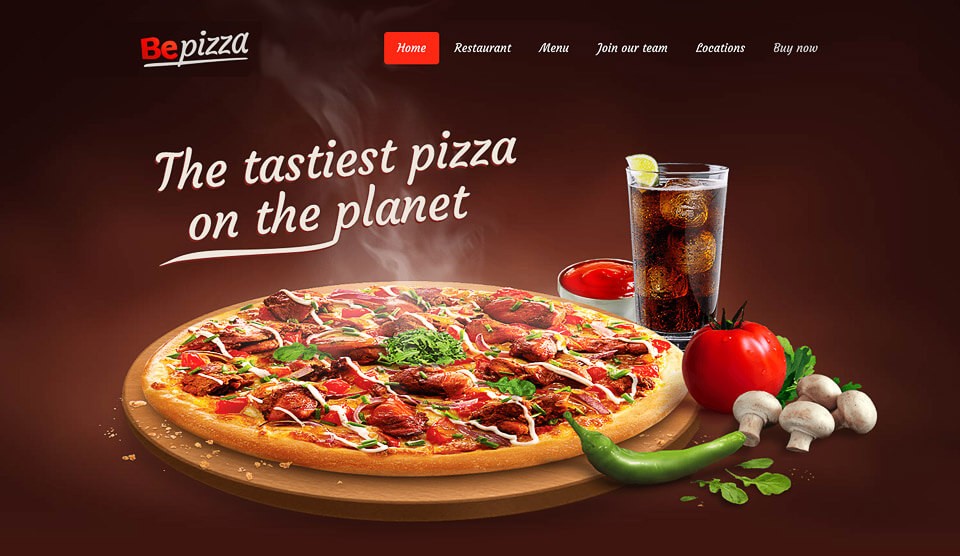
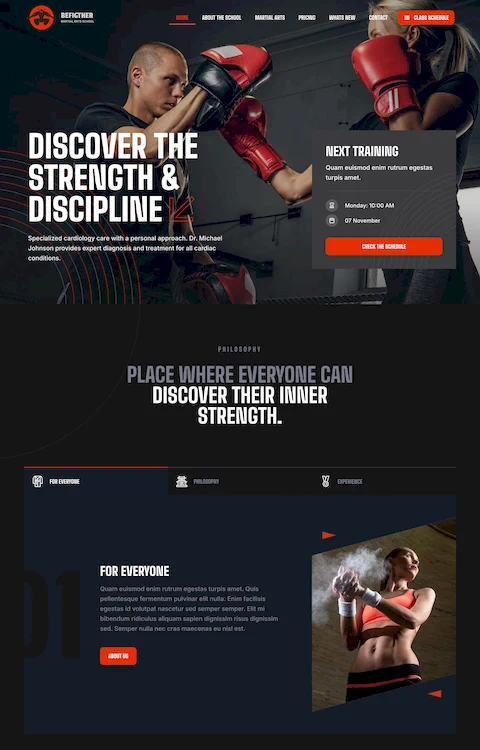
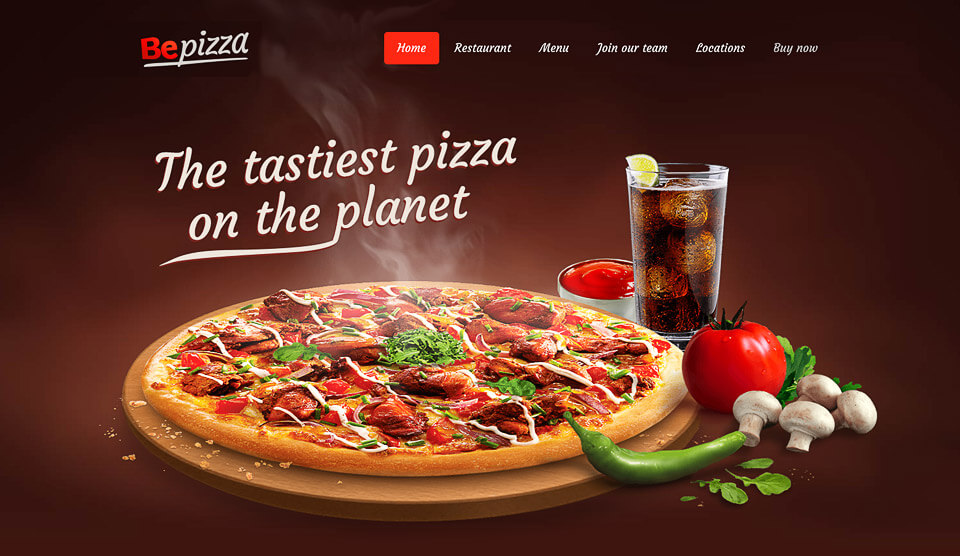
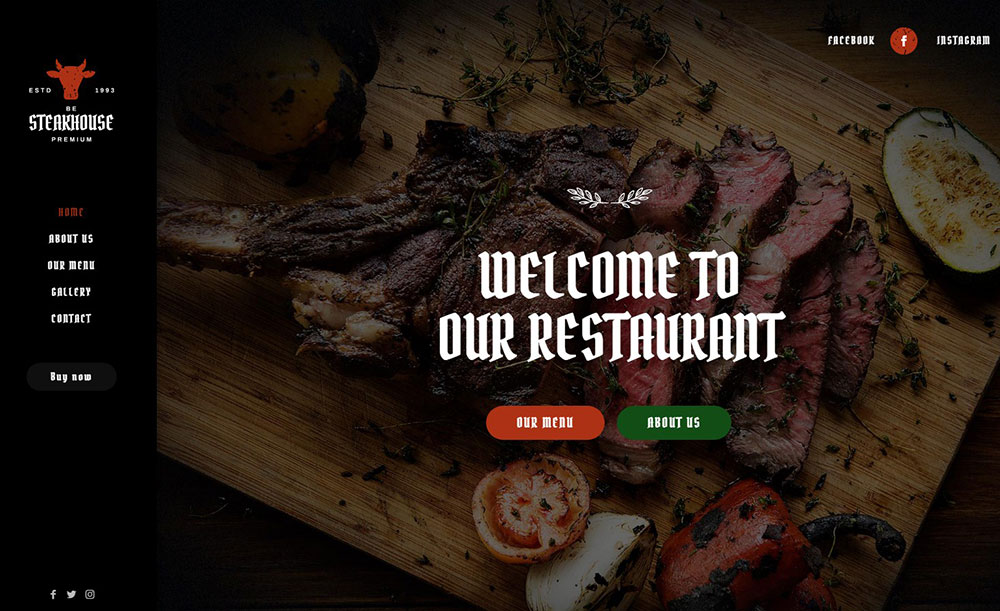
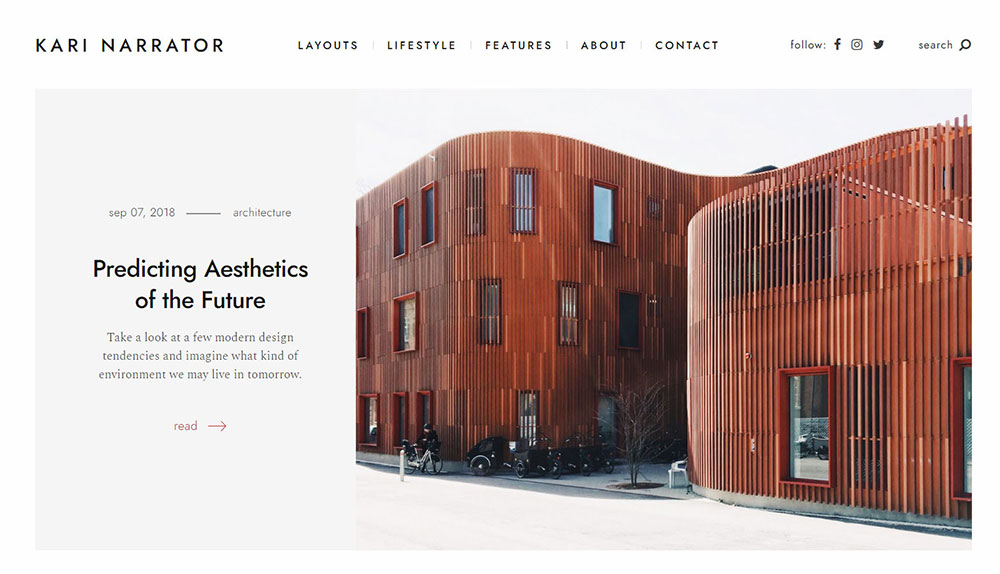
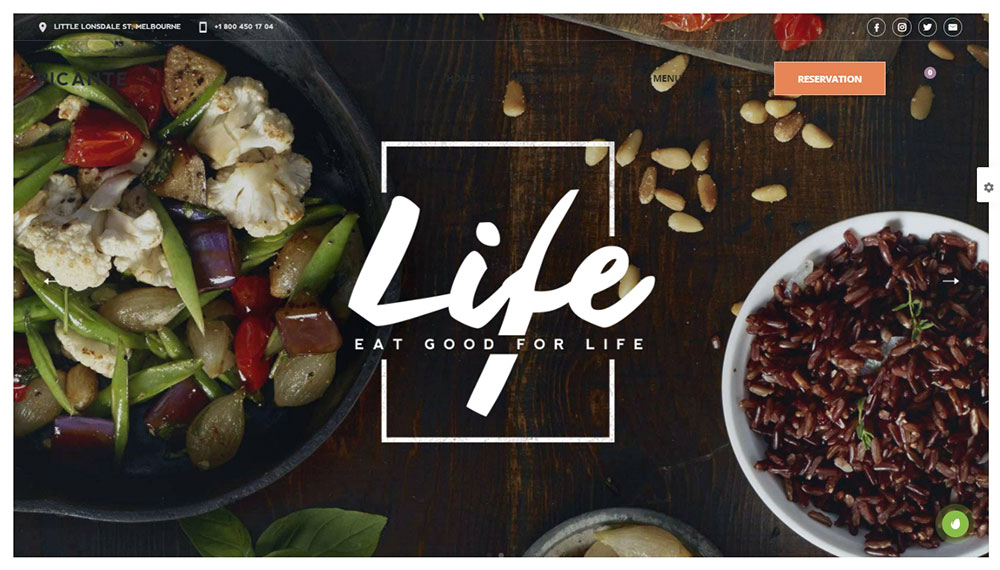
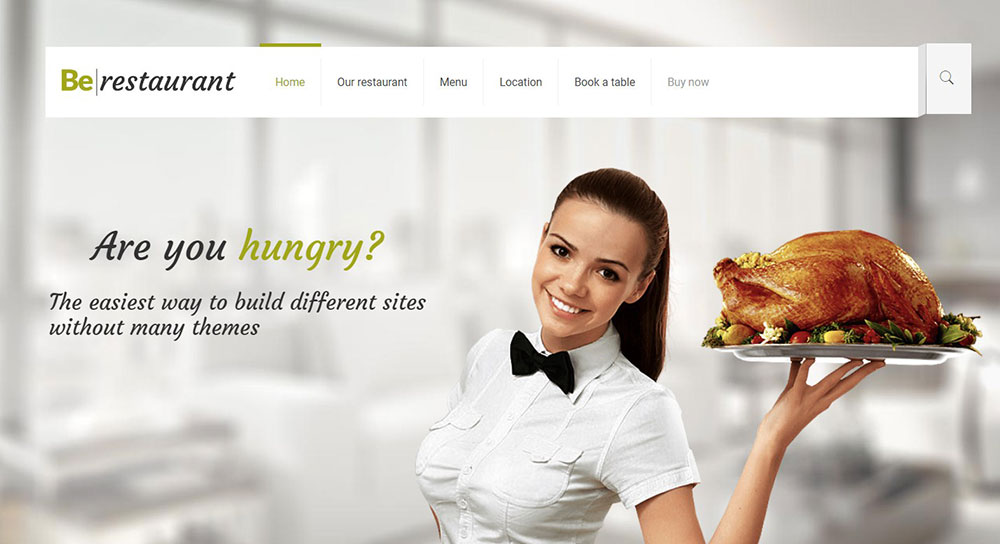
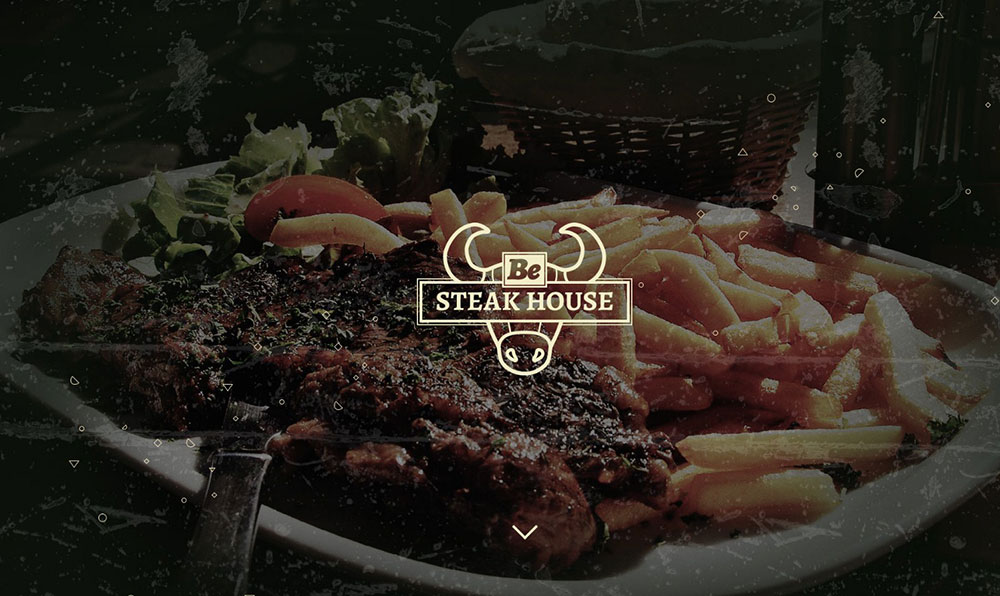
BeTheme
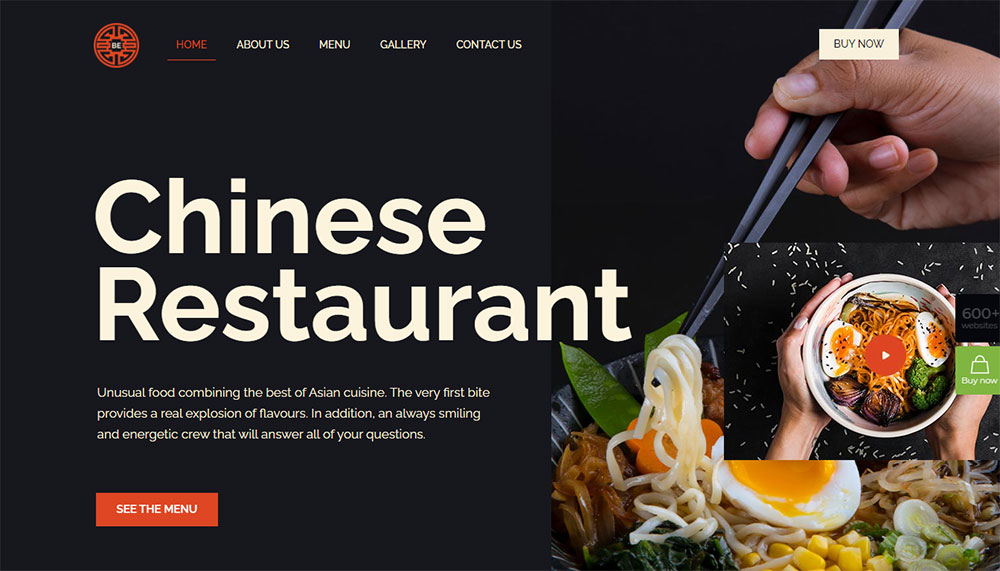
BeTheme is the definitive multipurpose theme. It has a huge array of power tools and design elements it places at your disposal. It’s easy for beginners to work with. If trying to satisfy multiple clients has become more stressful than rewarding, BeTheme has a solution for that as well.
BeTheme’s selection of hundreds of customizable, responsive pre-built websites is the highlight and a proven stress reducer. These professionally crafted, pre-built websites cover 30 industry sectors, all the common websites, and an impressive range of business niches.
The customizability of the theme makes it a dream come true for its users. There are 4 types of Page Builders that you can use with it: WPBakery, BeBuilder, and Elementor among them.
And now with the BeBuilder Woo, it’s even more impressive.
But this is us talking about our theme. Why believe us, right? Here’s what a user had to say on Themeforest recently:
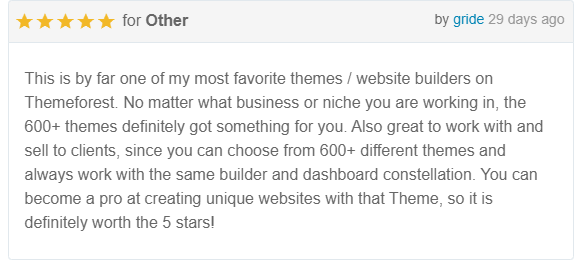
And there are thousands of reviews like this one.
Check out BeTheme and see why our users love it!
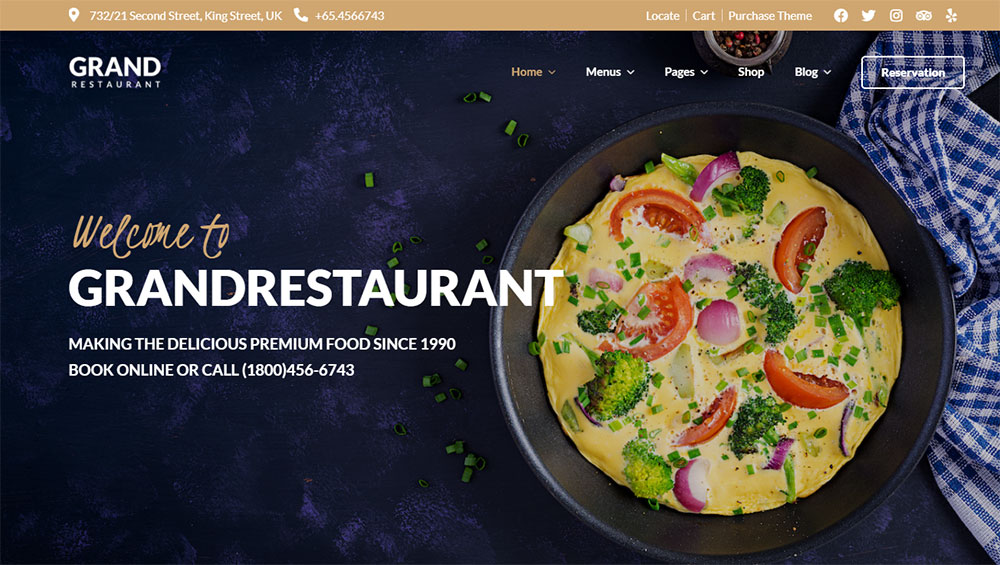
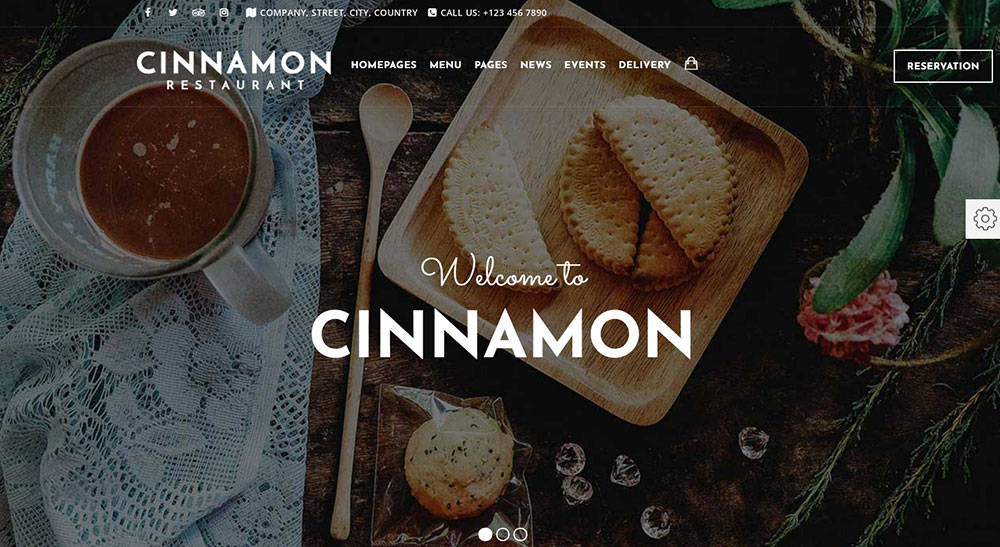
Grand
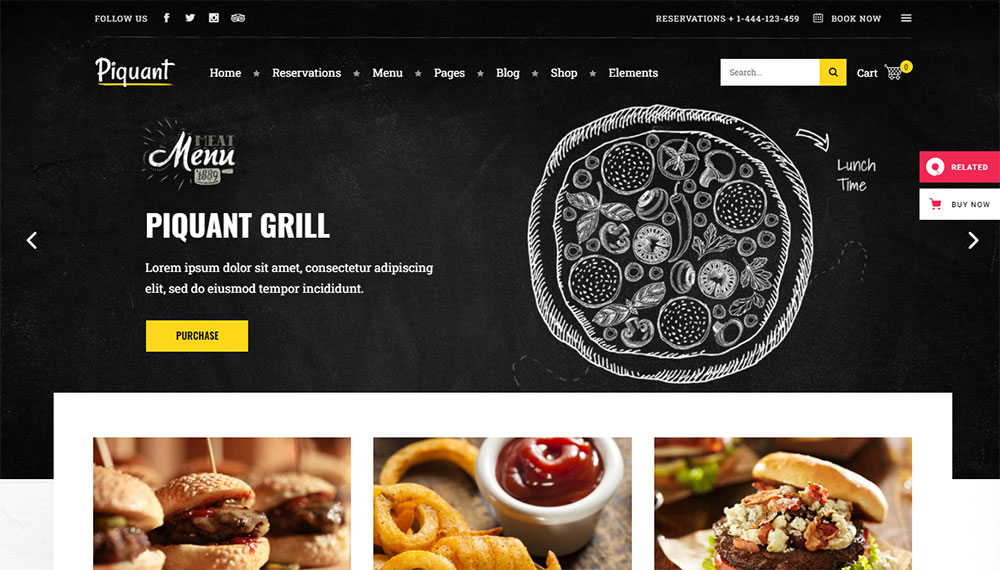
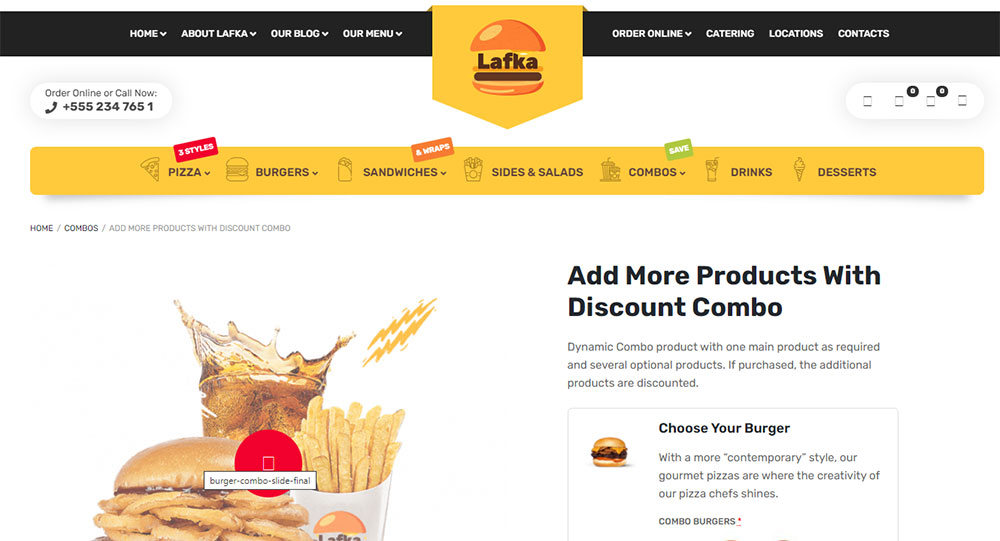
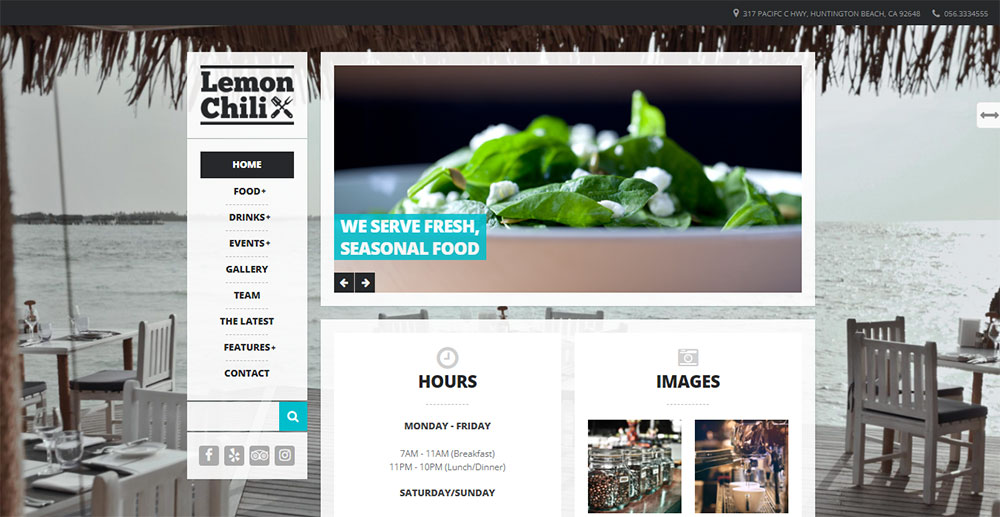
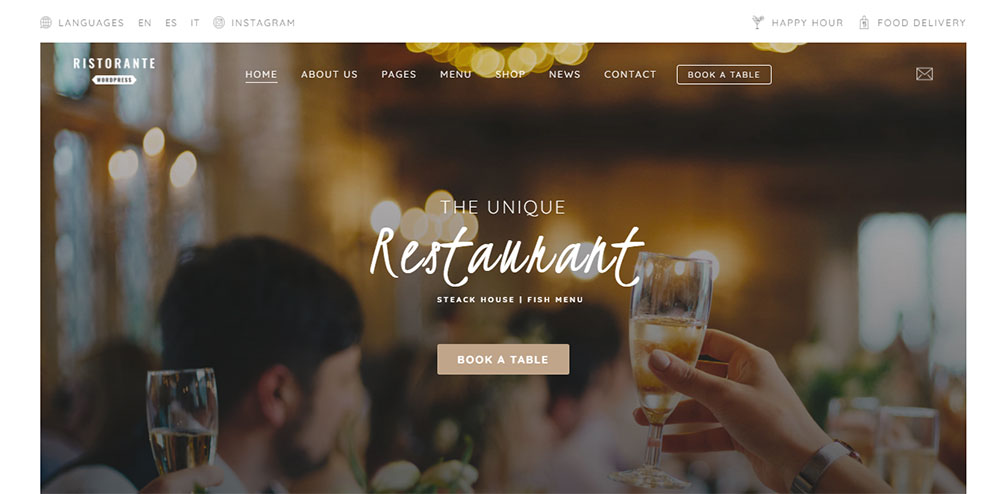

Design Features for Food Service Websites
What design elements make restaurant themes different from standard WordPress templates?
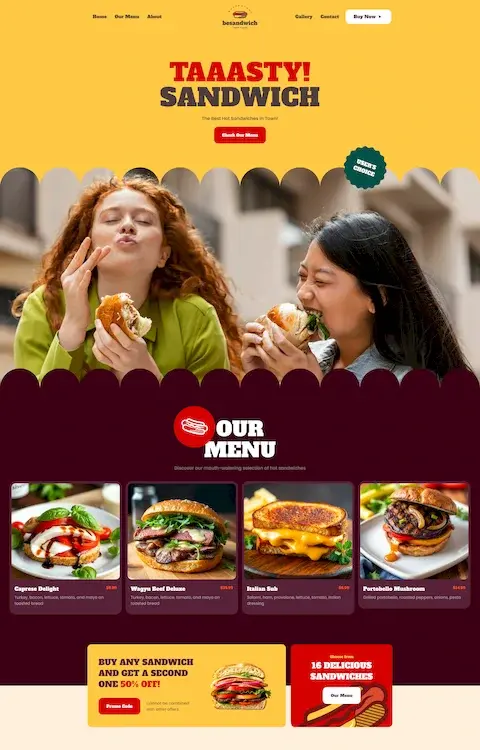
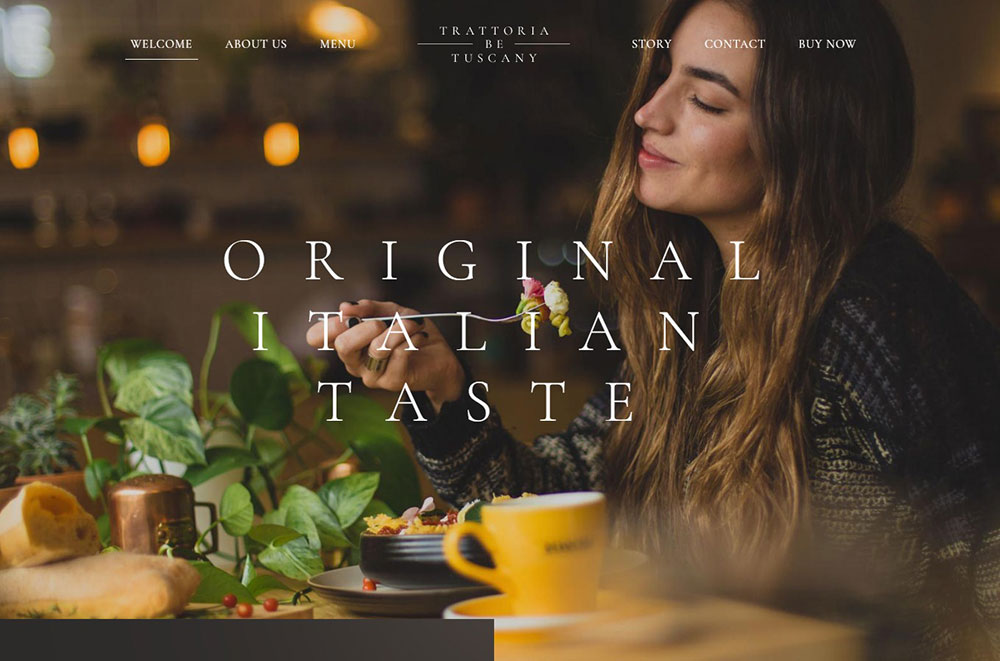
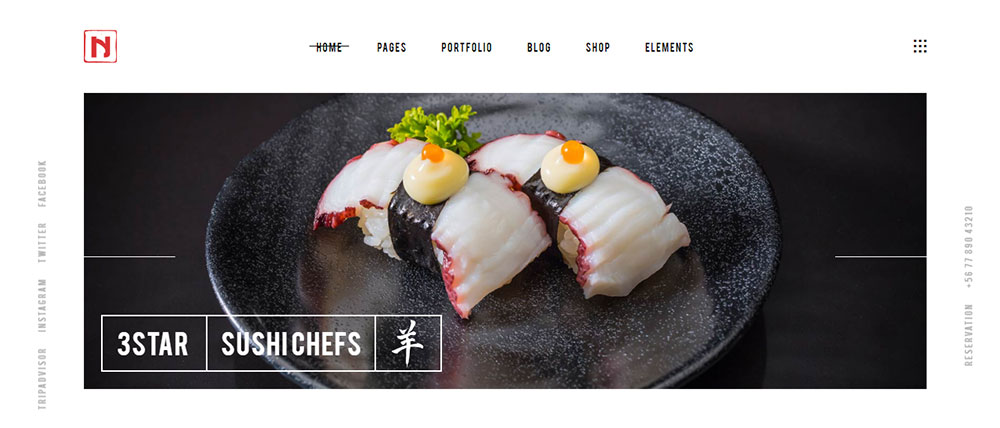
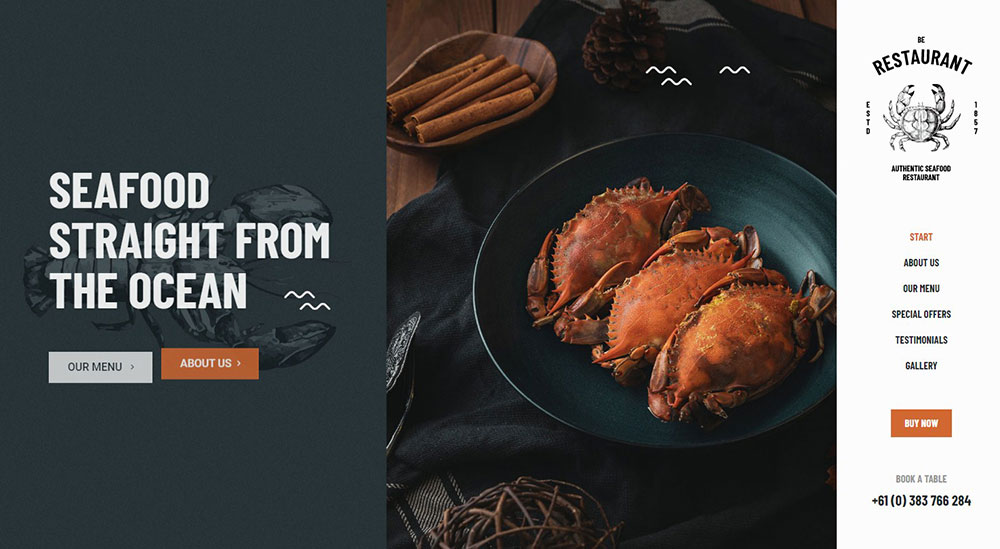
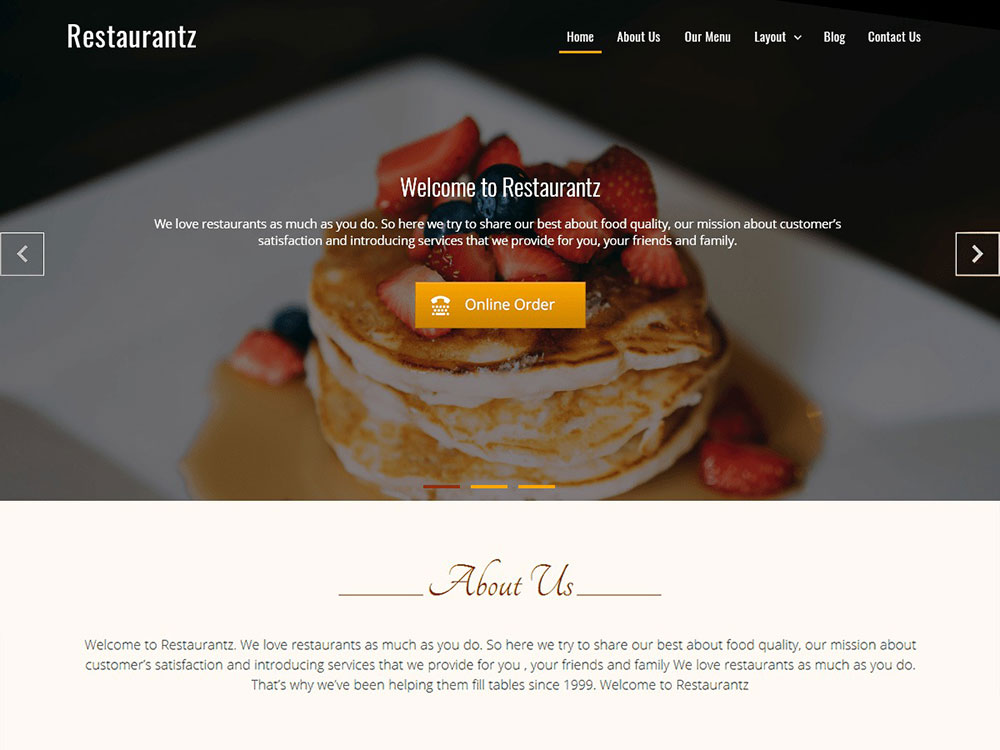
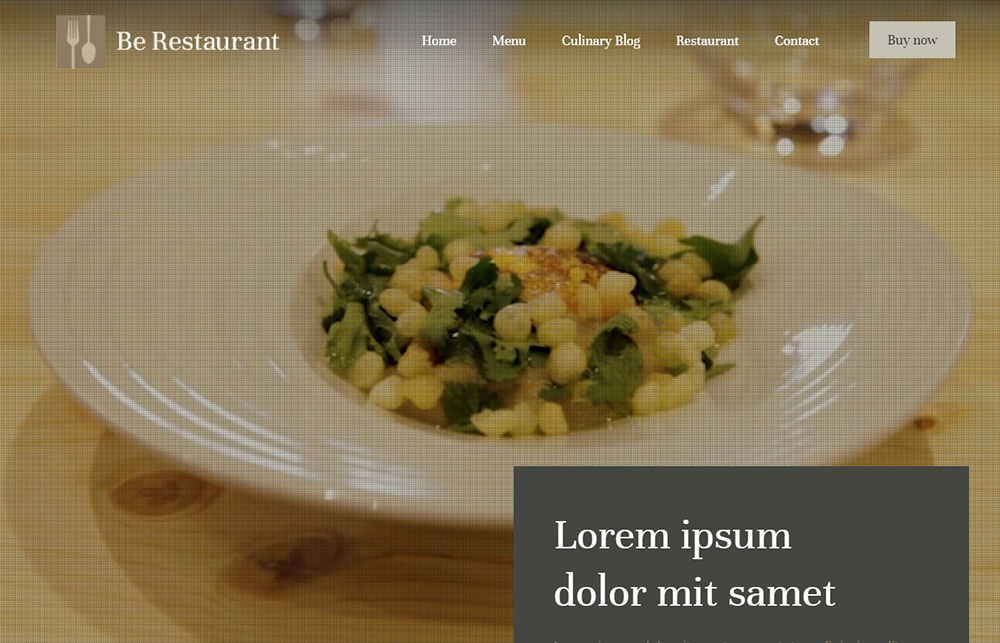
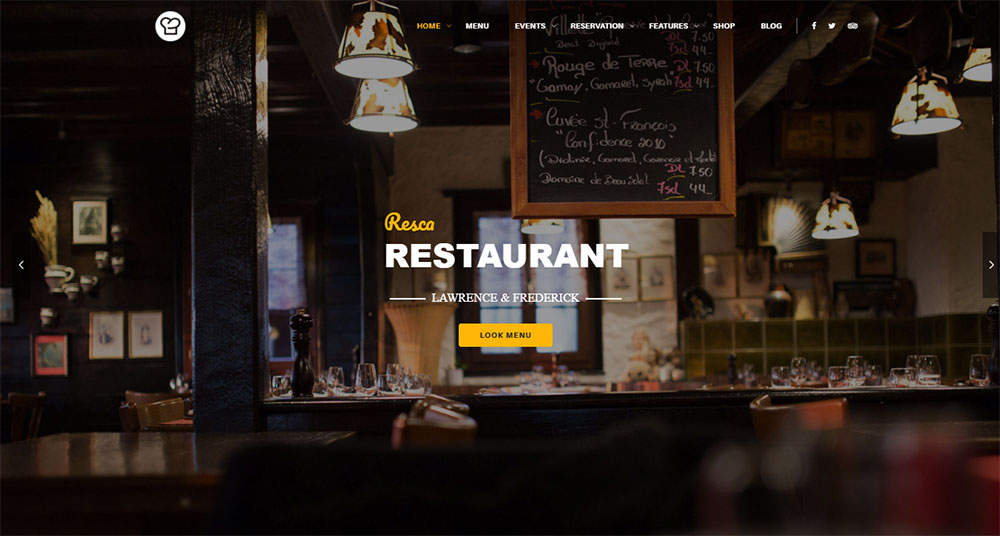
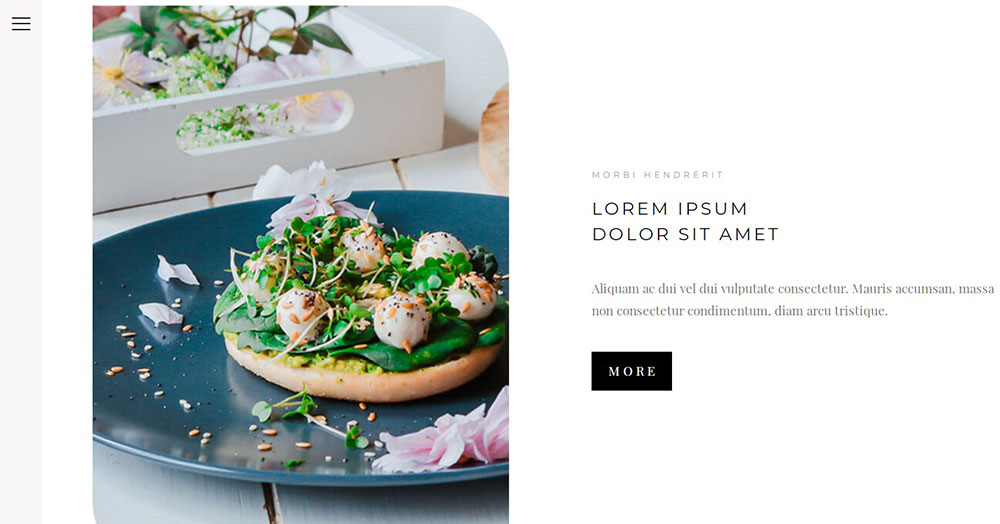
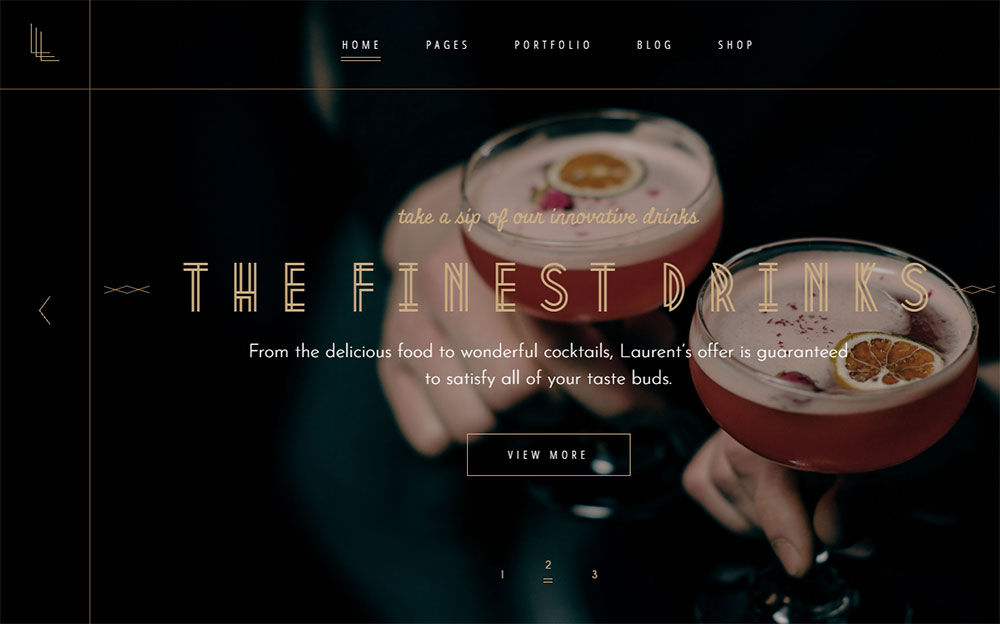
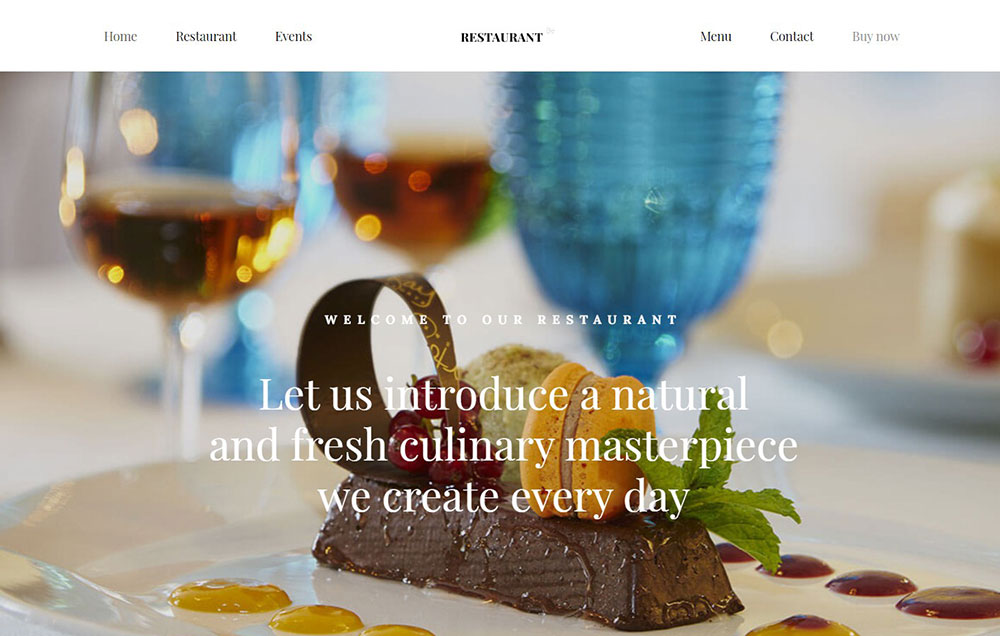
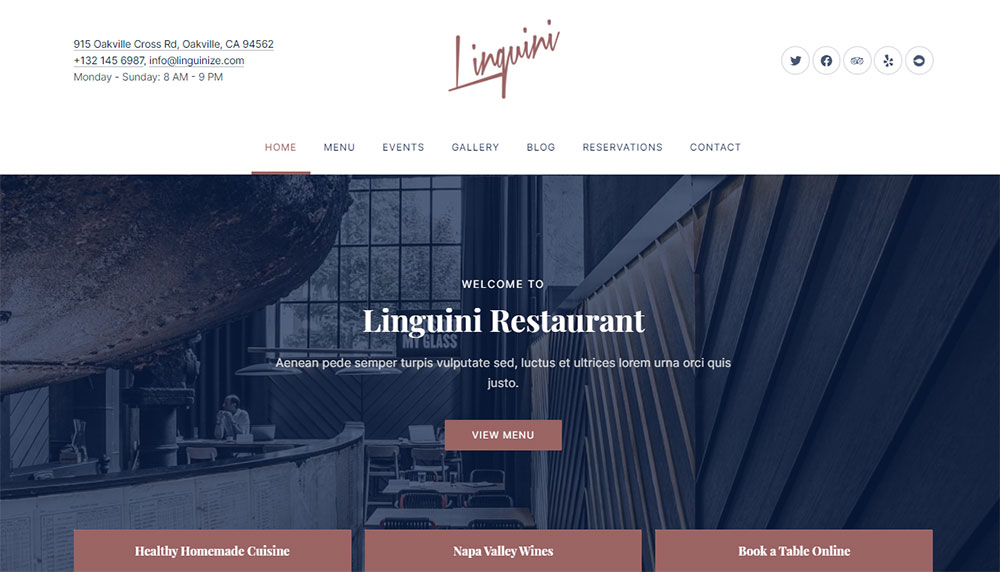
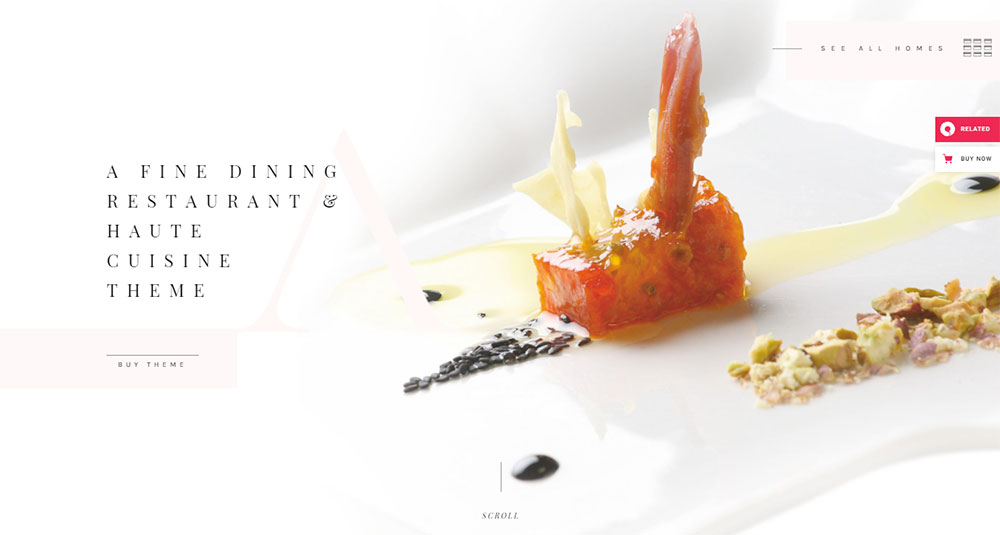
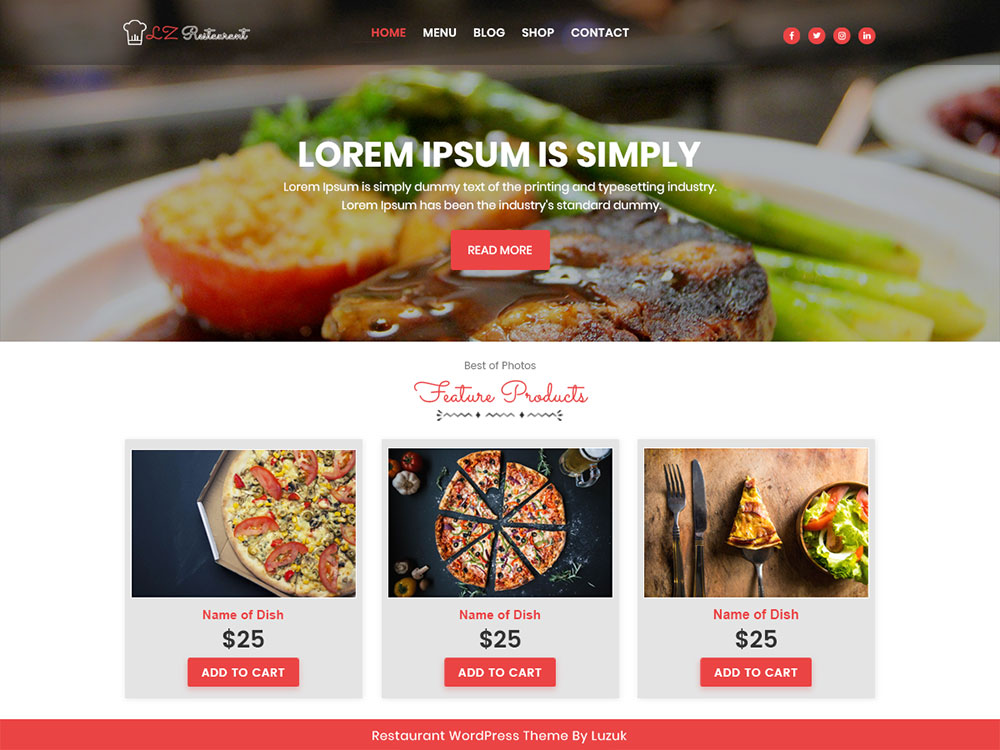
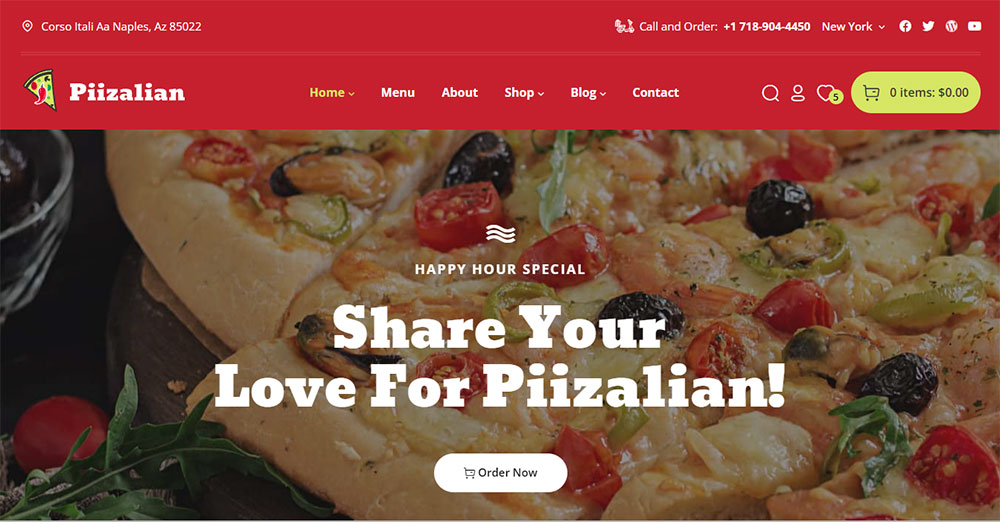
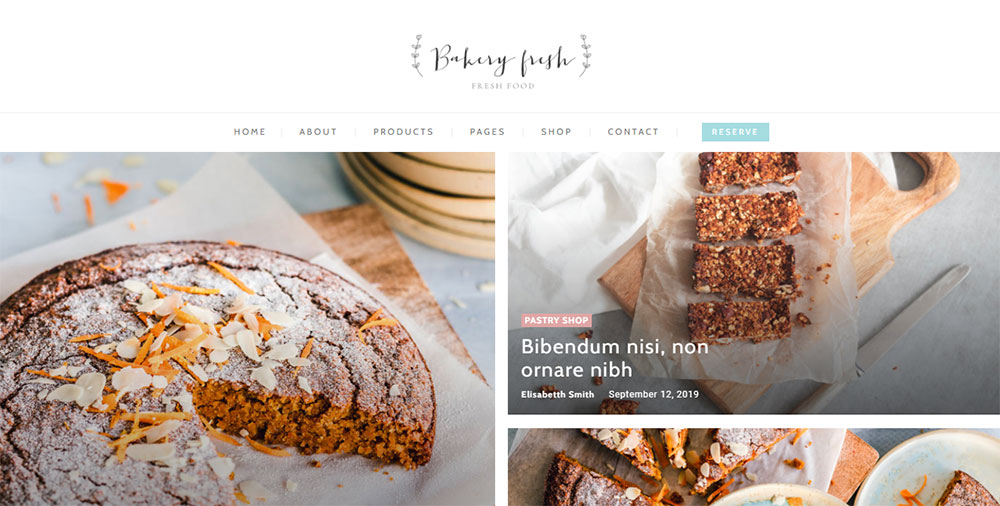
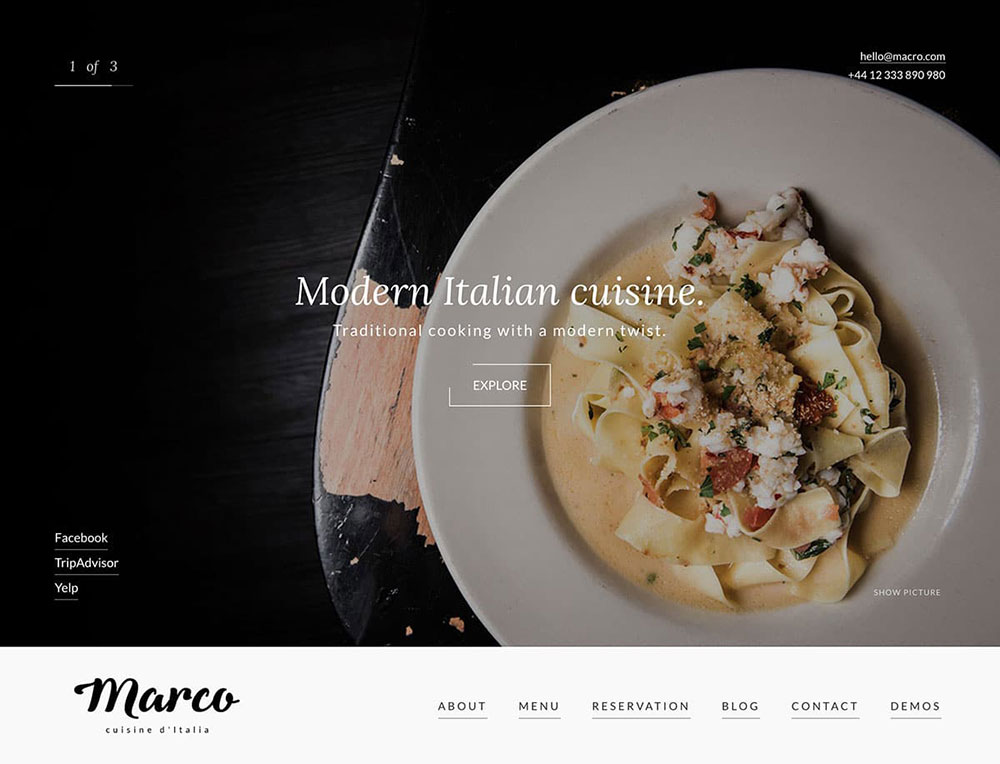
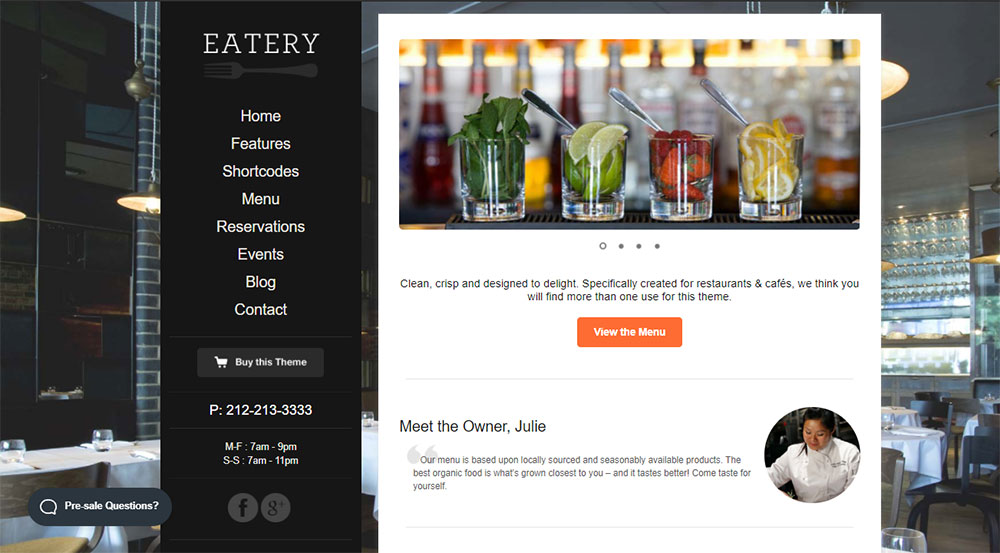
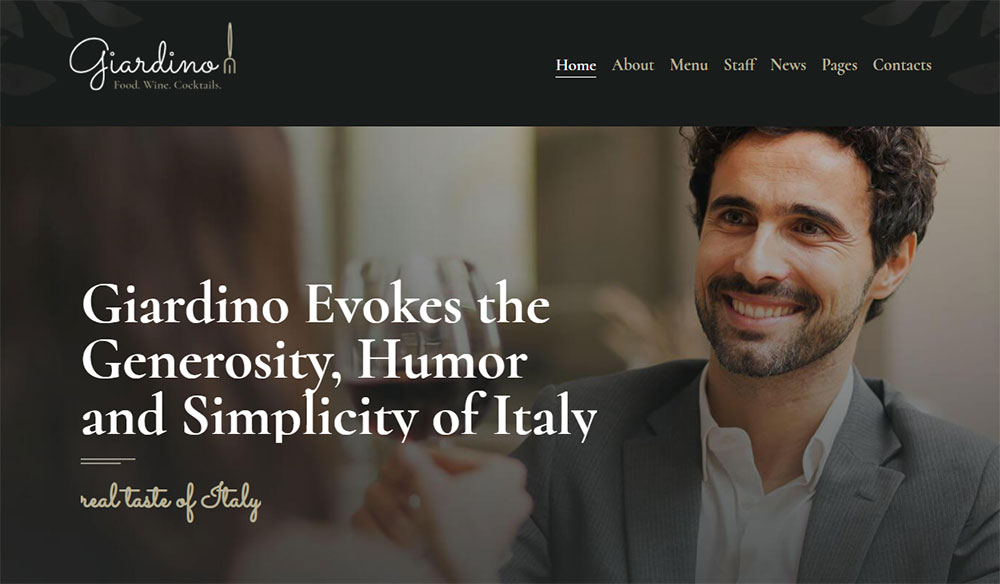
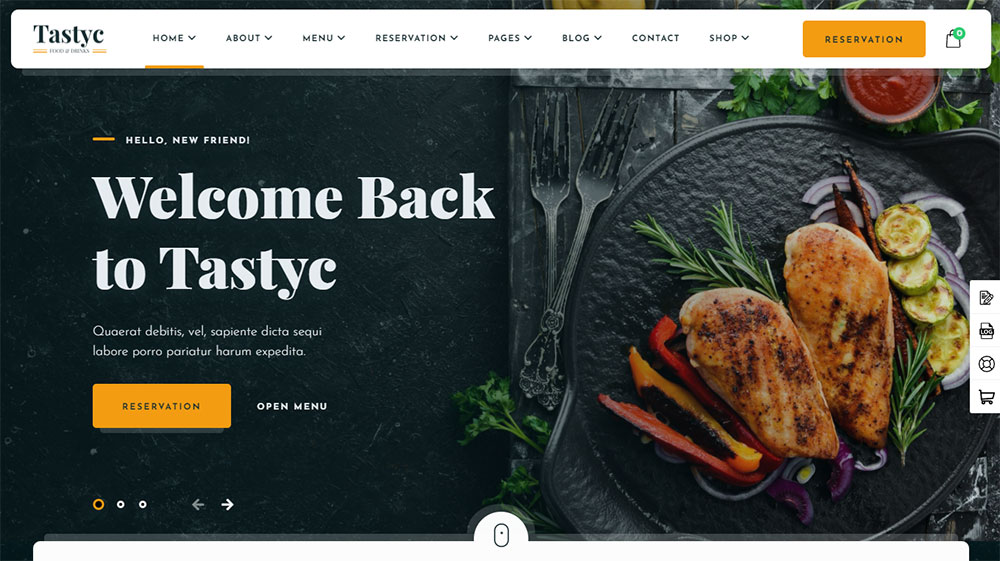
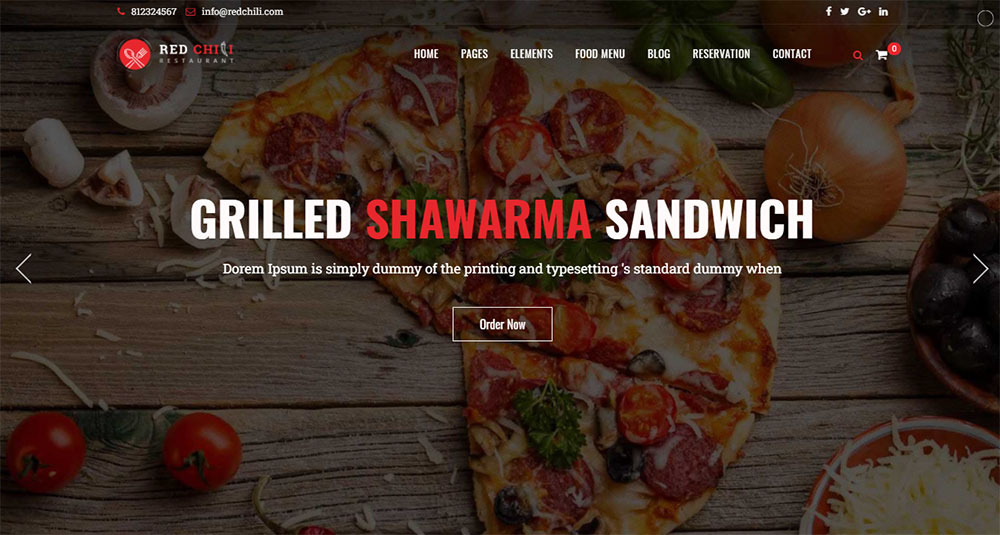
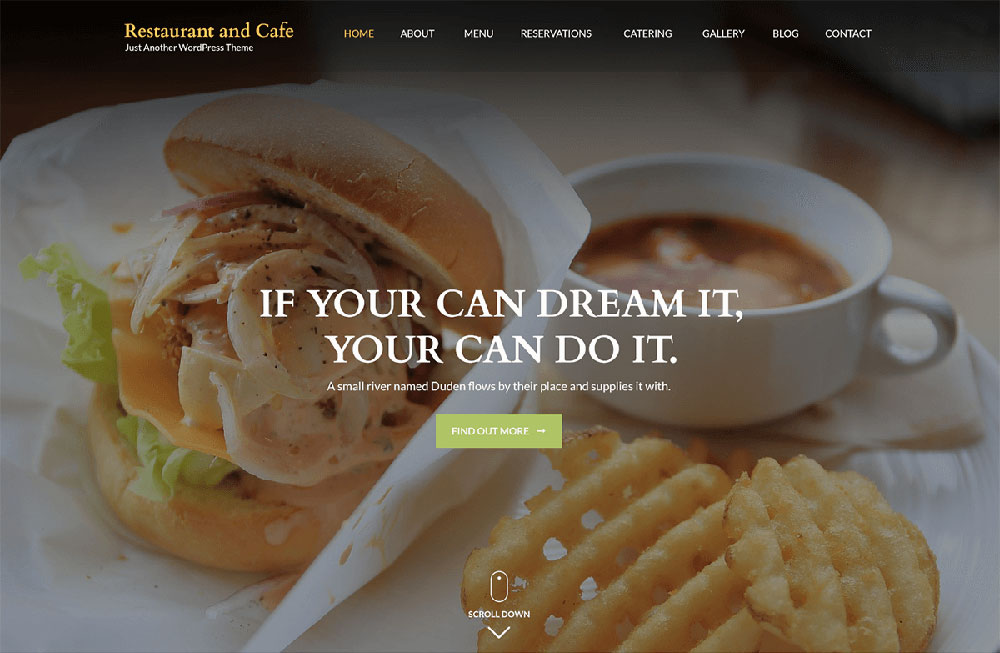
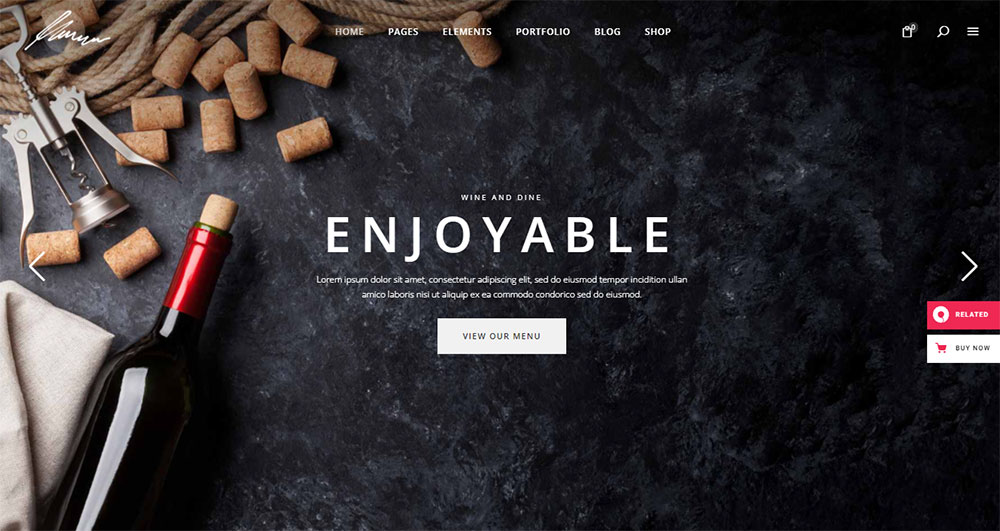
Restaurant WordPress themes include hero images for food photography, gallery layouts for menu items, table booking widgets, location maps with hours, online ordering integration, event calendars, chef profiles, customer testimonials, and mobile-responsive designs optimized for smartphone browsing during dining decisions.
A 2023 Toast study found 77% of diners check restaurant websites before visiting. 62% view menus online first.
Full-Width Hero Sections
Hero sections showcase signature dishes with high-resolution photography. The first impression happens in 0.05 seconds.
Parallax effects add depth without slowing load times. Similar techniques appear in animated landing page designs for conversion optimization.
Grid-Based Menu Layouts
Grid systems display food items with prices in scannable formats. Three-column layouts work best on desktop; single-column stacks for mobile.
Category filtering lets visitors jump to appetizers, entrees, desserts, or beverages. Dietary tags (vegan, gluten-free, halal) appear as visual badges.
Reservation Form Integration
Embedded booking forms connect to OpenTable, Resy, or TheFork through API integration. Custom forms collect party size, date, time, and special requests.
Confirmation emails include calendar attachments. SMS reminders reduce no-shows by 35% according to 2024 OpenTable data.
Location Maps and Hours
Google Maps embedding shows exact restaurant location with directions. Operating hours update automatically for holidays.
Click-to-call buttons convert mobile browsers into phone calls. LocalBusiness schema markup helps Google display accurate information in search results.
Menu Display Systems
How do WordPress themes handle digital menu presentation?
Restaurant themes provide menu builder plugins with custom post types, allowing categorization by meal period (breakfast, lunch, dinner), dietary restrictions (vegan, gluten-free, halal), pricing tiers, ingredient lists, allergen warnings, and nutritional information, all manageable through the WordPress dashboard without coding.
Custom menu post types differ from standard WordPress posts. They include fields for price, description, ingredients, and allergen data.
Category Filtering Systems
Menus organize into appetizers, entrees, desserts, and beverages through taxonomy structure. Visitors filter by dietary needs or meal type.
AJAX loading refreshes menu items without page reload. The user experience mirrors SaaS landing pages with smooth transitions.
Price Display Formats
Pricing shows as exact amounts ($12.99), ranges ($-$$$), or hidden for prix fixe menus. Multi-currency support converts USD to EUR or GBP automatically.
A la carte and tasting menu formats require different layouts. Template parts handle both structures within the same theme.
Seasonal Menu Rotation
Date-based visibility controls when menu items appear. Summer menus replace winter offerings on preset schedules.
Version control tracks menu changes over time. Restaurant managers revert to previous menus without rebuilding from scratch.
Reservation and Booking Integration
Which reservation systems work with restaurant WordPress themes?
WordPress restaurant themes integrate reservation platforms through plugins or APIs including OpenTable widgets, Resy embedded forms, SevenRooms booking systems, custom-built reservation forms with confirmation emails, SMS notifications, party size limits, time slot management, and deposit requirements for large groups.
Third-party platforms handle the heavy lifting. Themes just provide the interface.
Plugin Options
- Restaurant Reservations - Free plugin with basic booking
- Bookly - Premium with staff scheduling
- Amelia - Advanced with payment processing
- OpenTable widget - Direct integration
Custom forms built with Contact Form 7 or Gravity Forms work for simple setups. WooCommerce Bookings handles complex requirements like deposits and cancellations.
API Integration Methods
REST API connections sync reservations between WordPress and external platforms. Real-time availability prevents double-booking.
Webhook notifications trigger confirmation emails automatically. The technical setup mirrors what you'd see in B2B landing pages for lead capture.
Deposit Collection
Stripe and PayPal integrations collect deposits for parties over 6 people. Refund policies display during booking.
Minimum spend requirements for private dining rooms process through WooCommerce. The checkout flow needs to be as simple as possible to reduce abandonment.
Online Ordering Capabilities
Can restaurant themes handle takeout and delivery orders?
Modern restaurant WordPress themes connect with food ordering platforms (Uber Eats, DoorDash, Grubhub) through API integrations, or build custom ordering systems using WooCommerce with delivery zone mapping, minimum order amounts, tip calculations, preparation time estimates, and order status tracking.
Third-party platforms charge 15-30% commission per order. Native solutions keep revenue in-house but require more setup.
WooCommerce Product Variations
Menu items become WooCommerce products with variations for size, toppings, or sides. A pizza might have 12 different configurations.
Add-on plugins like Product Add-Ons or WooCommerce Customizer handle complex modifications. Customers build meals exactly how they want them.
Delivery Zone Mapping
Zip code validation confirms delivery availability before checkout. Zones define different delivery fees or minimum orders.
Distance calculations estimate delivery times. Real-time tracking shows order status from kitchen to doorstep, similar to logistics on SaaS websites.
Order Management Dashboards
Kitchen display systems receive orders instantly. Staff mark items as preparing, ready, or delivered.
Order history helps track popular items and peak hours. Analytics inform menu decisions and staffing needs.
Mobile Responsiveness for Restaurant Websites
Why does mobile optimization matter more for restaurant sites?
Google research shows 76% of smartphone users who search for nearby restaurants visit within 24 hours. Restaurant themes require click-to-call buttons, simplified navigation, fast-loading images, readable menu text on small screens, and location-based search optimization for local discovery.
Mobile visitors make decisions faster than desktop users. Load times under 2 seconds convert 40% better according to 2024 Cloudflare data.
Click-to-Call Functionality
Phone number links trigger dialers with one tap. No copying or manual input required.
The tel: protocol works across iOS and Android. Placement in headers and sticky menus keeps it accessible during scrolling.
Map Integration
Embedded Google Maps open native apps (Google Maps, Apple Maps) for turn-by-turn directions. Users navigate from search to parking in seconds.
Location coordinates in schema markup help Google show restaurant pins in local pack results. Similar geographic optimization appears in real estate landing pages.
Image Optimization
WebP format reduces file sizes by 30% versus JPEG without quality loss. Lazy loading defers below-fold images until users scroll.
Srcset attributes serve different image sizes based on screen width. A 1200px hero image shrinks to 400px on phones automatically.
Touch-Friendly Elements
Buttons measure 44x44 pixels minimum for easy tapping. Spacing between clickable elements prevents mis-clicks.
Swipeable galleries let users browse menu photos with thumb gestures. The interaction patterns match what people expect from mobile first design principles.
WordPress Theme Selection Criteria
What factors determine the best restaurant theme choice?
Restaurant owners evaluate themes based on demo content quality, page builder compatibility (Elementor, WPBakery, Gutenberg), update frequency from developers, customer support response times, loading speed benchmarks, price (free vs. premium $30-$100), and refund policies.
Demo Content Assessment
One-click demo import saves hours of manual setup. Pre-built pages for menus, reservations, and contact reduce development time.
Demo similarity to your restaurant style matters. Italian trattorias need different layouts than sushi bars or food trucks.
Developer Update History
Themes updated within the last 3 months stay compatible with WordPress 6.0+. Check ThemeForest or WordPress.org changelog dates.
Abandoned themes create security risks. PHP version conflicts break sites during hosting updates.
Documentation Quality
Video tutorials beat text guides for visual learners. Step-by-step setup instructions with screenshots reduce support tickets.
Knowledge bases covering common issues (menu import, reservation setup, schema configuration) save time. Poor documentation means hours lost troubleshooting.
Pricing Models
- Free themes - Limited features, community support
- $30-$60 - Single site license, 6-12 months support
- $60-$100 - Unlimited sites, lifetime updates
Extended licenses cost more but allow client work. Regular licenses restrict use to one website.
Page Builder Compatibility
Which page builders work best with restaurant themes?
Elementor dominates with 63% market share in 2024, followed by WPBakery, Beaver Builder, and Gutenberg block editor. Elementor provides drag-and-drop customization, pre-designed restaurant blocks, menu widgets, and mobile editing capabilities.
Elementor Advantages
100+ food and restaurant widgets include menu grids, reservation forms, chef profiles, and testimonial carousels. Theme Builder controls headers, footers, and archive layouts.
Motion effects add parallax scrolling and animations without code. Mobile editing adjusts layouts specifically for smartphones.
WPBakery Features
Backend and frontend editing modes suit different workflows. Backend editor shows raw structure; frontend displays live preview.
Template system saves reusable content blocks. Menu sections built once deploy across multiple pages instantly.
Gutenberg Integration
Native WordPress integration means no plugin dependencies. Block patterns create complex layouts from preset combinations.
FSE (Full Site Editing) controls entire site design through block interface. Growing adoption mirrors shift toward simplified tools like those in website design ideas.
Beaver Builder Benefits
Developer-friendly hooks and filters allow custom functionality. Clean code output improves site speed versus bloated builders.
Multisite compatibility lets restaurant chains deploy identical designs across locations. White-label options hide branding for agencies.
Performance Optimization for Restaurant Sites
How fast should a restaurant WordPress site load?
Google recommends restaurant websites load under 2.5 seconds for Largest Contentful Paint (LCP). Achieve this through image compression, lazy loading, CDN implementation, caching plugins (WP Rocket, W3 Total Cache), database optimization, and minimal JavaScript execution.
Image Compression Tools
ShortPixel and Imagify compress uploads automatically. Bulk optimization processes existing media libraries in minutes.
Lossy compression reduces file sizes 60-80% with barely noticeable quality changes. Lossless maintains perfect quality at 20-30% reduction.
CDN Implementation
Cloudflare or BunnyCDN serve assets from servers nearest to visitors. A Tokyo user loads images from Asian servers instead of US hosting.
Global distribution cuts latency by 40-70%. Free Cloudflare plans work for most restaurants; premium adds image optimization.
Caching Strategies
WP Rocket generates static HTML versions of dynamic pages. Servers deliver cached files instead of processing PHP repeatedly.
Browser caching stores assets locally for returning visitors. Page loads drop from 3 seconds to 0.8 seconds on subsequent visits.
Database Optimization
Post revisions, spam comments, and transients bloat databases over time. WP-Optimize cleans unnecessary data monthly.
Query optimization reduces database calls. Poorly coded plugins making 50+ queries per page load cripple performance.
Schema Markup for Restaurant Websites
What structured data helps restaurants rank locally?
Restaurant schema markup includes LocalBusiness type with address, phone, hours, price range, accepted payment methods, Menu schema for dish listings, Review aggregation for star ratings, and Reservation action markup enabling Google Search booking directly from results.
LocalBusiness Schema
FoodEstablishment subtype specifies restaurant classification. ServesCuisine property lists Italian, Japanese, Mexican, or other categories.
PriceRange ($, $$, $$$) sets diner expectations. AcceptsReservations boolean tells Google if booking is available.
Menu Schema Implementation
MenuItem schema defines individual dishes with name, description, price, and nutrition info. HasMenu property links to full menu pages.
Offers schema shows availability (InStock, OutOfStock) and special pricing. Limited-time dishes display end dates automatically.
Review Aggregation
AggregateRating displays star counts in search snippets. Rating value, review count, and best/worst ratings create rich results.
Individual Review schema from customers adds credibility. Google extracts author names, dates, and review text for Knowledge Panels.
Event Schema
Special dinners, wine tastings, and cooking classes qualify as Event type. Start/end times, location, and ticket pricing appear in Google Events.
Offers schema within events handles ticket sales. The structured approach parallels event landing pages optimized for conversions.
Internal Linking Strategy
How should restaurant WordPress sites link internally?
Hub-and-spoke architecture connects main theme page to supporting content. Specific anchor text (WordPress reservation systems) outperforms generic phrases (click here).
Hub Page Structure
Main restaurant theme guide serves as hub. Spokes cover menu plugins, reservation systems, mobile optimization, schema implementation, and hosting recommendations.
Contextual links from related sections only. Menu display section links to menu plugins; reservation section links to booking systems.
Anchor Text Variation
Exact match anchors mixed with partial matches and branded terms. "Elementor page builder" and "drag-and-drop builders like Elementor" both target the same page.
Over-optimization with identical anchors triggers spam filters. Natural variation mimics how real sites link organically.
Depth Distribution
Important pages sit 1-2 clicks from homepage. Deep pages (4+ clicks) receive less authority and fewer visits.
Breadcrumb navigation and footer links provide multiple paths to key content. Users and crawlers both benefit from redundant access.
FAQ on Restaurant WordPress Themes
Do free restaurant WordPress themes work as well as premium options?
Free themes provide basic layouts and menu displays but lack premium features like advanced reservation systems, WooCommerce integration, priority support, and regular updates. Premium themes ($30-$100) include Elementor compatibility, one-click demo import, and dedicated customer support for technical issues.
Which page builder works best with restaurant themes?
Elementor dominates restaurant theme development with 63% market share, offering 100+ food-specific widgets, mobile editing, and drag-drop customization. WPBakery and Gutenberg provide alternatives, but Elementor's template library and motion effects suit restaurant sites better for visual impact.
Can restaurant themes handle multiple locations?
Multisite-compatible themes manage chain restaurants through WordPress multisite network. Each location gets unique menus, hours, and contact info while sharing the same design. Custom post types organize location-specific content. Schema markup differentiates each branch for local search results.
How do restaurant themes integrate with delivery platforms?
Themes connect to Uber Eats, DoorDash, and Grubhub through API integrations or embed widgets. Native solutions use WooCommerce with delivery zone mapping, minimum order amounts, and tip calculations. Third-party platforms charge 15-30% commission; custom systems keep revenue in-house.
What loading speed should restaurant websites target?
Google recommends Largest Contentful Paint under 2.5 seconds for good user experience. Restaurant sites achieve this through image compression (WebP format), lazy loading, CDN implementation (Cloudflare, BunnyCDN), caching plugins like WP Rocket, and minimal JavaScript execution for mobile devices.
Do restaurant themes include menu management systems?
Premium themes provide custom post types for menu items with fields for price, description, ingredients, allergens, and dietary tags. Category filtering organizes dishes by meal period (breakfast, lunch, dinner) or type (appetizers, entrees, desserts). Seasonal rotation schedules items automatically.
Which reservation plugins work with restaurant themes?
OpenTable widgets, Restaurant Reservations plugin, Bookly, and Amelia integrate with most themes. Custom forms built with Gravity Forms or Contact Form 7 handle basic bookings. Advanced systems require deposit collection through Stripe, party size limits, and SMS confirmation notifications.
How important is mobile optimization for restaurant sites?
Critical. 76% of smartphone users who search nearby restaurants visit within 24 hours according to Google research. Mobile themes need click-to-call buttons, fast-loading images under 2 seconds, readable menu text, simplified navigation, and responsive website design for conversion optimization.
What schema markup do restaurant websites need?
LocalBusiness schema with FoodEstablishment subtype includes address, phone, hours, price range, and accepted payments. Menu schema defines individual dishes. AggregateRating displays star reviews in search results. Reservation action markup enables Google Search booking directly from snippets.
Can restaurant themes sell gift certificates or merchandise?
WooCommerce integration handles gift certificate sales, branded merchandise, cooking class tickets, and catering deposits. Product variations manage different denominations or sizes. Digital gift certificates send automatically via email. Physical products require shipping zones and inventory tracking through WooCommerce settings.
Conclusion
Choosing the right restaurant WordPress themes affects everything from table turnover rates to online ordering revenue.
The best templates combine WooCommerce integration for delivery systems, OpenTable compatibility for reservations, and Elementor page builder flexibility for menu customization without coding knowledge.
Performance matters more than aesthetics. Largest Contentful Paint under 2.5 seconds, mobile-responsive layouts, and LocalBusiness schema markup determine whether Google shows your restaurant to hungry searchers within their delivery radius.
Premium themes ($30-$100) justify their cost through dedicated support, regular WordPress 6.0+ compatibility updates, and one-click demo import that saves development hours.
Free options work for basic cafes or bakeries testing WordPress before committing to paid solutions.
Your theme choice should match your restaurant type, fine dining establishments need different layouts than food trucks or catering services, and support growth from single location to multisite networks.