

Unique WordPress Themes That You Must Check Out
May 22, 2026
How to edit the WordPress excerpt length easily
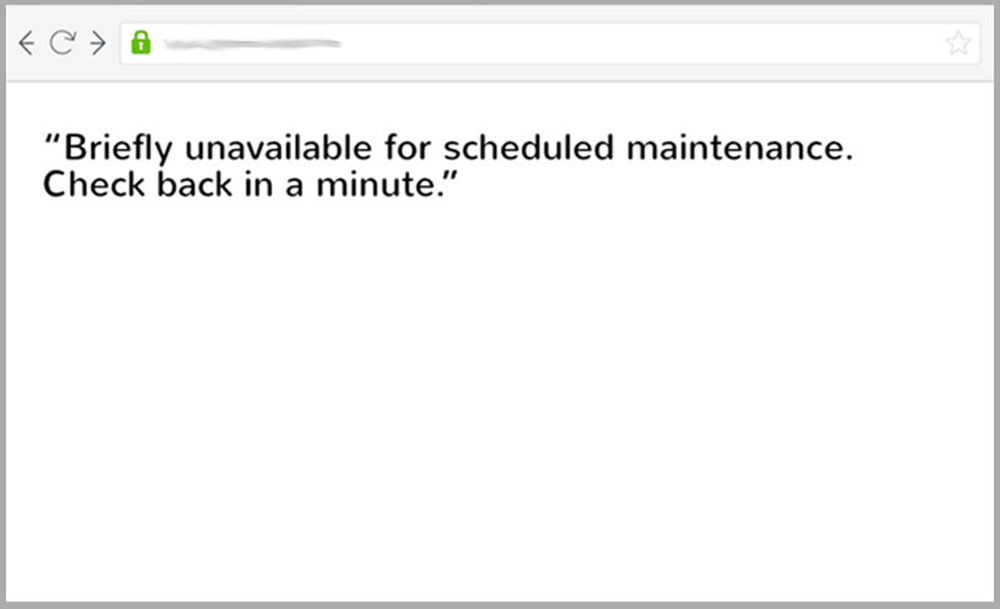
May 24, 2026Your site is down. Visitors see "Briefly unavailable for scheduled maintenance" and you have no idea why the update did not finish.
This happens because WordPress creates a .maintenance file during every update. If the process is interrupted, that file never gets deleted and your site stays locked.
Knowing how to fix WordPress stuck in maintenance mode takes less than five minutes once you understand what actually caused it.
This guide covers:
- What the
.maintenancefile is and where to find it - How to delete it via FTP, cPanel, or SSH
- How to fix the PHP memory limit issues behind most failures
- What the 503 status code means for your SEO
What Is WordPress Maintenance Mode?
WordPress maintenance mode is a built-in protection mechanism that takes your site offline during update processes. When a core update, plugin update, or theme update starts, WordPress creates a file called .maintenance in the root directory, the same folder that holds wp-config.php and wp-login.php. That file triggers the "Briefly unavailable for scheduled maintenance. Check back in a minute." message for all visitors.
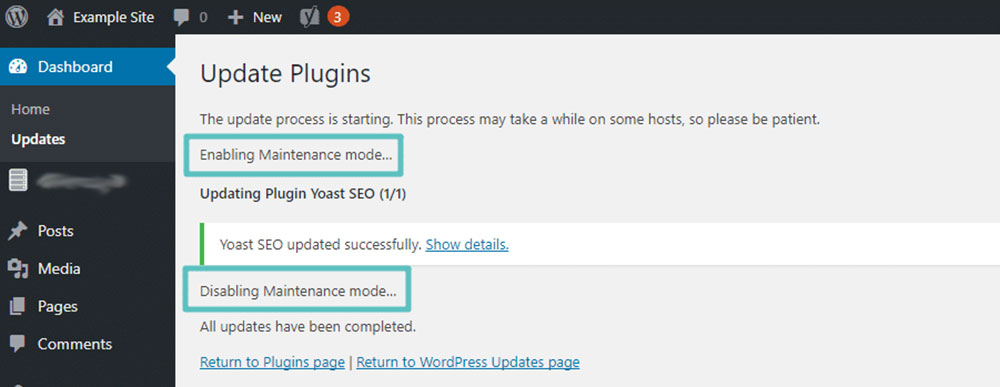
Under normal conditions the whole thing lasts a few seconds. The WP_Upgrader class runs the update, finishes, and deletes the .maintenance file automatically.
WordPress powers 43.4% of all websites on the internet as of 2025 (W3Techs), which means this mechanism runs billions of times every year across the web. Most users never see it. The problem starts when something goes wrong mid-update and the cleanup step never runs.
The file itself is a plain PHP snippet: . That timestamp tells WordPress when maintenance started. The site stays locked until the file is deleted, whether that happens automatically or manually.
What Causes WordPress to Get Stuck in Maintenance Mode?
The update process interrupts before cleanup. That is the short answer. The specific trigger matters because it determines whether you need to fix only the .maintenance file or also address something deeper.
| Cause | What happens | How common |
|---|---|---|
| Browser closed mid-update | Update script orphaned, cleanup skipped | Very common |
| Server timeout | PHP execution limit reached before update finishes | Common on shared hosting |
| PHP memory limit hit | Default 64MB on shared hosts exhausted by large plugin | Common |
| Simultaneous "Update All" | Multiple update cycles overlap and conflict | Moderate |
| Corrupted update package | Update fails silently without clearing the file | Less common |
A WordPress site running 30 or more plugins has significantly more chances of update conflicts than a lean, curated install (Seahawk Media, 2025). Bulk updating everything at once multiplies that risk because each plugin triggers its own brief update cycle, and overlapping cycles create timing conflicts.
Core update failures are more serious than plugin failures. During a core update, WordPress replaces its own files. A failure mid-process can leave some files partially replaced, which puts the installation in an unstable state even after maintenance mode clears.
How Do You Delete the .maintenance File Manually?
Deleting the .maintenance file from the WordPress root directory resolves the stuck state in the vast majority of cases. The file is hidden by default on Linux servers because filenames starting with a period are treated as system files.
You can do this through 2 tools: FTP via FileZilla, or your hosting control panel's file manager. Both work. FTP is faster if you already have credentials set up.
How to Delete the .maintenance File via FTP
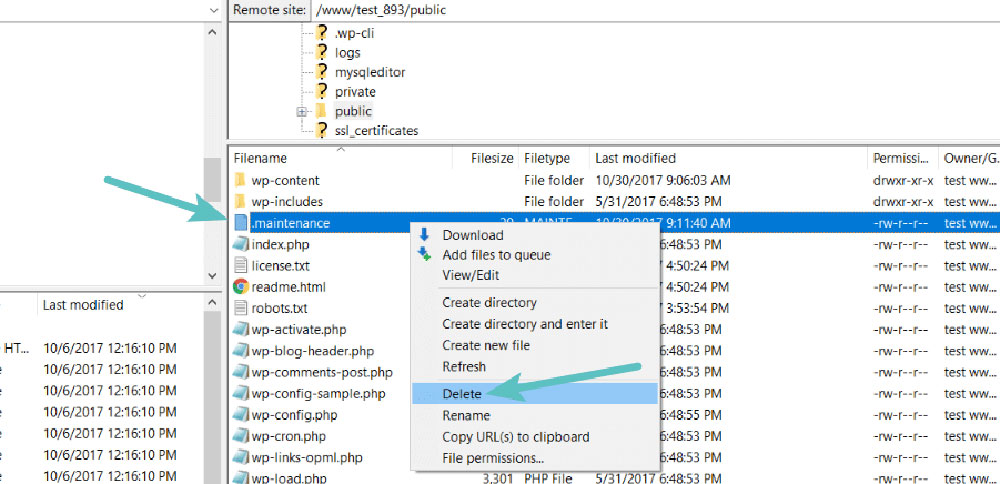
Connection setup: Open FileZilla and connect using your FTP credentials from your hosting account.
- Go to Edit > Settings > Directory Listing and enable "Show hidden files"
- Navigate to your WordPress root directory
- Locate the
.maintenancefile at the same level aswp-config.php - Right-click and delete it
- Reload your site to confirm maintenance mode is gone
If you cannot find a good FTP client for your system, FileZilla is free and works on all major operating systems.
Do not rename the file. Delete it entirely. Renaming leaves a modified file that WordPress may still detect.
How to Delete the .maintenance File via cPanel File Manager
Access path: Log in to your hosting dashboard, open cPanel, and go to File Manager.
- Click Settings in File Manager and check "Show Hidden Files"
- Navigate to the public\_html folder (your WordPress root)
- Find
.maintenanceand right-click to delete - Confirm deletion and reload the frontend
SiteGround, WP Engine, Kinsta, and Cloudways all provide direct file manager access from their own dashboards. The location varies slightly by host but the process is the same.
How Do You Access Your Site When Locked Out of wp-admin?
WordPress maintenance mode blocks the frontend and wp-admin equally. You cannot log in through the browser to fix the issue from inside the dashboard. The fix has to happen at the file level.
3 access methods bypass the admin lockout entirely:
- FTP via FileZilla - connects directly to server files without going through WordPress
- cPanel or hosting file manager - browser-based file access from your hosting account
- SSH command line - run
rm /path-to-root/.maintenancefor the fastest resolution
phpMyAdmin is not relevant here. The stuck maintenance mode issue is entirely file-based, not database-based. Accessing the database will not clear it.
If you are locked out of WordPress for a reason beyond maintenance mode, such as a forgotten password or corrupted login, the fix path is different and requires database access via phpMyAdmin.
For users on managed hosts, the hosting dashboard itself often includes a one-click file manager that requires no separate FTP setup. This is the fastest option if you do not have FileZilla credentials ready.
What to Check After Deleting the .maintenance File?
Deleting the file restores site access. That does not mean the update that triggered maintenance mode actually completed. Skipping this verification step is a mistake I have seen cause problems more than once.
98% of organizations report that even a single hour of downtime costs over $100,000 (ITIC, 2024). For smaller WordPress sites the numbers are lower, but returning to an incomplete update state creates its own risks including plugin conflicts, security gaps, and broken functionality.
Verify Update Completion
Check Dashboard > Updates for any items still flagged as pending or failed.
Compare the version numbers shown for plugins, themes, and WordPress core against the expected update targets. A failed update shows the old version number.
Look specifically for update failure notices displayed at the top of the Dashboard. WordPress surfaces these as red admin notices when an update did not complete cleanly.
Clear All Cache Layers
Caching plugins including WP Rocket, W3 Total Cache, LiteSpeed Cache, and WP Super Cache can serve a stored HTML version of the maintenance page even after the .maintenance file is gone. Clear all cache layers before testing.
- Plugin-level cache: use the plugin's own "Clear Cache" button
- Server-level cache: available in hosting dashboards on Kinsta, WP Engine, and Cloudways
- CDN cache: Cloudflare and Fastly require a manual cache purge from the CDN dashboard
- Browser cache: hard refresh using Ctrl+Shift+R (Windows) or Cmd+Shift+R (Mac)
Some CDNs cache 503 responses for several minutes after the actual issue is resolved. If your site still shows the maintenance page after deleting the file, CDN cache is the most likely reason.
How Do You Fix PHP Memory Limit Issues That Cause Stuck Maintenance Mode?
A low PHP memory limit is one of the most common reasons update scripts die before cleanup runs, leaving the .maintenance file behind. The default memory limit on many shared hosting environments is 64MB, which is not enough for large plugin or theme updates.
Increasing the limit to at least 256MB resolves this in most cases. WordPress itself recommends 256MB as the minimum for sites with active plugins (WordPress.org documentation).
How to Increase PHP Memory Limit in wp-config.php
Add this line to wp-config.php, above the "That's all, stop editing" comment:
define('WP_MEMORY_LIMIT', '256M');Save the file and run the failed update again. Check the current active limit first using WP-CLI:
wp eval 'echo WP_MEMORY_LIMIT;'This confirms the new limit took effect before you retry the update. If the value still shows 64M after editing wp-config.php, your hosting provider may be overriding it via php.ini or server-level configuration. In that case, contact your host directly or edit php.ini if your plan allows it.
Hosts like Kinsta and WP Engine set PHP memory at 256MB by default, which is why maintenance mode timeout issues are far less common on managed platforms than on shared hosting.
For a more detailed walkthrough on adjusting limits and related memory errors, the guide on WordPress memory limit configuration covers all 3 methods including wp-config.php, php.ini, and .htaccess.
How Do You Prevent WordPress From Getting Stuck in Maintenance Mode?
4 practices reduce recurrence to near zero. None of them require technical expertise beyond basic WordPress admin access.
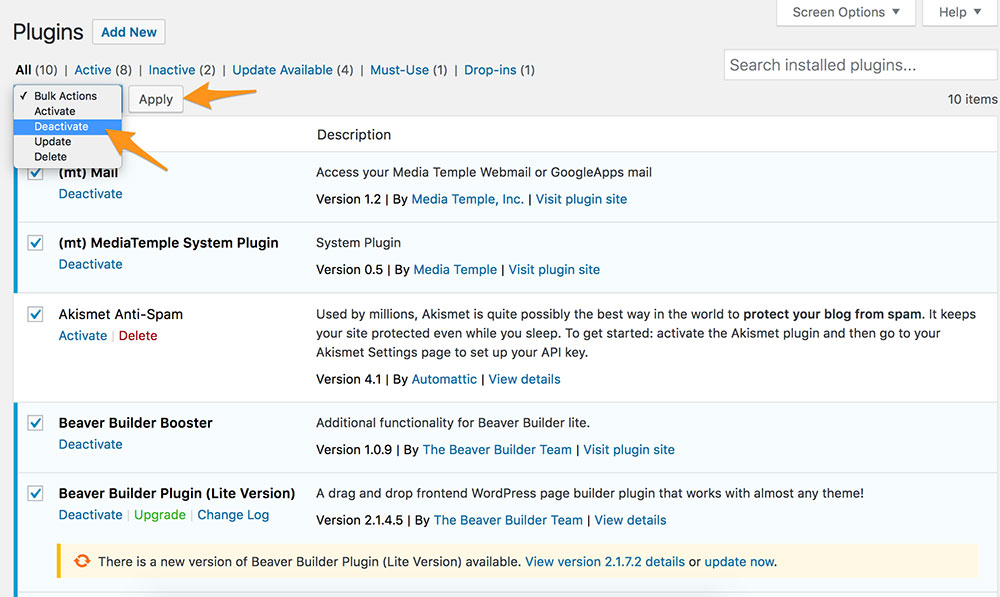
Update plugins one at a time instead of using "Update All." Each plugin initiates its own update cycle. Running them simultaneously creates overlapping processes and multiplies timeout risk.
Increase PHP memory and max execution time before running large updates. The max execution time setting (max_execution_time in php.ini) is as important as memory for large plugin packages. A 30-second execution limit can kill an update that needs 45 seconds to complete.
Use a staging environment before pushing updates to production. WP Engine, Kinsta, Cloudways, and the WP Staging plugin all provide staging options. Testing a plugin update on staging first catches conflicts before they affect live visitors.
Back up before every update session. UpdraftPlus and Jetpack Backup both run pre-update backups automatically. A full backup means a stuck maintenance mode with a failed core update is recoverable in minutes rather than hours.
On top of these, reading the changelog before any major plugin update takes 60 seconds and flags breaking changes before they cause problems. Plugin developers document compatibility issues and breaking changes there, yet most WordPress users never check it.
If you want to learn how to back up a WordPress site properly before running updates, doing so covers both the database and all core files, giving you a complete restore point.
How Does WP-CLI Fix Stuck Maintenance Mode?
WP-CLI is the command-line interface for WordPress. It runs maintenance mode fixes in seconds without touching a file manager or FTP client, which makes it the preferred method for developers managing multiple WordPress installs.
Most managed hosts including Kinsta, WP Engine, Cloudways, and Pressable ship WP-CLI pre-installed. On shared hosts it may require manual setup, but the fix itself is a single command.
WP-CLI Deactivate Command
Primary command:
wp maintenance-mode deactivateThis clears maintenance mode directly through the WordPress API without requiring you to locate or delete the .maintenance file manually.
If that command returns an error, run the shell fallback instead:
rm /path-to-wordpress-root/.maintenanceBoth achieve the same result. The WP-CLI route is cleaner on managed platforms where direct SSH access to the filesystem may be restricted.
Running Clean Updates via WP-CLI
Update all plugins without triggering stuck states:
wp plugin update --allWP-CLI handles each plugin update sequentially rather than in parallel, which eliminates the overlapping update cycle problem that causes maintenance mode to persist on bulk dashboard updates.
Check the current PHP memory limit before running large updates:
wp eval 'echo WP_MEMORY_LIMIT;'If this returns 64M, increase the limit in wp-config.php first. Running a large plugin update against a 64MB memory ceiling is a reliable way to reproduce the stuck maintenance mode problem.
The WordPress updating failed error and stuck maintenance mode often share the same root cause: insufficient memory or a server timeout during the update process. Fixing the memory limit resolves both.
Do WordPress Caching Plugins Extend Maintenance Mode Visibility?
Deleting the .maintenance file does not always clear the maintenance screen immediately. Caching plugins serve stored HTML versions of pages, which means visitors can still see the maintenance message after the file is gone.
This catches a lot of people off guard. The fix is correct, but the cache makes it look like nothing changed.
| Cache Layer | Plugin / Service | How to Clear |
|---|---|---|
| Plugin cache | WP Rocket, W3 Total Cache, LiteSpeed Cache, WP Super Cache | Use the plugin's "Clear Cache" button |
| Server cache | Kinsta, WP Engine, Cloudways dashboards | Clear from hosting dashboard |
| CDN cache | Cloudflare, Fastly | Manual purge from CDN dashboard |
| Browser cache | Chrome, Firefox, Safari | Ctrl+Shift+R (Win) / Cmd+Shift+R (Mac) |
CDN Cache and 503 Response Storage
503 responses can be cached by CDNs for minutes after the underlying issue is resolved.
Cloudflare in particular caches error responses depending on your cache rules configuration. If the maintenance screen persists after all plugin caches are cleared, log into the Cloudflare dashboard and trigger a full cache purge from the Caching tab.
Fastly behaves similarly. A manual purge via the Fastly control panel is required rather than waiting for the TTL to expire naturally.
WP Rocket Cache Behavior During Maintenance
WP Rocket stores full-page HTML files in the wp-content/cache/wp-rocket/ directory.
The plugin serves these files directly without invoking PHP, meaning it bypasses the WordPress update detection entirely. A cached maintenance page in that directory stays visible until the cache is explicitly cleared.
Quickest fix: Go to WP Rocket settings and click "Clear and Preload Cache." This regenerates all cached files from the live site, replacing the stored maintenance HTML immediately.
What Is the .maintenance File and Where Is It Located?
The .maintenance file is a plain PHP file that WordPress creates automatically at the start of every update process. Its sole purpose is to trigger the maintenance screen for all visitors while the update runs.
The file contains one line: <?php $upgrading = [Unix timestamp]; ?>
That timestamp records when maintenance started. WordPress checks for this file on every page request. If it exists, the WP_Upgrader class serves the maintenance template instead of the normal site content, regardless of what page the visitor requested.
File Location and Hidden Status
Location: WordPress root directory, same level as wp-config.php, wp-login.php, and wp-cron.php.
The file is hidden by default on Linux servers because any filename starting with a period is treated as a system file. File managers and FTP clients do not show it unless you explicitly enable "show hidden files" in the settings.
- FileZilla: Edit > Settings > Directory Listing > check "Show hidden files"
- cPanel File Manager: Settings > check "Show Hidden Files (dotfiles)"
How WordPress Creates and Deletes It
The WP_Upgrader class in WordPress core handles both creation and deletion.
Creation step: Called at the start of any update. The file is written before a single byte of the new plugin, theme, or core package is extracted.
Deletion step: Called after the update completes and all files are in place. If the script dies before reaching this step, the deletion never runs and the file stays.
This is why stuck maintenance mode is almost always a sign that something stopped the update mid-process, not a sign that maintenance mode itself is broken.
Related errors that follow the same pattern include the "another update is currently in progress" message, which means the core_updater.lock database entry was not cleared after a failed core update.
Does Maintenance Mode Affect SEO Rankings?
WordPress maintenance mode returns a 503 HTTP status code with a Retry-After header. This tells Googlebot the unavailability is temporary and instructs it to come back later rather than treating the page as permanently gone.
Short outages do not cause lasting ranking damage. The duration is what determines actual SEO risk.
| Downtime Duration | Googlebot Behavior | SEO Risk |
|---|---|---|
| Under 15 minutes | Retries on next crawl cycle | None |
| 1 to 24 hours | Reduces crawl rate temporarily | Minimal |
| 1 to 7 days | Crawl rate drops, pages may exit index | Moderate |
| 7+ days | Pages deindexed until site recovers | High |
Google's Gary Illyes confirmed in the April 2024 Google Search Central SEO Office Hours that serving 503 for short periods is "not extended by any means" and poses no crawling risk. Extended 503 downtime is where the problem starts.
What Google Search Console Shows After Stuck Maintenance Mode
After resolving the stuck maintenance mode issue, check the Coverage report in Google Search Console for any 503 crawl errors logged during the outage.
Short outage (under 4 hours): GSC may show 503 errors but no ranking impact is expected. Errors typically clear within the next crawl cycle.
Longer outage (24 hours or more): GSC Coverage report will surface affected URLs as crawl anomalies. Resubmit affected URLs via the URL Inspection tool to prompt faster recrawling.
The 503 status code paired with a Retry-After header is the correct implementation. WordPress maintenance mode sends both automatically, which is why a properly resolved stuck maintenance mode issue leaves no lasting SEO trace for most sites.
How to Check if Rankings Were Affected
Google Search Console's Performance report shows traffic drops by date. Compare the period during which the site was in maintenance mode against the 7 days before and after.
- Filter by "Date" to isolate the affected window
- Check "Pages" tab for URLs with sudden impression drops
- Use URL Inspection on the top 5 affected pages to trigger recrawl requests
A ranking dip following a short maintenance mode outage typically reverses within 2 to 4 crawl cycles. No manual action beyond URL resubmission is needed for outages under 24 hours, according to documented Googlebot behavior (ClickMinded, 2025).
For context on related WordPress errors that also produce 503-type behavior, the guide on WordPress briefly unavailable for scheduled maintenance covers the same .maintenance file mechanism in more detail, including how the Retry-After header is set by default.
FAQ on How To Fix WordPress Stuck In Maintenance Mode
How do I fix WordPress stuck in maintenance mode?
Delete the .maintenance file from your WordPress root directory via FTP or cPanel File Manager. The file sits at the same level as wp-config.php. Enable "show hidden files" first, then delete it. Reload your site to confirm.
Where is the .maintenance file located?
The .maintenance file lives in the WordPress root directory, the same folder as wp-config.php and wp-login.php. It is hidden by default on Linux servers. You must enable hidden file visibility in FileZilla or cPanel File Manager to see it.
Why does WordPress get stuck in maintenance mode after a plugin update?
The update script was interrupted before cleanup ran. Common triggers include a browser tab closed mid-update, a PHP memory limit exhausted on shared hosting, or a server timeout. The .maintenance file stays behind because the WP_Upgrader class never reached the deletion step.
Can I fix stuck maintenance mode without FTP?
Yes. Use your hosting control panel's built-in file manager to delete the .maintenance file. SiteGround, Kinsta, WP Engine, and Cloudways all provide direct file access from their dashboards. SSH access via the command rm .maintenance is the fastest option if available.
Does being stuck in maintenance mode hurt SEO?
Not for short outages. WordPress serves a 503 status code with a Retry-After header, which tells Googlebot the downtime is temporary. Google's Gary Illyes confirmed in April 2024 that brief 503 windows cause no crawling risk. Outages exceeding 24 to 48 hours carry real deindexing risk.
Why is my site still showing maintenance mode after I deleted the .maintenance file?
Your caching plugin is serving a stored HTML version of the maintenance page. Clear cache in WP Rocket, W3 Total Cache, or LiteSpeed Cache immediately after deleting the file. Also purge your CDN cache in Cloudflare or Fastly, and do a hard browser refresh.
How do I fix WordPress maintenance mode using WP-CLI?
Run wp maintenance-mode deactivate via SSH. If that returns an error, run rm /path-to-root/.maintenance directly. WP-CLI is available on Kinsta, WP Engine, Cloudways, and Pressable by default. It is faster than FTP for developers managing multiple WordPress installs.
What causes the PHP memory limit to trigger stuck maintenance mode?
Many shared hosts set the default PHP memory limit at 64MB. Large plugin or theme updates exhaust that limit mid-process, killing the update script before cleanup. Add define('WP_MEMORY_LIMIT', '256M'); to wp-config.php to resolve it before retrying the update.
Is WordPress maintenance mode the same as the "another update is currently in progress" error?
No. Stuck maintenance mode is caused by a leftover .maintenance file in the root directory. The "another update is currently in progress" error is a database lock stored in the core_updater.lock option in the wp_options table. Both follow failed updates but require different fixes.
How do I stop WordPress from getting stuck in maintenance mode again?
Update plugins one at a time instead of using "Update All." Increase your PHP memory limit and max execution time before large updates. Use a staging environment to test updates before applying them to production. Back up with UpdraftPlus before every update session.
Conclusion
This conclusion is for an article presenting every practical method to remove WordPress stuck in maintenance mode, from deleting the .maintenance file via cPanel or FileZilla to running wp maintenance-mode deactivate through WP-CLI.
Most cases come down to one orphaned file. Delete it, clear your cache layers, and the site recovers in under five minutes.
For recurring failures, the fix goes deeper. Raising the PHP memory limit to 256MB in wp-config.php and updating plugins one at a time eliminates the two most common root causes.
The 503 status code WordPress returns during a stuck update is temporary by design. Googlebot treats it that way, so short outages leave no lasting crawl or ranking damage.
Back up before every update session. It turns any worst-case scenario into a five-minute restore.