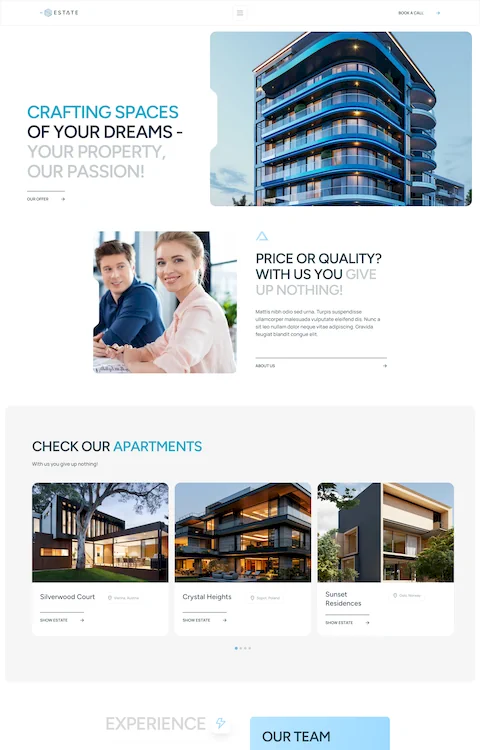


Architect WordPress Themes to Use for Great Portfolios
June 10, 2026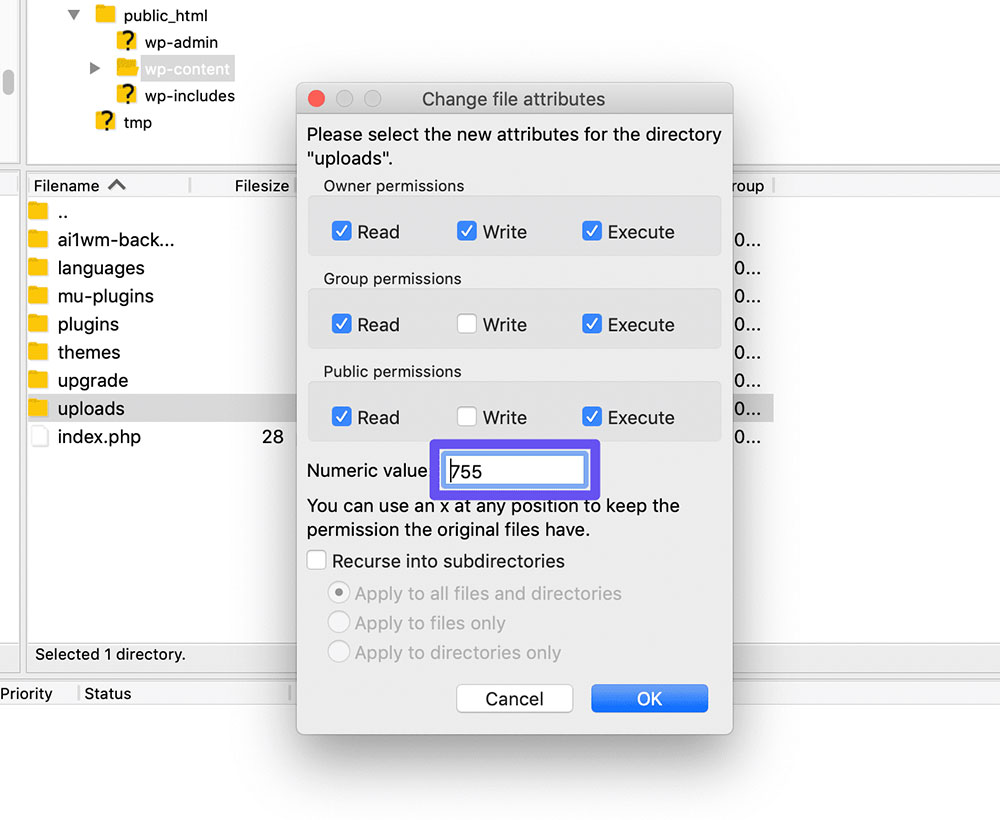
How To Solve The Failed To Open Stream Error In WordPress
June 15, 2026Your site looks fine to visitors, but the browser console tells a different story.
The failed to load resource error in WordPress shows up quietly in Chrome DevTools or Firefox Developer Tools, flagging missing CSS files, broken JavaScript, undelivered images, or blocked fonts with a 404, 403, or ERR_BLOCKED_BY_CLIENT status code.
Left unfixed, these broken assets affect how your pages render, how plugins behave, and how search engines crawl your site.
This guide covers every root cause and its fix, including URL mismatches, wrong file permissions, plugin conflicts, CDN cache issues, mixed content errors, and browser-side blocking.
What Is the Failed to Load Resource Error in WordPress?
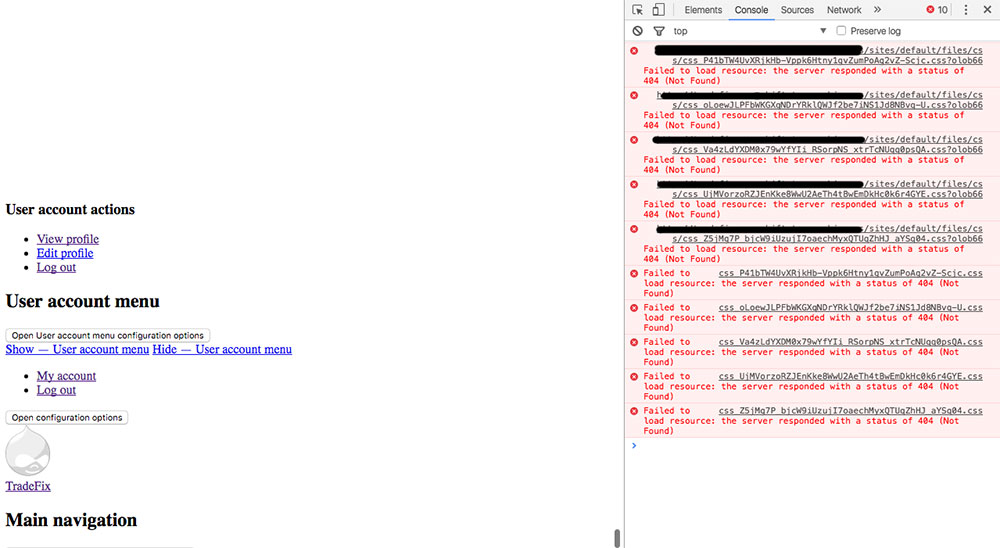
The failed to load resource error is a browser-level console message, not a WordPress admin notice. It appears inside Chrome DevTools or Firefox Developer Tools when the browser sends a request for a file and gets back a failure response instead of the file itself.
This is not a single error. It is a category of errors. The browser console error string changes depending on what went wrong at the network level.
Over 37% of WordPress users have encountered this error on their site at some point (Ricky Spears, 2023). That number holds up in practice. It is one of the most common browser console errors reported on WordPress sites.
The error does not always break visible page functionality. A broken JavaScript file may silently fail while the page still renders. That is why developers often miss it until something else stops working.
What Does This Error Look Like in the Browser Console?
Open DevTools with F12, then click the Console tab. The 3 most common error strings you will see:
- 404 variant: Failed to load resource: the server responded with a status of 404
- 403 variant: Failed to load resource: the server responded with a status of 403
- Blocked variant: Failed to load resource: net::ERR_BLOCKED_BY_CLIENT
Each string maps to a different root cause. The status code in the message tells you where to start looking.
What File Types Trigger This Error in WordPress?
Any file the browser requests can trigger this. In WordPress, 4 file types account for most cases: CSS stylesheets, JavaScript files, images (JPG, PNG, WebP, SVG), and web fonts loaded via @font-face or a CDN.
Plugin and theme assets sit inside /wp-content/plugins/ and /wp-content/themes/. When a plugin update removes or renames a file without updating the path reference, the browser still requests the old URL and gets a 404.
What Causes the Failed to Load Resource Error in WordPress?
There are 6 root causes that cover the majority of failed to load resource errors in WordPress. Matching your situation to the right cause saves significant diagnostic time.
| Cause | Error Type | Most Common Trigger |
| Missing or deleted file | 404 | Plugin/theme update removes an asset |
| Incorrect file path | 404 | WordPress URL mismatch in Settings |
| Wrong file permissions | 403 | Server blocks read access to file |
| Browser or ad blocker | ERR_BLOCKED_BY_CLIENT | Script filename matches block list pattern |
| CDN or cache serving stale path | 404 | Cached URL points to file that no longer exists |
| SSL / mixed content | Blocked (mixed content) | HTTPS page loads HTTP resource |
Plugin vulnerabilities account for 96% of all disclosed WordPress vulnerabilities in 2024 (Wordfence Annual Report, 2024). Poorly coded plugins are also the most common source of broken asset paths after updates.
URL Mismatch Causes
WordPress stores 2 URL values in the database: WordPress Address (URL) and Site Address (URL). When these differ from the actual domain, every asset path the site generates points to the wrong location.
This happens most often after a domain migration or after someone edits one field in Settings > General without updating the other.
Server-Side Permission Causes
Correct WordPress file permission values:
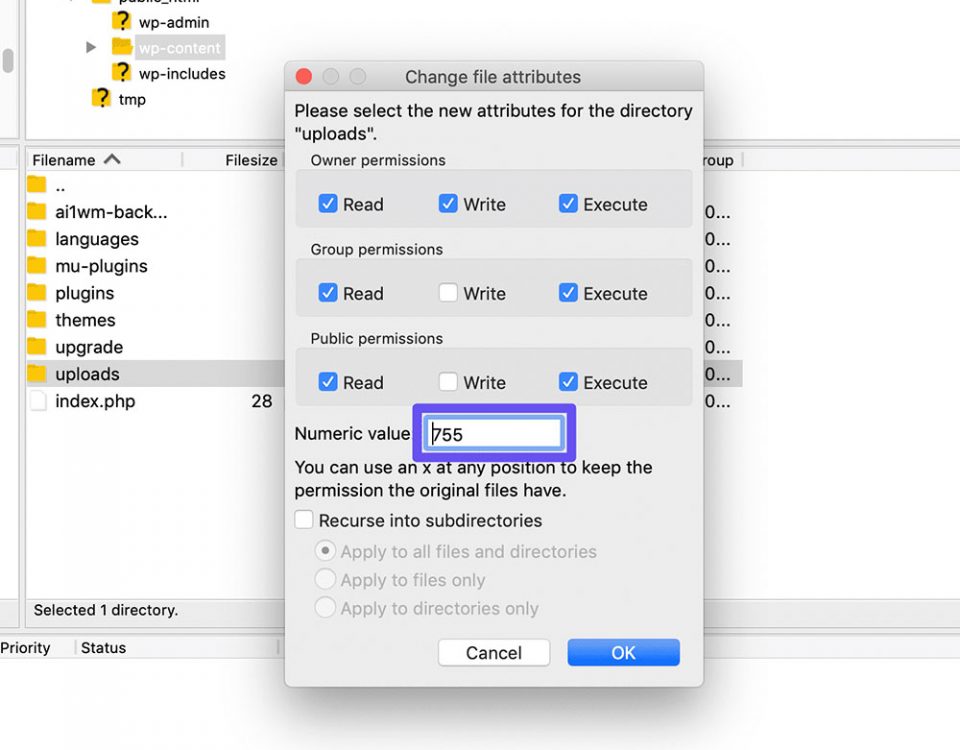
- Directories: 755
- Files: 644
- wp-config.php: 600 or 640
A directory set to 644 is broken. The server cannot enter it because the execute bit is missing. WordPress Developer Resources documentation states no directories should ever be set to 777, even upload directories.
External Blocking Causes
ERR_BLOCKED_BY_CLIENT means the browser rejected the request before it reached the server. Ad blockers like uBlock Origin and AdBlock Plus use filter lists that block files containing "ads", "banner", "track", or "analytics" in the filename or path.
This error does not affect all visitors. Only users with active blocking extensions see it. Testing in an incognito window with extensions disabled confirms whether this is the cause.
How to Identify Which Resource Is Failing to Load?
Finding the broken file before attempting any fix is the right order of operations. Chrome DevTools and Firefox Developer Tools both expose exactly which resource failed and why.
Open DevTools: press F12 or right-click anywhere on the page and select Inspect. Go to the Network tab, not the Console tab. The Network tab shows every single file request the browser made and the HTTP status code each one returned.
Using the Network Tab to Filter Errors
Screaming Frog research shows that most developers overlook the Network tab and only check the Console. The Network tab gives more actionable data.
3 steps to isolate the broken file:
- Reload the page while DevTools is open (the tab needs to be open before the page loads to capture all requests)
- Click the Status column header to sort by status code, or type
status-code:404in the filter bar - Every red row is a failed request. Click a row to see the full request URL
The Initiator column shows which script or stylesheet triggered the broken request. This tells you which plugin or theme owns the broken file.
Tracing the File Back to Its Plugin or Theme
Once you have the full resource URL from the Name column, look at the path structure. Most WordPress asset paths follow this pattern:
/wp-content/plugins/[plugin-name]/assets/[filename]
/wp-content/themes/[theme-name]/css/[filename]
The folder name after /plugins/ or /themes/ tells you exactly which plugin or theme owns the failing resource. That is where the fix starts.
How to Fix a 404 Failed to Load Resource Error in WordPress?
A 404 resource error means the file does not exist at the URL the browser is requesting. The fix depends on why it is missing.
Plugin conflicts represent 65% of technical malfunctions reported in WordPress sites in 2025 (Digidop). Most 404 resource errors trace back to a plugin update that removed or moved a file without updating the registered asset path.
Reinstalling the Plugin or Theme
Fastest fix for missing plugin assets: deactivate the plugin, then reinstall it fresh from the WordPress repository.
Go to Plugins > Add New, search for the plugin by name, and click Install Now. This pulls a clean copy of all plugin files, including any assets the previous version may have deleted during an update.
The same process applies to themes. Go to Appearance > Themes > Add New, search for the theme, and reinstall it. This does not overwrite your child theme or customizations stored in the database.
Fixing a Broken File Path Manually
Some plugins register asset paths using hardcoded URLs. After a domain migration or URL change, those hardcoded paths still point to the old location.
Check the path in 3 places:
- The plugin's settings page (some plugins let you set a custom asset URL)
- The
wpenqueuescriptshook in the plugin's main PHP file - The WordPress database via Better Search Replace, searching for the old domain string
To confirm a file physically exists on the server, connect via FileZilla or open cPanel File Manager, then navigate to the path shown in the console error. If the file is not there, reinstalling the plugin is the correct next step.
Resetting the permalink structure also fixes a subset of 404 resource errors caused by broken rewrite rules. Go to Settings > Permalinks and click Save Changes without changing anything. WordPress regenerates the .htaccess rewrite rules on save.
How to Fix a 403 Failed to Load Resource Error in WordPress?
A 403 error means the file exists on the server but the server is refusing to deliver it. The browser sent a valid request to a valid URL, and the server said no.
3 things can cause a WordPress 403 resource error: wrong file permissions, a security plugin blocking access, or an .htaccess rule denying specific file types.
Correcting File Permissions via FTP
WordPress Developer Resources documentation sets the correct values clearly: 644 for files, 755 for directories. A CSS or JS file set to 600 or 640 will return a 403 because the web server user cannot read it.
Open FileZilla, connect to the server, right-click the wp-content folder, and select File Permissions. Set the value to 755, check "Recurse into subdirectories," and select "Apply to directories only." Run the process again with 644 selected and "Apply to files only."
cPanel File Manager handles this through the Permissions column. Select all files in a directory, click Change Permissions, and set the values. Both tools produce the same result.
Reviewing .htaccess Deny Rules
Security plugins like Wordfence and iThemes Security sometimes add .htaccess rules that block direct access to specific file types. These rules are written to prevent PHP execution in upload directories, but they can also block legitimate CSS and JS files if written too broadly.
Check the .htaccess file in the WordPress root directory via FileZilla or cPanel. Look for lines containing deny from all or Options -Indexes combined with file type restrictions. A rule that blocks all .js files in /wp-content/uploads/ will trigger a 403 for any JavaScript file stored there.
Also check whether a separate .htaccess file exists inside /wp-content/ or /wp-content/plugins/. Some security plugins place their own .htaccess files inside subdirectories.
How Does a WordPress URL Mismatch Cause This Error?
WordPress generates every asset URL by prepending the Site Address (URL) stored in the database to the file path. If that stored URL does not match the actual domain the site runs on, every CSS, JavaScript, and image URL the site builds will be wrong.
The result is a failed to load resource error for most or all assets on the page. It looks severe. The fix is usually 2 minutes of work once identified.
Fixing the URL Mismatch in wp-config.php
The fastest fix that bypasses the database entirely: add 2 lines to wp-config.php before the line that reads / That's all, stop editing! /.
define('WPHOME', 'https://yourdomain.com');
define('WPSITEURL', 'https://yourdomain.com');
These lines override whatever is stored in the database. The site immediately starts generating correct asset URLs. This is particularly useful after a migration where database access is tricky or where the Settings > General page is inaccessible because broken assets prevent the admin panel from loading properly.
Updating Hardcoded URLs in the Database
The Settings > General fix only updates 2 rows in the database. Old post content, widget text, theme settings, and custom fields can all still contain the old URL string hardcoded inside them.
Better Search Replace handles this safely. It correctly processes serialized data in the database, which plain SQL find-and-replace can corrupt. Go to Tools > Better Search Replace, enter the old URL in the search field and the new URL in the replace field, select all tables, and run a dry-run first.
Sites migrated from HTTP to HTTPS are especially prone to this. Images inserted directly into post content before the migration still carry http:// in their src attributes. Better Search Replace updates all of them in a single operation.
For related issues that involve images not rendering after a URL change, the same database search process applies. You can read more about fixing WordPress images not displaying for cases where the URL update alone does not restore visibility.
How Do Plugins and Themes Cause Failed to Load Resource Errors?
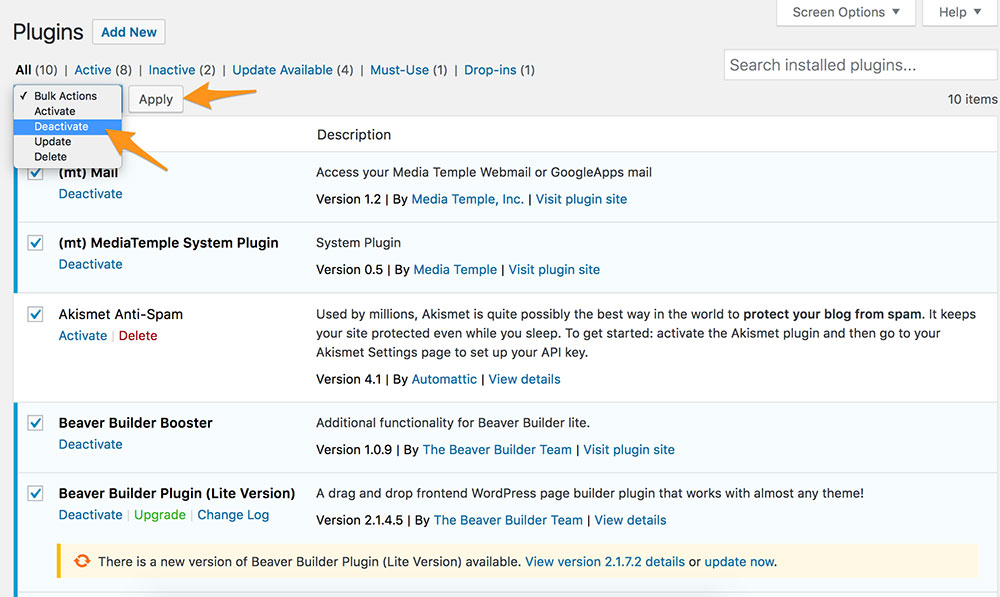
A plugin or theme causes a failed to load resource error in 3 ways: it enqueues a file that does not exist, it conflicts with another plugin that loads the same library at a different version, or an update moves or removes a file without updating the registered path.
Plugin vulnerabilities accounted for 90% of all WordPress vulnerabilities originating from plugins in 2024, up 34% from 2023 (PatchStack, 2024). Poorly maintained plugins are also the most common source of broken asset registrations.
Running a Plugin Conflict Test
The Health Check and Troubleshooting plugin (available at wordpress.org) runs a conflict test without taking the site offline. It puts the site into troubleshooting mode for your browser session only, deactivating all plugins and switching to a default theme like Twenty Twenty-Four for your view while normal visitors see the live site unchanged.
Standard conflict test sequence:
- Activate Health Check and Troubleshooting, then open the troubleshooting mode
- Check the console in troubleshooting mode. If the error disappears, a plugin is the cause
- Reactivate plugins one at a time, reloading and checking the console after each one
- The plugin that reintroduces the error owns the broken asset
Diagnosing Theme Asset Errors
jQuery conflicts are a specific and common variant. 2 plugins that each enqueue jQuery at different versions can break JavaScript-dependent assets across the entire page. The console shows the failed resource request alongside a separate JavaScript error.
Open the browser's Network tab and filter for the failing file. If the Initiator column shows functions.php, the theme is registering the broken asset path directly via wpenqueuescripts.
Check the theme's functions.php for wpenqueuestyle and wpenqueuescript calls. Look for paths that use hardcoded URLs rather than gettemplatedirectoryuri() or getstylesheetdirectoryuri(). Hardcoded paths break after any URL or domain change.
If you need to fix a WordPress mixed content issue that appeared at the same time as the resource error, the two problems often share the same root cause: a URL stored in the wrong format inside a plugin or theme file.
How Does a CDN or Caching Plugin Cause This Error?
A CDN or caching plugin can produce a failed to load resource error in 2 distinct ways: the CDN serves a cached 404 response for a file that now exists, or a minification/concatenation process creates a new combined file path that the browser cannot find.
W3 Total Cache misconfiguration often makes performance worse, not better, according to PandaCodeGen's 2026 WordPress site audits. Caching plugins configured aggressively without understanding their minification settings are a common source of broken asset paths after plugin updates.
| Tool | Common Error Trigger | Fix |
| Cloudflare | CDN caches old 404 at edge | Purge cache in Cloudflare dashboard |
| WP Rocket | Minified JS/CSS path breaks after plugin update | Disable minification, clear cache |
| W3 Total Cache | Combined file URL no longer exists | Flush all caches, disable concatenation |
| LiteSpeed Cache | CDN URL zone misconfigured | Correct CDN URL in plugin settings |
Purging CDN and Page Cache
Cloudflare's "Flexible" SSL/TLS mode is a specific and tricky CDN trigger. When Cloudflare connects to the origin server over HTTP while the WordPress site serves HTTPS, resource paths can mismatch at the edge layer.
Switch Cloudflare SSL/TLS mode to "Full (Strict)" under the SSL/TLS tab in the Cloudflare dashboard. Then purge everything from the Cache tab using "Purge Everything."
For WP Rocket and W3 Total Cache, the cache purge button is in the admin toolbar. After purging, check the browser console again. If the resource error disappears, the CDN or cache was serving a stale or broken path.
Disabling JS/CSS Minification to Isolate the Error
Minification combines multiple JS or CSS files into a single concatenated file at a new generated path. When a plugin update removes one of the source files, the concatenation process either fails silently or produces a broken output file path.
3 steps to isolate a minification-related resource error:
- Disable JS and CSS minification in your caching plugin settings
- Clear all caches (plugin cache, CDN cache, browser cache)
- Reload the page and check the console. If the error stops, minification of a specific file is the cause
Re-enable minification gradually, excluding the plugin folder that owns the broken file from the minification scope.
How to Fix ERRBLOCKEDBYCLIENT for WordPress Resources?
ERR_BLOCKED_BY_CLIENT is a browser-side rejection. The server never sees the request. The browser's ad blocking extension intercepted it before it left the machine.
Ad blocker usage reached 912 million users globally in 2024, representing roughly 30% of all internet users (Statista and PageFair, 2024). Among developers and IT professionals, usage approaches 50 to 60%. That means a meaningful share of the people most likely to check your browser console are also most likely to trigger this error.
Confirming the Browser Is the Source
Open the page in an incognito or private browsing window with all extensions disabled. If the ERRBLOCKEDBYCLIENT error disappears, a browser extension is responsible.
Most commonly blocked file patterns:
- Filenames containing:
ads,banner,track,analytics,pixel - Paths matching filter list patterns in uBlock Origin or AdBlock Plus
- Third-party scripts loaded from advertising or tracking domains
This error does not affect all visitors. Only users with active blocking extensions see it. The site functions normally for everyone else.
Renaming the Blocked File or Script Handle
If the blocked file is a legitimate plugin asset (not an ad or tracker), renaming it resolves the issue. The file name matched a common block-list pattern accidentally.
Two ways to rename the asset: edit the plugin's PHP file where wpenqueuescript or wpenqueuestyle registers the file, changing both the handle name and the path. Or contact the plugin developer, since this is a bug worth reporting upstream.
Do not rename files inside /wp-content/plugins/ directly without also updating the registration. The file path in wpenqueuescript must match the actual file location on disk, or the change produces a new 404 error in place of the blocked one.
How to Fix Failed to Load Resource Errors Caused by SSL or HTTPS Issues?
Mixed content happens when an HTTPS page loads a resource over HTTP. Chrome and Firefox block the HTTP resource silently, and the browser console shows a failed to load resource error with no HTTP status code, just a blocked mixed content warning.
As of 2024, 88% of websites globally use HTTPS (Network Solutions, 2024). Sites that migrated from HTTP to HTTPS without updating all internal resource URLs are the primary source of mixed content resource errors.
Using Really Simple SSL and SSL Insecure Content Fixer
Really Simple SSL forces HTTPS on all WordPress URLs after SSL certificate installation. SSL Insecure Content Fixer targets the specific problem of HTTP resource references in page output.
Install SSL Insecure Content Fixer from the WordPress repository. Go to Settings > SSL Insecure Content. The default "Simple" fix level handles most cases. Set it to "Content" if the simple level does not resolve the console error, and to "Capture" for the most thorough fix that rewrites output buffers.
Clear all caches after saving, including any caching plugin and the CDN. The mixed content fix only applies to newly generated page output, not cached versions.
Updating Hardcoded HTTP URLs in the Database
SSL plugins fix how WordPress generates new URLs. They do not update HTTP strings already stored inside post content, widget text, or theme settings in the database.
Use Better Search Replace to find and replace http://yourdomain.com with https://yourdomain.com across all database tables. Run a dry-run first. The plugin handles serialized data correctly, which is important because serialized arrays in WordPress options tables break if replaced with plain SQL.
Cloudflare users specifically need to check SSL/TLS mode. "Flexible" mode means Cloudflare connects to the origin over HTTP, which produces mixed content between the CDN edge and the origin even when the site appears to be on HTTPS. Set it to "Full (Strict)" to eliminate this source.
For more detail on diagnosing and fixing all variants of this problem, the full WordPress mixed content guide covers every edge case including reverse proxy and Nginx-specific configurations.
How to Prevent Failed to Load Resource Errors in WordPress?
Prevention costs less time than diagnosis. Most failed to load resource errors share a common cause: a change was made to a live site without testing it first.
Teams using WordPress staging environments experience 72% fewer deployment-related outages and resolve issues 3 times faster when they do occur (WP Engine, 2025). That single practice eliminates the majority of resource errors before they reach production.
Testing Every Update in a Staging Environment
A staging environment is a private clone of the live site running on a separate subdomain. Plugin updates, theme changes, and URL migrations happen there first. If a plugin update breaks an asset path in staging, it never reaches the live site.
Managed hosts with built-in one-click staging:
- WP Engine
- SiteGround
- Kinsta
- Flywheel
Mirror the staging environment's infrastructure exactly to production: same PHP version, same caching configuration, same CDN settings. A test that passes on staging with different infrastructure does not guarantee the same result on the live server.
Running a Browser Console Check After Every Deployment
Staging catches most errors. A post-deployment console check catches the ones that slip through, particularly environment-specific issues that only appear on the production server.
Open Chrome DevTools (F12), go to the Network tab, reload the page, and filter by status 4xx. Zero red rows means clean deployment. Run this check on the homepage, a single post, and a WooCommerce product or checkout page if applicable.
Keeping WordPress Address and Site Address in Sync
URL mismatches after domain migrations cause cascading resource errors across every asset on the site. The Settings > General fix is fast, but the database still holds old URLs in post content and options tables.
Post-migration checklist:
- Update WordPress Address (URL) and Site Address (URL) in Settings > General
- Run Better Search Replace to update old domain strings in the database
- Update wp-config.php with WPHOME and WPSITEURL constants if Settings is inaccessible
- Purge all caches after the URL update
- Run a browser console check to confirm zero resource errors
Using Broken Resource Checkers on a Schedule
Screaming Frog crawls a site and flags all 4xx responses including broken CSS, JavaScript, image, and font requests. Run it monthly on production.
The Broken Link Checker plugin monitors the site continuously and sends an email notification when a resource returns a 404. It runs quietly in the background, so the notification arrives before any visitor notices the problem.
UpdraftPlus and ManageWP both provide scheduled backups with one-click rollback. A backup taken before every plugin update gives a clean restore point if a post-update resource error turns out to be difficult to fix manually. This applies to managing the failed to open stream errors that sometimes accompany broken file paths on the server level, where a rollback is faster than manual debugging.
FAQ on How To Fix The Failed To Load Resource Error In WordPress
Why does the failed to load resource error appear in WordPress?
The browser requested a file and the server could not deliver it. The 3 most common reasons are a missing file, a wrong URL path, or a server-side permission blocking delivery. The browser console shows the exact status code.
What does net::ERR_BLOCKED_BY_CLIENT mean in WordPress?
The browser blocked the request before it reached the server. An ad blocker like uBlock Origin matched the file name or path against a filter list. Test by reloading the page in incognito mode with extensions disabled.
How do I find which file is causing the error?
Open Chrome DevTools with F12 and go to the Network tab. Reload the page, then sort by status code to filter 404 and 403 responses. The Name column shows the exact broken file URL.
Can a plugin update cause this error?
Yes. Plugin updates sometimes remove or rename asset files without updating the registered path in wpenqueuescripts. The browser still requests the old URL and gets a 404. Reinstalling the plugin restores the missing files.
How do I fix a 403 failed to load resource error?
Set file permissions to 644 for files and 755 for directories using FileZilla or cPanel File Manager. Also check the .htaccess file for deny rules added by security plugins like Wordfence that may be blocking specific file types.
Does a WordPress URL mismatch cause resource loading failures?
Yes. If the WordPress Address and Site Address fields in Settings > General do not match the actual domain, every CSS, JavaScript, and image URL the site generates will point to the wrong location. Fix it in wp-config.php using WPHOME and WPSITEURL.
How does mixed content trigger this error?
Chrome and Firefox block HTTP resources on HTTPS pages. The browser console shows a failed to load resource error with no status code. Install SSL Insecure Content Fixer and run Better Search Replace to update hardcoded HTTP URLs in the database.
Can a CDN cause the failed to load resource error?
Yes. Cloudflare and similar CDNs cache 404 responses at the edge. After fixing the missing file on the origin server, purge the CDN cache. Also check that Cloudflare's SSL/TLS mode is set to Full (Strict), not Flexible.
How do I stop this error from coming back after updates?
Test every plugin and theme update in a staging environment before deploying to production. Teams using staging experience 72% fewer deployment-related outages (WP Engine, 2025). Run a browser console check after every deployment.
Does the failed to load resource error affect SEO?
Broken CSS and JavaScript files can prevent pages from rendering correctly, which affects how Googlebot crawls and indexes the page. A broken stylesheet that disrupts layout can also increase bounce rates and reduce time on site.
Conclusion
This conclusion is for an article presenting every practical fix for the failed to load resource error in WordPress, from 404 and 403 status codes to ERRBLOCKEDBY_CLIENT and mixed content warnings.
Most cases trace back to one of six root causes: a deleted file, a broken asset path, wrong server permissions, a plugin conflict, a stale CDN cache, or an SSL misconfiguration.
The browser console is your starting point every time. The Network tab in Chrome DevTools or Firefox Developer Tools pinpoints the exact file and status code before any fix begins.
Prevention is faster than diagnosis. A staging environment, a post-deployment console check, and a scheduled Screaming Frog crawl eliminate most resource loading failures before visitors see them.