

Examples of Cosmetics Websites with Great Web Design
March 1, 2026
Global Sections in BeTheme – Reusable site elements Guide
March 5, 2026You refresh your site mid-update and get hit with it: "Briefly unavailable for scheduled maintenance. Check back in a minute."
It does not go away on its own. That is the problem.
Knowing how to fix the WordPress briefly unavailable for scheduled maintenance error takes less than two minutes once you understand what actually causes it. A single file in your WordPress root directory is keeping your site locked. Every visitor sees the maintenance screen until you remove it.
This guide covers the exact steps to delete the .maintenance file, clear every cache layer, and confirm your site is fully recovered. It also covers what to do when the screen persists after the fix.
What Is the "Briefly Unavailable for Scheduled Maintenance" Error in WordPress?
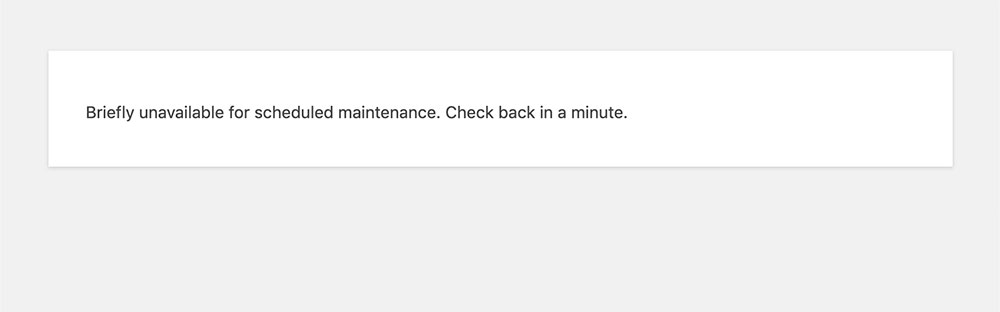
The "briefly unavailable for scheduled maintenance" error is a stuck maintenance mode state triggered by an incomplete WordPress update. It is not a server crash, a hack, or a coding problem.
WordPress powers 43.5% of all websites as of 2024 (Kinsta), which means this error affects an enormous number of site owners every time an update goes wrong.
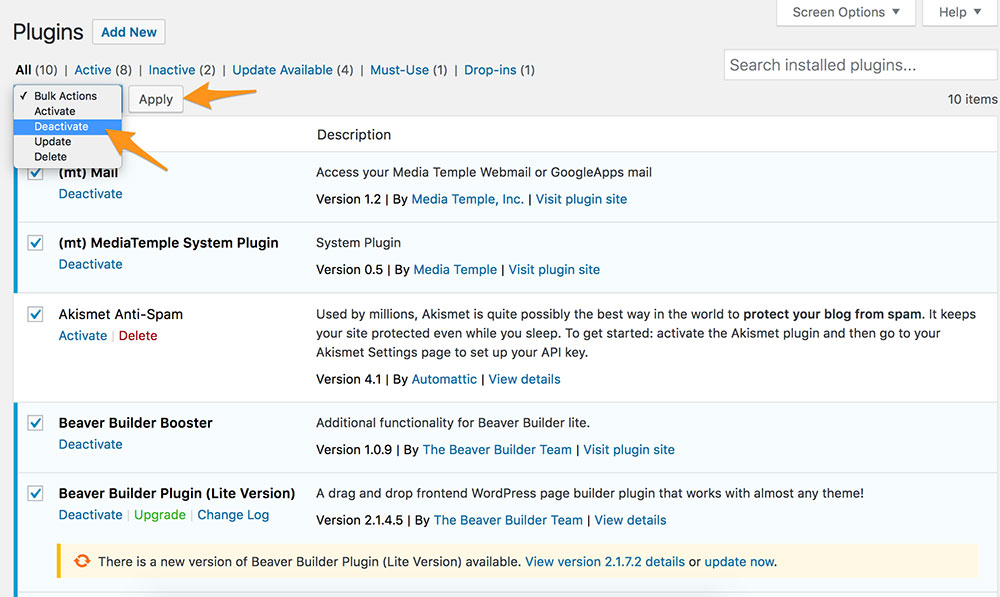
Every WordPress core, plugin, or theme update follows the same process. WordPress creates a .maintenance file in the root directory at the very start. Once the update finishes, WordPress deletes the file automatically and the site returns to normal.
If that process is interrupted before completion, the .maintenance file stays in place. WordPress has no way to know the update failed. It keeps serving the maintenance screen to every visitor, including you.
The maintenance screen itself reads: "Briefly unavailable for scheduled maintenance. Check back in a minute." That message does not update. It will sit there indefinitely until someone manually removes the .maintenance file from the WordPress root directory.
This is a file state problem, not a database problem. The fix takes under two minutes once you know where to look.
| What it is | What it is NOT |
|---|---|
A stuck .maintenance file in root |
A server error or crash |
| A result of an interrupted update | A hack or malware infection |
| A fixable file state issue | A WordPress core bug |
| Resolved by deleting one file | A database or PHP fatal error |
What Causes the WordPress Maintenance Mode to Get Stuck?
4 specific triggers leave the .maintenance file in place after a WordPress update process fails. Knowing which one applies to your situation helps you avoid the same problem next time.
Browser Interruption During the Update
The most common cause. Closing the browser tab, refreshing the page, or navigating away while an update is running cuts the PHP process mid-execution.
WordPress never receives the signal to complete the update cycle. The .maintenance file stays. The site locks.
This happens most often with bulk plugin updates, where the browser tab sits idle for 30 to 60 seconds and impatient site owners refresh.
Server Timeout During a Large Update
Shared hosting environments typically set max_execution_time to 30 or 60 seconds. Large plugin updates, particularly WooCommerce or page builders like WPBakery, can exceed that limit.
When the PHP script hits the timeout ceiling, the update process dies without completing. WordPress does not catch this as a failure. The .maintenance file is never deleted.
HostGator recorded a worst-case uptime of 79.38% in 2025 benchmarks (Hosting Step), which illustrates how unstable shared environments can be during resource-heavy operations like bulk updates.
PHP Memory Limit Exhausted Mid-Update
PHP memory limit: The default WordPress memory limit is 40MB, though most hosts set it higher. Large plugin updates that load multiple class files can push past even a 128MB limit.
When PHP runs out of memory, the script exits silently. No error is thrown to the WordPress update screen. The maintenance mode state persists.
Conflicting Plugins Interrupting the Update Lifecycle
Security plugins (Wordfence, Sucuri), caching plugins (WP Rocket, W3 Total Cache), and some backup plugins hook into the WordPress update process. A conflict during that hook execution can terminate the update before WordPress cleans up the .maintenance file.
This is less common than timeout or browser interruption but harder to diagnose without checking the WordPress updating failed error log directly.
How Do You Delete the .maintenance File to Exit Maintenance Mode?
Deleting the .maintenance file from the WordPress root directory resolves the stuck maintenance mode error in 100% of cases where the file is the sole cause. This is the primary fix.
How to Delete the .maintenance File via FTP
Required tool: FileZilla (free), Cyberduck, or any FTP/SFTP client. Connect to your server using the FTP credentials from your hosting control panel.
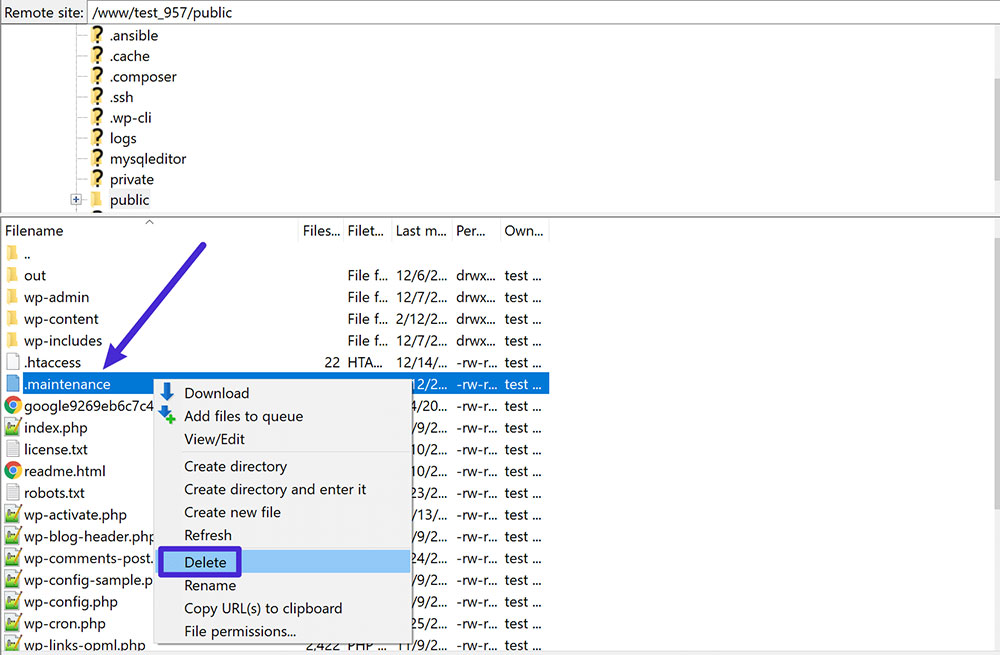
FileZilla hides the .maintenance file by default. Go to Server > Force Showing Hidden Files before browsing. Without this step, the file will not appear in the directory listing.
Once visible, navigate to the WordPress root directory (the same folder containing wp-config.php and wp-login.php). Right-click the .maintenance file and select Delete.
Do not rename it. A renamed file is still a file, and some server configurations may still read it. Delete it entirely.
Refresh your site after deletion. The maintenance screen should be gone immediately. If it is not, clear your browser cache and check for a caching layer (covered in H2 8).
I have seen developers waste 20 minutes renaming the file to .maintenance_old and wondering why the site is still down. Delete, do not rename.
How to Delete the .maintenance File via cPanel File Manager
Best for: Users on shared hosting without an FTP client installed.
Log into cPanel, open File Manager, and navigate to public_html or the folder where WordPress is installed. Hidden files are off by default in cPanel File Manager.
Click Settings in the top-right corner and check "Show Hidden Files (dotfiles)." The .maintenance file will appear. Right-click it, select Delete, confirm, and reload your site.
Plesk users follow the same logic: open File Manager, enable hidden files display, locate .maintenance in the WordPress root, and delete it.
How Do You Fix the Error Using WP-CLI?
WP-CLI resolves the stuck maintenance mode error with a single command. It is faster than FTP for anyone with SSH access and is the standard method on managed WordPress hosts.
Deactivate command:
wp maintenance-mode deactivateThis deactivates maintenance mode and removes the .maintenance file in one step. No file browsing, no FTP client required.
Run this first to check the current state before deactivating:
wp maintenance-mode statusWP-CLI is pre-installed on Kinsta, WP Engine, Cloudways, and Flywheel. On these platforms, open the SSH terminal from the hosting dashboard and run the command directly in the WordPress root directory.
For VPS or dedicated server users, WP-CLI installation takes under 5 minutes. The official install guide at wp-cli.org covers it with 3 commands.
| Method | Access needed | Time to fix | Best for |
|---|---|---|---|
| FTP (FileZilla) | FTP credentials | 2-4 minutes | Shared hosting users |
| cPanel File Manager | cPanel login | 2-3 minutes | Non-technical users |
| WP-CLI | SSH access | Under 30 seconds | Developers, managed hosts |
What to Do After Deleting the .maintenance File
Deleting the .maintenance file exits maintenance mode. It does not confirm the interrupted update completed. These are 2 separate things.
Check Whether the Interrupted Update Actually Finished
Go to Dashboard > Updates in wp-admin. If the plugin or theme that triggered the stuck maintenance screen still shows as available for update, the update did not complete.
Run the update again manually. Do not skip this step. A partially updated plugin can have mismatched file versions between its old files and any new files that did transfer before the interruption.
Mismatched plugin files are a known cause of fatal errors and WordPress publishing failed errors after the site comes back online.
Clear All Cache Layers After the Fix
3 cache layers can serve a stale version of the maintenance screen even after the .maintenance file is deleted:
- WordPress caching plugins (WP Rocket, W3 Total Cache, LiteSpeed Cache): purge cache from the plugin dashboard or via the admin toolbar
- Cloudflare: log into Cloudflare, go to Caching > Configuration, and click Purge Everything
- Server-side full-page cache (Kinsta, WP Engine): purge from the hosting dashboard
Clear all 3. If only one layer is cleared, some visitors (or Googlebot) may still hit a cached maintenance page. This matters for both user experience and crawl accuracy.
Verify Both Frontend and wp-admin Are Accessible
Load the site frontend in a private browsing window (bypasses browser cache). Separately, confirm /wp-admin loads and you can log in normally.
If wp-admin still shows the maintenance screen after deleting the file and clearing cache, a separate maintenance plugin is likely active.
How Do You Prevent WordPress From Getting Stuck in Maintenance Mode?
Sucuri's 2023 Website Threat Research Report found that 39.1% of compromised CMS installations were running outdated software at time of infection. Keeping WordPress updated is necessary but the update process itself needs proper configuration to avoid creating new problems.
Increase PHP Memory Limit and Execution Time
Add this to wp-config.php above the line that reads "That's all, stop editing!":
define('WP_MEMORY_LIMIT', '256M');For max_execution_time, add this to .htaccess on Apache servers:
php_value max_execution_time 300Or add max_execution_time = 300 to php.ini if your host gives you direct access to it. 300 seconds covers even large WooCommerce or page builder updates on slow shared hosting connections.
The WordPress memory limit is one of the most under-configured settings on shared hosting sites, and it directly affects update stability.
Update Plugins One at a Time Instead of Bulk Updating
Bulk updating chains multiple update processes in a single PHP execution. If any single plugin in that chain causes a timeout or conflict, all subsequent updates in the queue fail and the site can get stuck in maintenance mode.
Update 1 plugin, confirm the site loads, update the next. It takes longer but eliminates the compounding failure risk. This is especially true when updating security plugins like Wordfence or Sucuri alongside heavy plugins like WooCommerce.
Use a Staging Environment Before Updating Production
Kinsta, WP Engine, and Flywheel all provide one-click staging environments. Test plugin and core updates on staging first. If an update causes the stuck maintenance error or a fatal error on staging, you handle it without any visitor impact.
Kinsta recorded 100% uptime in both 2023 and 2024 (Hosting Step benchmarks), which illustrates what properly managed update pipelines look like at scale. The staging-first workflow is a big part of that.
Schedule Updates During Low-Traffic Windows
Best practice: Run updates between 2am and 5am local time for your primary audience.
If the update does get stuck, the maintenance screen affects fewer active visitors and there is more time to fix it before business hours. Even a 10-minute stuck maintenance window during peak traffic can cost real revenue. A 2024 ITIC survey reported that for 90% of midsize and large businesses, one hour of downtime costs over $300,000 (DEV Community). The actual stuck maintenance window is usually much shorter, but the principle holds: timing matters.
Does the "Briefly Unavailable for Scheduled Maintenance" Error Affect SEO?
WordPress maintenance mode returns a 503 Service Unavailable HTTP status code. What happens to your rankings depends entirely on how long that 503 stays active.
What Google Does When It Encounters a 503 Response
Google's own documentation confirms that a 503 is the correct status code for temporary unavailability. Googlebot reads it as "come back later" and reschedules the crawl.
A Google representative confirmed this directly (Search Engine Journal): "Serving a 503 status code for an extended period of time will cause a decrease in crawl rate. Fortunately for you, 10-15 minutes every now and then is not 'extended' by any means."
Short-duration 503 responses, under a few hours, do not cause ranking loss. Google treats them as expected maintenance behavior.
When Does the 503 Become an SEO Problem?
Under 15 minutes: No SEO impact. Googlebot reschedules the crawl automatically.
Several hours: Googlebot may reduce crawl frequency for affected URLs. No deindexing risk yet, but crawl rate drops.
More than 24 hours: Sustained 503 responses cause Googlebot to begin treating the pages as potentially unreliable. Crawl frequency drops further and new content stops being discovered.
More than a few days: Persistent 503 responses can lead to deindexing of affected URLs (W3Era, Search Engine Journal). If Googlebot consistently sees 503 on the same URLs, it may eventually remove them from the index.
How to Check Whether Googlebot Hit the Maintenance Screen
Open Google Search Console and go to Settings > Crawl Stats. Filter by response code. A spike in 503 responses on the day of the stuck maintenance incident confirms Googlebot encountered the screen.
If the stuck maintenance lasted less than 2 hours, no action is needed. If it lasted longer, submit a sitemap via Search Console to prompt Googlebot to re-crawl the affected URLs.
Do not check coverage reports and assume everything is fine just because rankings look stable the next day. Crawl frequency reductions show up in the data before they show up in rankings.
What If the Site Is Still in Maintenance Mode After Deleting the .maintenance File?
Deleting the .maintenance file resolves the stuck maintenance mode error in most cases. When the maintenance screen persists after the file is gone, 3 separate causes are responsible, each requiring a different fix.
Patchstack found that plugins account for 96% of all WordPress vulnerabilities in 2024, which means the plugin layer is also where most secondary maintenance mode problems originate (Wordfence WordPress Security Report 2024).
| Cause | What you see | Fix |
|---|---|---|
| Cached maintenance page | Maintenance screen after file deletion | Purge all cache layers |
| Active maintenance plugin | Maintenance screen even with no .maintenance file | Deactivate plugin via wp-admin or FTP |
| Host-level maintenance page | Maintenance screen with no WordPress involvement | Check hosting control panel |
A Caching Plugin or CDN Is Serving a Stale Maintenance Page
This is the most frequent cause of the "still stuck" problem after file deletion. Caching systems store a static version of every page they serve, including the maintenance screen.
Purge in this order:
- WordPress caching plugin (WP Rocket, W3 Total Cache, LiteSpeed Cache): use the "Purge All" or "Empty Cache" button in the admin toolbar
- Cloudflare: Caching > Configuration > Purge Everything
- Host-level server cache (Kinsta, WP Engine, SiteGround): purge from the hosting dashboard
- Browser cache: open the site in a private/incognito window to bypass local browser cache entirely
Test using a URL parameter like https://yoursite.com/?nocache=123 after purging. If the maintenance screen disappears with the parameter but persists on the clean URL, a CDN cache layer is still serving the old page.
A Dedicated Maintenance Mode Plugin Is Still Active
SeedProd, WP Maintenance Mode, and Coming Soon Page by SeedProd all operate independently from the WordPress .maintenance file. Deleting the core file does nothing to their settings.
If wp-admin is accessible, go to the plugin's dashboard and set maintenance mode to Disabled. Do not just deactivate the plugin. Deactivating SeedProd while its maintenance mode is toggled on can leave a cached version of the maintenance page in place.
If wp-admin itself shows the maintenance screen, use FTP to rename the plugin folder. Navigate to /wp-content/plugins/ and rename the SeedProd or WP Maintenance Mode folder (for example, change seedprod to seedprod-disabled). WordPress treats a renamed folder as a missing plugin and deactivates it automatically.
WP-CLI also works here if SSH access is available:
wp plugin deactivate seedprodThe Hosting Provider Has a Server-Level Maintenance Page Active
This scenario is less common but easy to miss. Some hosting providers, including cPanel-based shared hosts and certain managed WordPress platforms, have their own maintenance page system that sits above WordPress entirely.
Check these locations:
- cPanel: look for a "Maintenance Mode" or "Site Suspension" section under "Advanced"
- Plesk: check "Websites and Domains" for any maintenance toggle
- Managed hosts (WP Engine, Kinsta): check the site dashboard for any server-level maintenance setting
A server-level maintenance page will serve even if every WordPress file and plugin is correctly configured. The giveaway: the page design looks different from a standard WordPress maintenance screen and does not include the "Briefly unavailable for scheduled maintenance. Check back in a minute." message.
What If wp-admin Itself Shows the Maintenance Screen?
This happens when the WordPress update process interrupted during a core update rather than a plugin or theme update. The wp-login.php and wp-admin routes are all served by WordPress core, so a stuck core update locks out the dashboard entirely.
FTP and WP-CLI are the only paths forward. Delete the .maintenance file via FTP (covered in H2 3), or run wp maintenance-mode deactivate via SSH.
After regaining dashboard access, check whether the WordPress stuck in maintenance mode was caused by a partial core update. Go to Dashboard > Updates. If WordPress core shows a version mismatch or prompts a re-update, run the core update again before activating any plugins.
I have seen cases where developers skip the re-update step, get the site back online, and then hit a fatal error 3 days later because core files were mismatched. That is a harder problem than the original maintenance mode issue.
If the locked out of WordPress admin state persists even after the .maintenance file is deleted, a PHP fatal error or corrupted core file from the interrupted update is likely the cause. Enable WP_DEBUG in wp-config.php to surface the actual error:
define('WP_DEBUG', true);
define('WP_DEBUG_LOG', true);
define('WP_DEBUG_DISPLAY', false);
Check /wp-content/debug.log for the specific PHP error. That error, not the maintenance screen, is the actual problem to solve at that point. Related errors like the WordPress sorry, you are not allowed to access this page message or a WordPress parse error can also appear after an interrupted update, each pointing to a different layer of the stack that needs attention.
Once the site is fully restored, consider running a revert to a previous WordPress version if the current update introduced instability. Doing this from a recent backup is significantly faster than debugging mismatched core files manually.
FAQ on How To Fix The WordPress Briefly Unavailable For Scheduled Maintenance Error
What causes the WordPress briefly unavailable for scheduled maintenance error?
WordPress creates a .maintenance file at the start of every update. If the update process is interrupted, that file stays in place. WordPress keeps serving the maintenance screen to every visitor until the file is manually deleted.
How do I fix the briefly unavailable for scheduled maintenance error?
Connect to your server via FTP using FileZilla or log into cPanel File Manager. Enable hidden files display, navigate to the WordPress root directory, locate the .maintenance file, and delete it. Refresh your site to confirm the error is gone.
Where is the .maintenance file located in WordPress?
The .maintenance file sits in the WordPress root directory, the same folder that contains wp-config.php and wp-login.php. It is a hidden file. Enable "show hidden files" in your FTP client or file manager before looking for it.
Why is my site still in maintenance mode after deleting the .maintenance file?
A caching plugin (WP Rocket, LiteSpeed Cache) or CDN like Cloudflare is serving a cached version of the maintenance screen. Purge all cache layers after deleting the file. Also check if a dedicated maintenance plugin like SeedProd is still active.
Can I fix the WordPress maintenance mode error without FTP?
Yes. Log into cPanel and open File Manager. Enable "Show Hidden Files" under Settings, navigate to your WordPress root directory, find the .maintenance file, and delete it. No FTP client required. Plesk users follow the same process in their own file manager.
Does the WordPress maintenance mode error affect SEO?
WordPress maintenance mode returns a 503 status code. Google treats short outages under a few hours as normal. Downtime lasting more than 24 hours reduces crawl frequency. Longer than a few days risks deindexing of affected URLs, according to Google's own guidance.
How do I fix the maintenance mode error using WP-CLI?
Run wp maintenance-mode deactivate via SSH. This removes the .maintenance file and exits maintenance mode in one command. WP-CLI is pre-installed on managed hosts including Kinsta, WP Engine, and Cloudways. Run wp maintenance-mode status first to confirm the current state.
How do I prevent WordPress from getting stuck in maintenance mode?
Increase max_execution_time to 300 seconds and set the PHP memory limit to at least 256MB in wp-config.php. Update plugins one at a time instead of bulk updating. Test updates on a staging environment before pushing to production.
Why is wp-admin also showing the maintenance screen?
A stuck core update locks the entire WordPress request cycle, including the dashboard. Delete the .maintenance file via FTP or run wp maintenance-mode deactivate via WP-CLI. After regaining access, re-run the interrupted WordPress core update from Dashboard > Updates.
How long does the WordPress scheduled maintenance screen last?
The maintenance screen stays active indefinitely until the .maintenance file is deleted. WordPress has no automatic timeout. A stuck maintenance mode does not resolve itself. Manual removal of the file is always required to restore the site to normal operation.
Conclusion
This conclusion is for an article presenting the full process of resolving the WordPress briefly unavailable for scheduled maintenance error, from deleting the .maintenance file to clearing every cache layer and re-running interrupted updates.
The fix is straightforward. What trips people up is not knowing where the WordPress root directory is, or assuming the problem is bigger than it actually is.
Prevent future occurrences by increasing your PHP memory limit, updating plugins one at a time, and using a staging environment before touching production.
If the WordPress update process gets stuck again, you now know exactly where to look. The WP-CLI command, FTP deletion, and cache purge steps covered here handle every variation of this error.