

Realtor Website Design: Inspiring Examples for Success
January 26, 2026
Inspiring School Website Design Examples to Explore
January 27, 2026Your competitors already have websites that generate leads while you're still relying on word of mouth.
Industrial website templates give manufacturing companies, construction firms, and engineering businesses a faster path to professional online presence. No custom development budget required.
These pre-built layouts include everything heavy industry sectors need. Project galleries, quote request forms, equipment showcases, and B2B contact sections ready for customization.
This guide covers template types for different industrial verticals, the features that actually matter for lead generation, and how to choose between Bootstrap, WordPress, and HTML5 options.
You will learn what separates effective industrial designs from generic business templates that fail to convert.
What is an Industrial Website Template
Industrial website template is a pre-designed web page layout built for manufacturing companies, construction firms, engineering businesses, and factory operations.
These templates come with specific sections already configured. Service pages, equipment galleries, project portfolios, team profiles, and B2B contact forms.
Most run on the Bootstrap framework or WordPress. You get HTML5 and CSS3 features out of the box, plus mobile responsive design that works across all devices.
What Industries Use Industrial Website Templates
Heavy industry sectors rely on these layouts. Steel production, oil and gas, mining operations, logistics companies, and warehouse management businesses.
Construction companies use them constantly. Same goes for manufacturing websites and engineering firms that need to showcase technical capabilities.
What Features Define an Industrial Website Template
Several features separate industrial templates from generic business layouts:
- Project gallery sections with filterable categories
- Equipment and machinery showcase areas
- Quote request forms for B2B inquiries
- Service page layouts with technical specifications
- Safety certifications and compliance badge displays
- Client testimonial sections with company logos
Industrial Website Templates
BE Industry 2

BE Industry Website
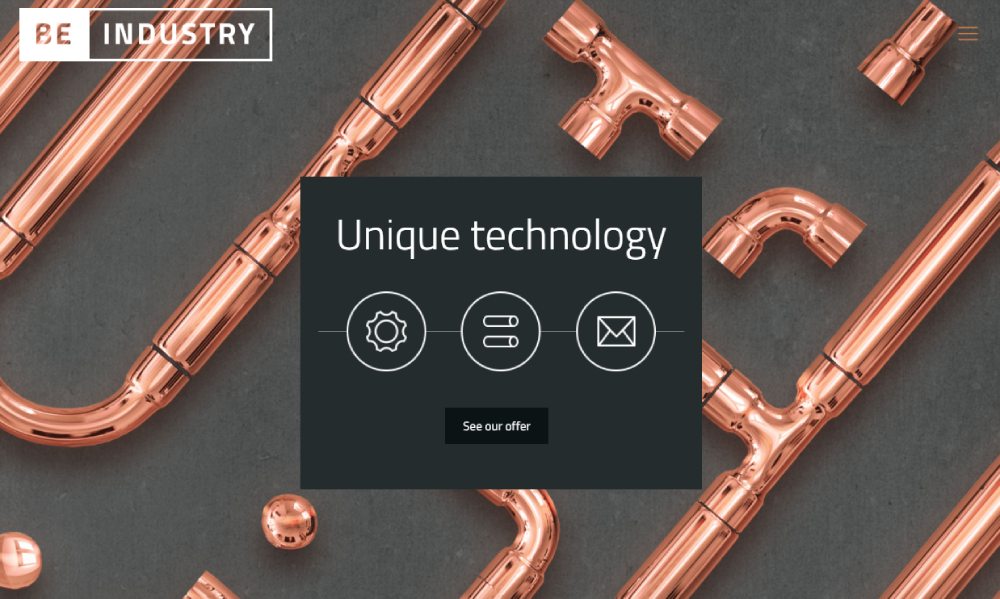
Industry

Factory Business
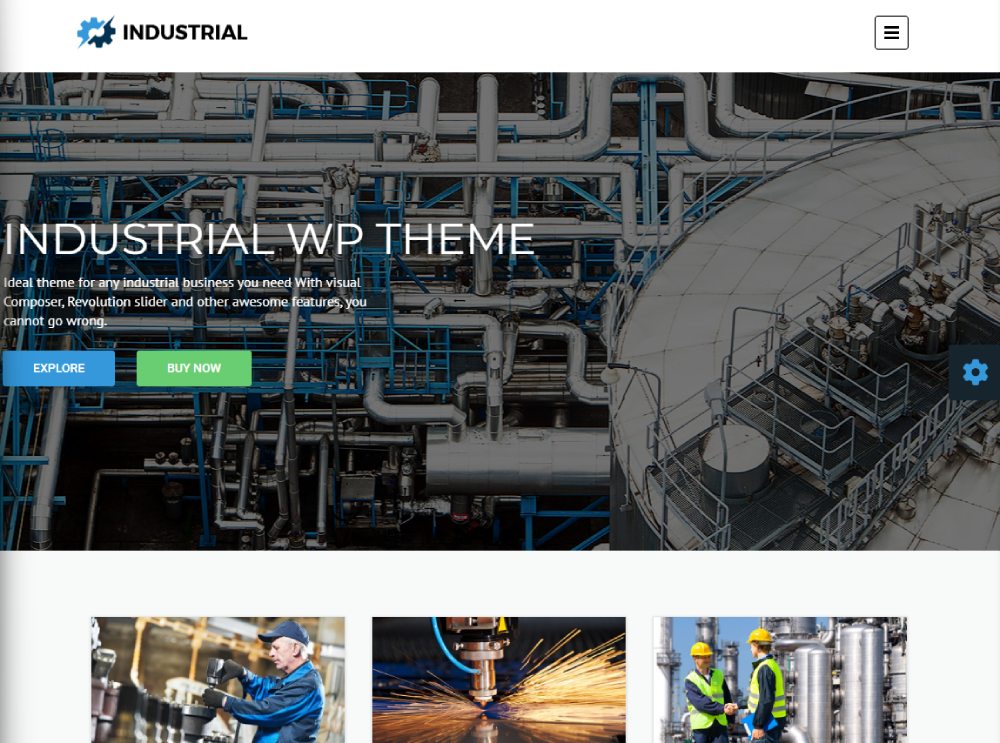
Industrium

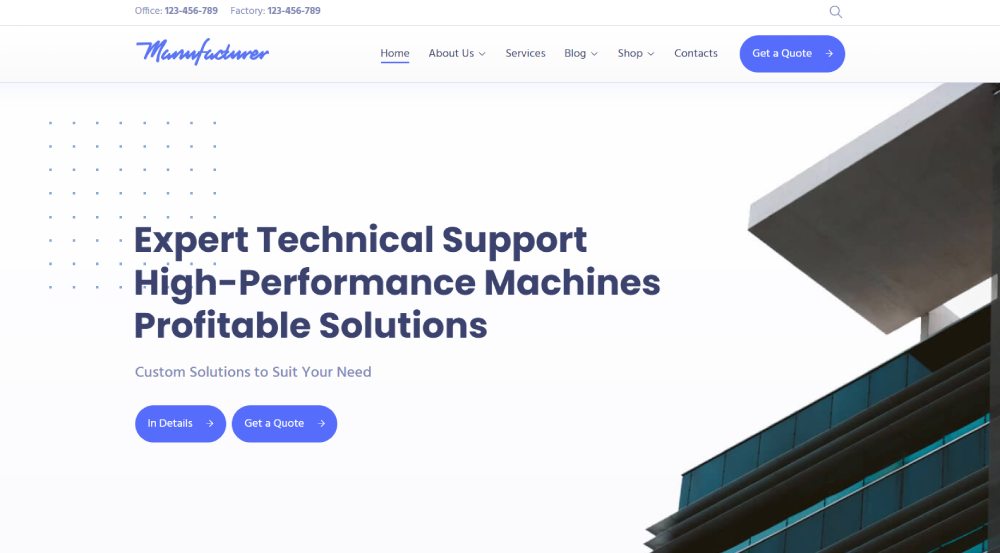
Manufacturer
Patrai Industry

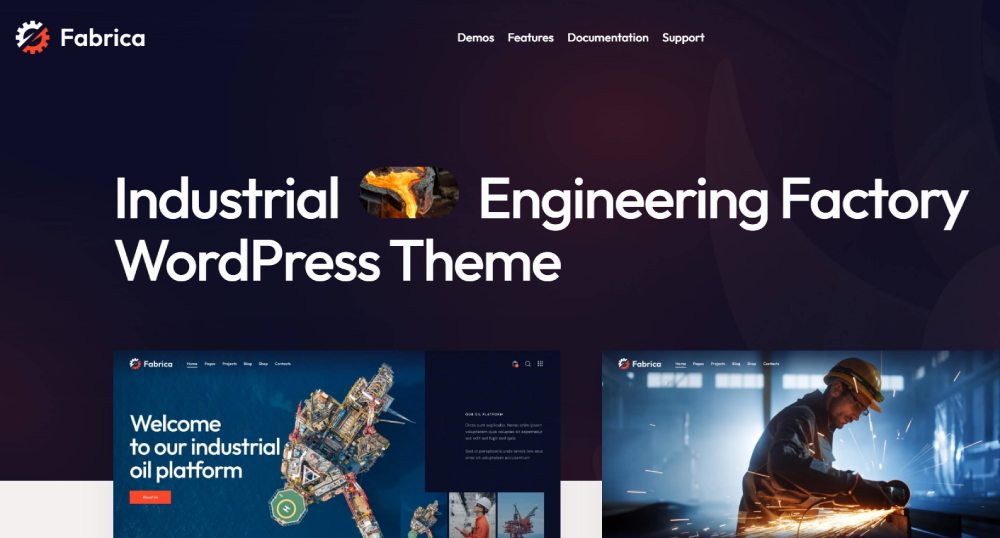
Fabrica
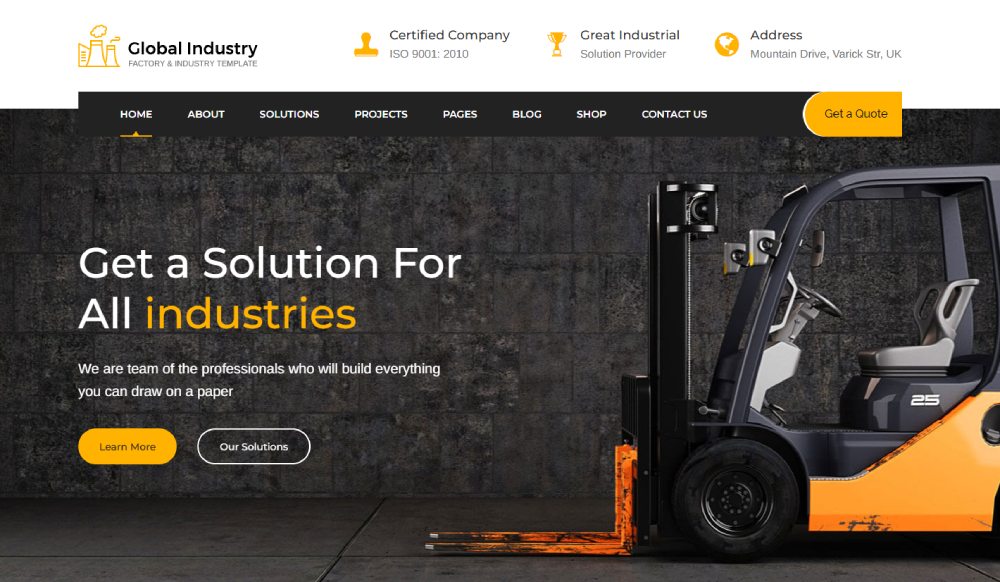
Global Industry
Extice

Manufactory

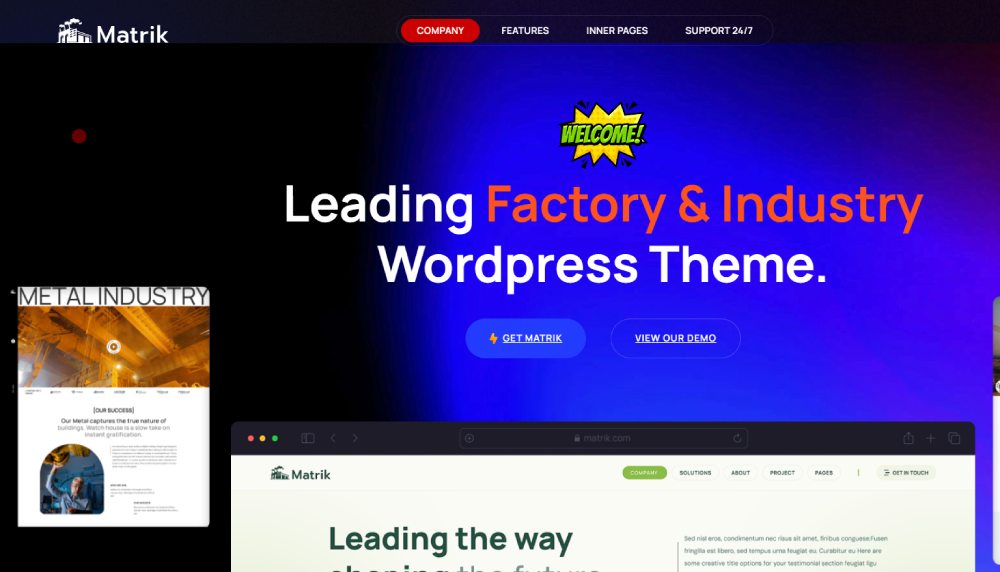
Matrik
Industx

Industry Press
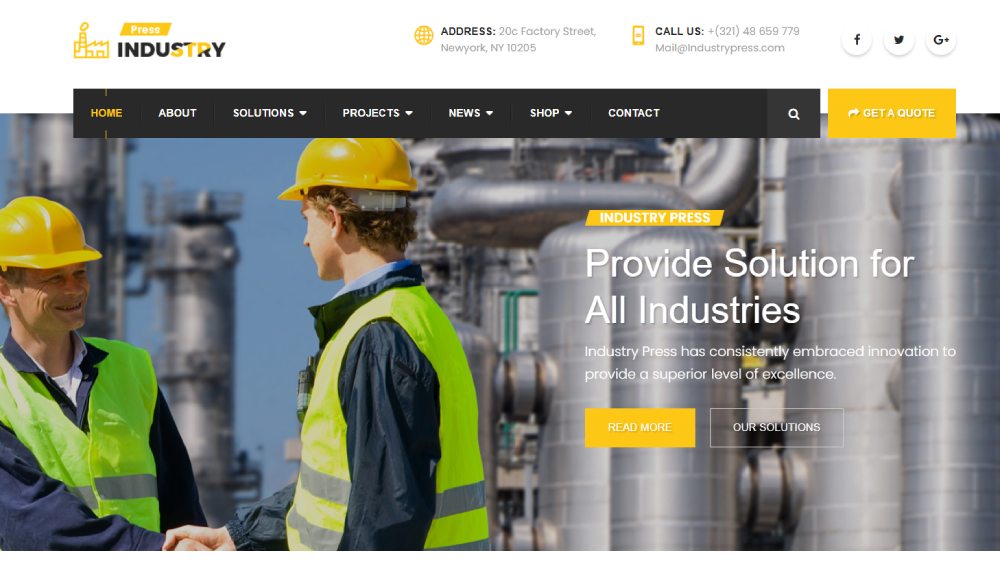
Amwerk
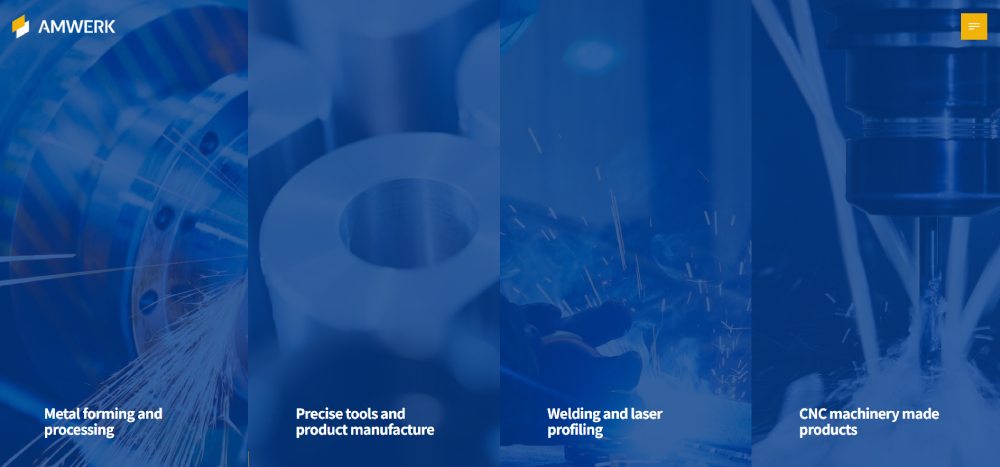
Zidex
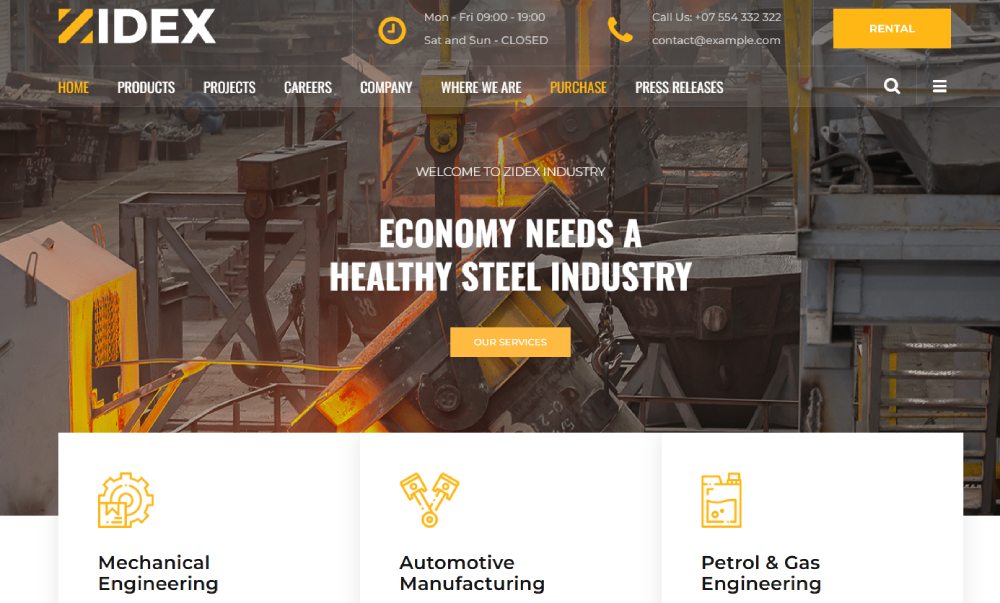
How Do Industrial Website Templates Differ from Business Templates
Standard business templates focus on broad commercial appeal. Industrial templates target specific operational needs.
The visual weight is different. B2B website design for industrial sectors uses heavier typography, darker backgrounds, and imagery that communicates reliability and strength.
What Design Elements Distinguish Industrial Templates
You will notice bold geometric shapes, strong grid layouts, and full-width image sections. The hero section typically features machinery, facilities, or workers in action.
Icons lean toward tools, gears, hard hats, and technical symbols. Fonts are usually sans-serif with thick weights.
What Color Schemes Work for Industrial Websites
Industrial sites favor a specific color scheme range:
- Navy blue and steel gray for professionalism
- Safety orange and yellow as accent colors
- Black backgrounds with high-contrast text
- Deep green for environmental or sustainability messaging
Dark mode web design works particularly well here. It gives that industrial, workshop feel that clients expect.
What Are the Types of Industrial Website Templates
Industrial templates break down into specialized categories based on sector. Each type includes pre-built sections relevant to that specific industry vertical.
What is a Manufacturing Website Template
Manufacturing templates include product catalog layouts, production process showcases, and facility tour sections.
These focus on B2B lead generation with quote calculators and bulk order inquiry forms. Most feature integration options for inventory management systems.
What is a Construction Website Template
Construction layouts prioritize project portfolios with before-and-after galleries. They include sections for licensing information, insurance details, and service area maps.
The templates work for general contractors, specialty trades, and commercial builders alike.
What is an Engineering Website Template
Engineering templates display technical expertise through case study layouts and detailed project breakdowns. They often include team credential sections highlighting certifications and degrees.
Similar to technology websites, these emphasize problem-solving capabilities and innovation.
What is a Factory Website Template
Factory templates showcase production capabilities and manufacturing capacity. Virtual facility tours, equipment specifications, and quality control processes get dedicated sections.
These templates often integrate with product databases for catalog display functionality.
What Features Should an Industrial Website Template Include
The right template covers operational needs while maintaining professional website standards. Here is what matters most.
What Navigation Structure Works for Industrial Sites
Industrial sites need clear, hierarchical website navigation. A sticky header menu with dropdown categories works best for complex service offerings.
The website menu should include quick links to quote requests and contact information on every page.
What Contact Forms Do Industrial Websites Need
Multi-step form design converts better for B2B inquiries. Include fields for project type, timeline, budget range, and specific requirements.
Quote request forms should integrate with CRM systems like Salesforce or HubSpot for lead tracking.
What Gallery Options Display Industrial Projects
Filterable project galleries organized by industry, service type, or project scale. Lightbox functionality for high-resolution equipment and facility images.
Video integration matters too. Embed capabilities for YouTube or Vimeo allow you to showcase operational footage and client testimonials.
What Portfolio Sections Showcase Industrial Work
Case study layouts with problem-solution-result formatting. A strong portfolio section includes project specs, timeline data, and measurable outcomes.
Client logos, industry awards, and certification badges add credibility throughout.
How to Choose an Industrial Website Template
Template selection depends on your platform, audience, and technical requirements. Making the wrong choice means redesigning everything six months later.
What Platform Compatibility Matters for Industrial Templates
WordPress themes offer the most flexibility with page builders like Elementor and WPBakery. B2B website templates on ThemeForest and TemplateMonster provide extensive customization options.
HTML5 templates work for custom development. Bootstrap-based options integrate smoothly with existing systems.
What Responsive Design Requirements Exist for Industrial Sites
Responsive websites are non-negotiable. Your template must adapt to tablets used on job sites and phones used by field teams.
Test the demo on multiple devices before purchase. Check that galleries, forms, and navigation all function properly on mobile.
What Loading Speed Standards Apply to Industrial Templates
Google PageSpeed scores above 80 are the baseline. Bloated templates with excessive jQuery plugins will tank your search rankings.
Look for templates with lazy loading for images, minified CSS3 files, and optimized JavaScript. Your equipment photos are heavy enough already.
What Bootstrap Industrial Templates Offer
The Bootstrap framework provides a solid foundation for industrial website templates. Grid-based layouts adapt to any screen size without custom coding.
Pre-built components speed up development. Navigation bars, cards, modals, and carousels work out of the box with minimal configuration.
What HTML5 Features Benefit Industrial Websites
HTML5 semantic markup improves search engine indexing and accessibility compliance. Native video embedding eliminates plugin dependencies for facility tours and equipment demonstrations.
Form validation attributes reduce server load and improve user experience on quote request pages.
What CSS3 Elements Improve Industrial Template Design
CSS3 transitions create smooth hover effects on service cards and project thumbnails. Flexbox and grid layouts handle complex website layout requirements without JavaScript hacks.
Custom properties (variables) make brand color updates a single-line change across the entire template.
What WordPress Industrial Themes Provide
WordPress themes for industrial sites include demo content, premium plugins, and one-click installation. ThemeForest lists over 3,700 industrial options ranging from $29 to $69.
Most themes bundle slider plugins, contact form builders, and WooCommerce compatibility for product sales.
What Page Builders Work with Industrial WordPress Themes
Elementor dominates the market with drag-and-drop editing and 90+ widgets. WPBakery (formerly Visual Composer) comes bundled with many ThemeForest themes.
Gutenberg blocks work for simpler edits. Beaver Builder and Divi offer alternatives with different learning curves.
What Plugins Support Industrial WordPress Sites
Essential plugins for industrial WordPress installations:
- Yoast SEO or Rank Math for search optimization
- Contact Form 7 or WPForms for lead capture
- WooCommerce for product catalogs and parts ordering
- Smush or ShortPixel for image compression
- Wordfence for security hardening
How to Customize an Industrial Website Template
Template customization transforms generic designs into branded experiences. Focus on the elements visitors see first.
What Logo Placement Options Exist in Industrial Templates
Most templates support left-aligned, centered, or right-aligned logo positioning in the header. Retina-ready formats (SVG or 2x PNG) display crisp on high-density screens.
Size your logo between 150-250px width for optimal header balance.
What Header Configurations Work for Industrial Brands
Sticky headers keep navigation accessible during scroll. Transparent headers over hero images create a modern website design feel.
Include a phone number and quote CTA in the header bar. Industrial buyers want immediate contact options.
What Footer Sections Serve Industrial Businesses
The website footer needs multiple functional columns:
- Contact information with physical address and service areas
- Quick links to key service pages
- Certifications, licenses, and association memberships
- Social media links (LinkedIn matters most for B2B)
- Newsletter signup for industry updates
What Content Sections Do Industrial Templates Require
Content architecture determines how visitors find information. Industrial templates need specific page types beyond standard business website layouts.
What Service Pages Do Industrial Companies Need
Individual service pages outperform single-page service lists for SEO. Each page should target specific search queries with detailed process descriptions and relevant equipment specifications.
Include call to action buttons above the fold and after each major section.
What About Us Pages Work for Industrial Businesses
Company history, leadership team, facility information, and safety records. Industrial buyers research vendors thoroughly before contact.
A strong testimonial page with client logos and project outcomes builds credibility faster than generic claims.
What Project Case Study Formats Suit Industrial Sites
Structured case studies convert browsers into leads. Use this format:
- Client industry and challenge overview
- Solution approach and equipment used
- Timeline and project milestones
- Measurable results with specific numbers
- Client quote or video testimonial
How Do Industrial Templates Handle B2B Functions
B2B functionality separates industrial templates from consumer-focused designs. Lead generation and product display require specialized features.
What Quote Request Forms Work for Industrial Sites
B2B landing pages with multi-field forms capture qualified leads. Include dropdowns for service type, project timeline, and budget range.
File upload fields let prospects attach blueprints, specifications, or RFP documents directly.
What Product Catalog Features Support Industrial Sales
Filterable product grids organized by category, application, or specification. PDF spec sheet downloads for each product listing.
Integration with inventory management systems shows real-time availability. Bulk inquiry forms handle large order requests.
What Technical Requirements Define Quality Industrial Templates
Technical performance affects search rankings, user experience, and conversion rates. Check these specifications before purchasing any template.
What SEO Features Should Industrial Templates Include
Schema markup support for LocalBusiness and Organization types. Clean URL structures without excessive parameters or session IDs.
Proper heading hierarchy (H1-H6), image alt text fields, and meta description options for every page. Good typography improves readability scores that affect rankings.
What Security Measures Protect Industrial Business Sites
SSL certificate compatibility is mandatory. Secure form handling prevents data interception on quote requests containing project details.
Regular update support from theme developers patches vulnerabilities. Avoid templates abandoned by their creators.
What Analytics Integration Benefits Industrial Websites
Google Analytics 4 and Google Tag Manager integration points. Event tracking capability for form submissions, PDF downloads, and video plays.
Conversion tracking reveals which pages and traffic sources generate actual leads. Heat mapping compatibility (Hotjar, Microsoft Clarity) shows user behavior patterns.
FAQ on Industrial Website Templates
What is an industrial website template?
An industrial website template is a pre-designed layout for manufacturing, construction, and engineering businesses. It includes service pages, project galleries, and B2B contact forms configured for heavy industry sectors.
How much do industrial website templates cost?
Free templates exist on platforms like Nicepage and Colorlib. Premium options on ThemeForest range from $29 to $69. Premium website templates include bundled plugins, demo content, and developer support.
What platform works best for industrial websites?
WordPress offers the most flexibility with themes and plugins. Bootstrap HTML5 templates work for custom development. Wix and Squarespace provide simpler alternatives but limit B2B functionality and third-party integrations.
Are industrial templates mobile responsive?
Quality templates include responsive website templates that adapt to tablets and smartphones. Test the demo on multiple devices before purchasing. Field teams access your site from job sites constantly.
Can I customize an industrial template without coding?
Yes. Page builders like Elementor and WPBakery use drag-and-drop editing. You can modify colors, fonts, layouts, and content blocks visually. Basic WordPress knowledge is enough for most customizations.
What features should an industrial template include?
Look for project portfolio sections, quote request forms, equipment galleries, and user friendly website navigation. SEO optimization, fast loading speed, and Contact Form 7 compatibility matter for lead generation.
Do industrial templates work with WooCommerce?
Most WordPress industrial themes support WooCommerce integration. You can sell parts, equipment, and supplies directly. Product catalog features display specifications, pricing, and inventory availability for B2B ordering.
How do I choose between free and premium templates?
Free templates lack support, updates, and advanced features. Premium options from ThemeForest or TemplateMonster include documentation, regular security patches, and bundled plugins worth $100+ separately. Invest in premium for business sites.
What industries use industrial website templates?
Manufacturing, construction, steel production, oil and gas, mining, logistics, and warehouse operations. Engineering firms and plumber websites also use industrial-style layouts for their service businesses.
How long does it take to launch with a template?
Basic setup takes 2-3 days with content ready. Full customization with branded imagery, service pages, and portfolio sections requires 2-4 weeks. Professional website templates speed up the process significantly.
Conclusion
Industrial website templates eliminate the guesswork from building an online presence for heavy industry businesses. The right template handles your factory, logistics, or production company without custom development costs.
Focus on responsive design, SEO-friendly structure, and lead capture functionality. These three factors determine whether your site generates quotes or collects dust.
ThemeForest and Envato Elements offer the widest selection of premium options. Elementor compatibility makes ongoing updates manageable without developer fees.
Pick a template that matches your industry vertical. Customize the color scheme, upload project photos, and configure your contact forms.
Your next B2B client is searching right now. Make sure they find a clean website that reflects the quality of your work.